12 Coffee Corner Ideas That Make Your Home Feel Like a Café
My first coffee corner lasted about three weeks before it quietly became the place mail goes to die. The actual coffee stuff got shoved behind a stack of envelopes, and the whole thing stopped looking like a café and started looking like a junk drawer that had escaped. The corners that work long-term aren’t the prettiest ones — they’re the ones designed around how mornings actually happen.
The short answer: pick the spot before you buy anything (near an outlet, near water, somewhere you already walk past half-asleep), spend your money on fresh beans and a decent grinder rather than a fancy machine, corral everything on a tray to fight clutter creep, and add one warm light source. These 12 coffee corner ideas cover setups for kitchens of every size.

1. Roll It Anywhere with a Bar Cart Station
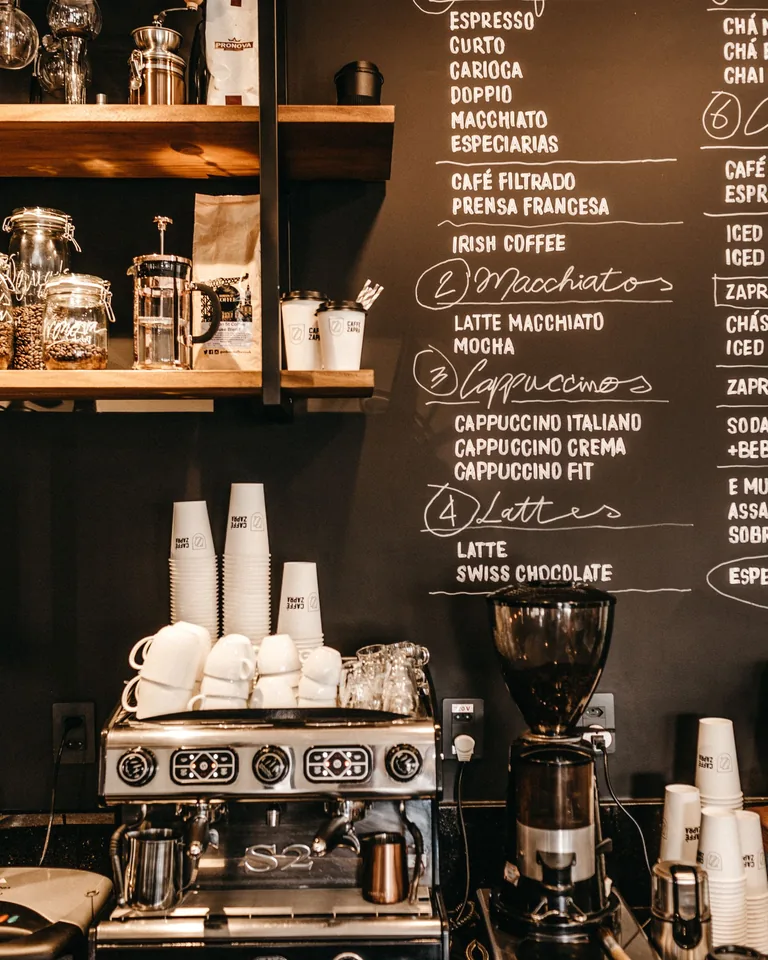
The most forgiving coffee corner for small or rented homes is a rolling bar cart. It holds the machine, the grinder, the mugs, and the beans on two or three tiers, and it wheels out of the way when you need the floor space — or out onto the balcony on nice mornings.
Style it like a café, not a storage unit: machine on top, mugs and beans in the middle, lesser-used supplies below. A small tray on the top tier corrals the drips and crumbs, and hooks on the side rail hold your two favorite mugs. When the cart is this self-contained, the coffee corner never sprawls into junk-drawer territory.
2. Claim a Counter Corner with a Tray
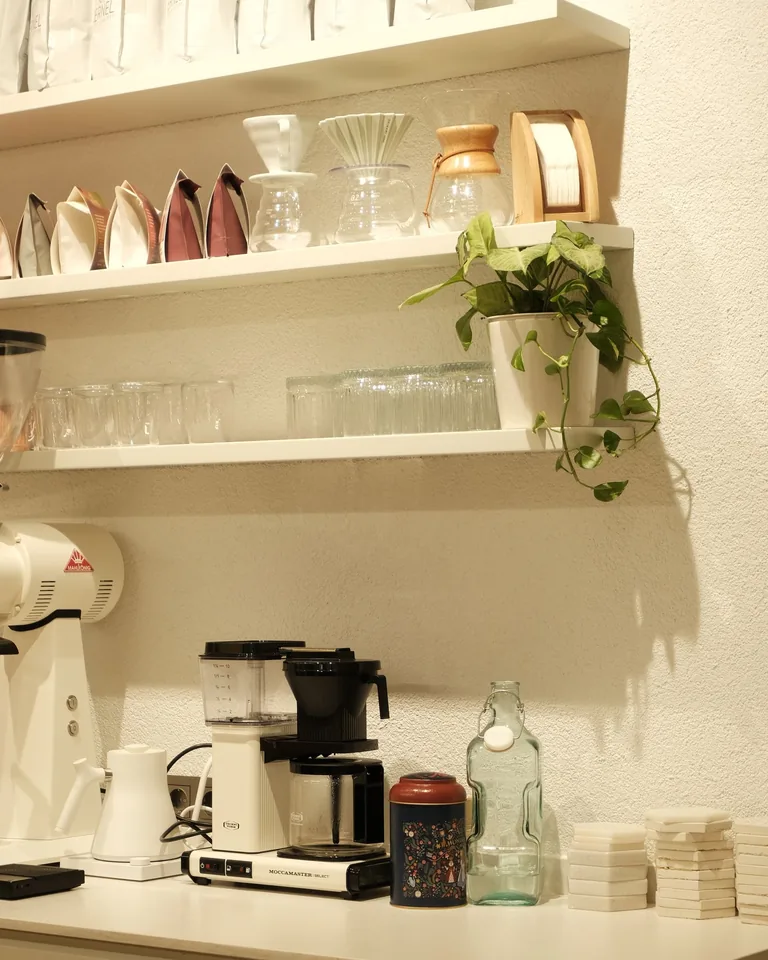
The cheapest upgrade in all of coffee-corner design is a tray. Corral the kettle, the grinder, and the sugar onto one tray and suddenly the clutter looks intentional. Move the tray, wipe the counter, done — it’s almost cheating.
Pick the spot with boring, practical rules: near an outlet (nobody wants an extension cord running to their espresso dreams), close to water or at least not a marathon from the sink, and somewhere you already walk past in the morning. A stretch of counter at the end of the kitchen, right by the kettle plug, beats a beautiful but inconvenient nook every single time.
3. Go Vertical with Floating Shelves
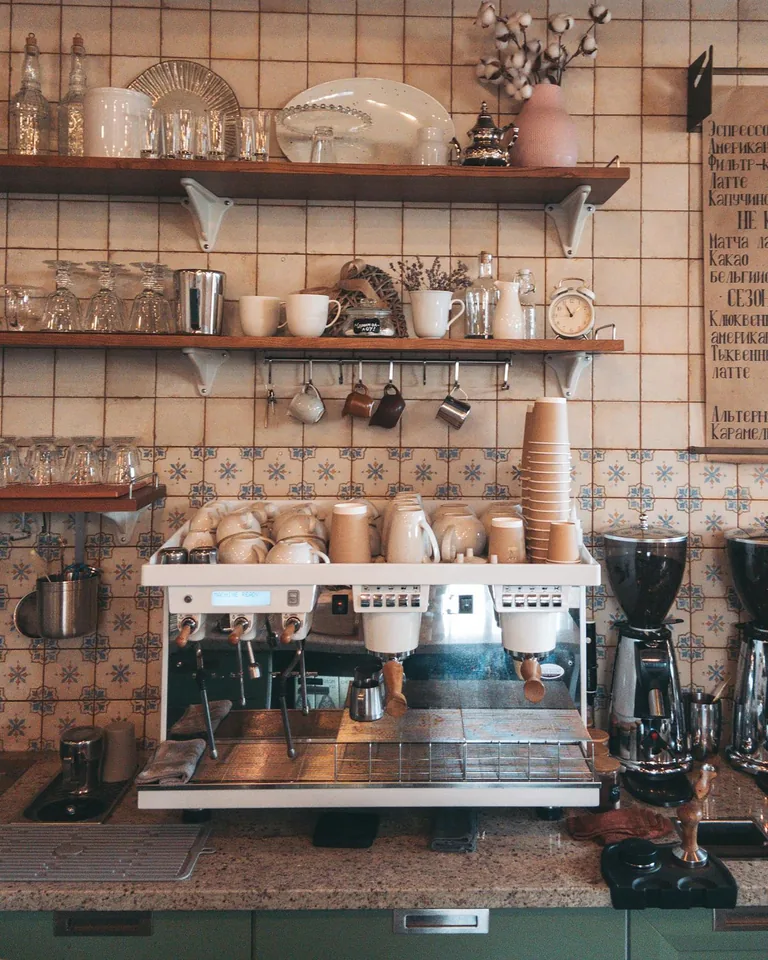
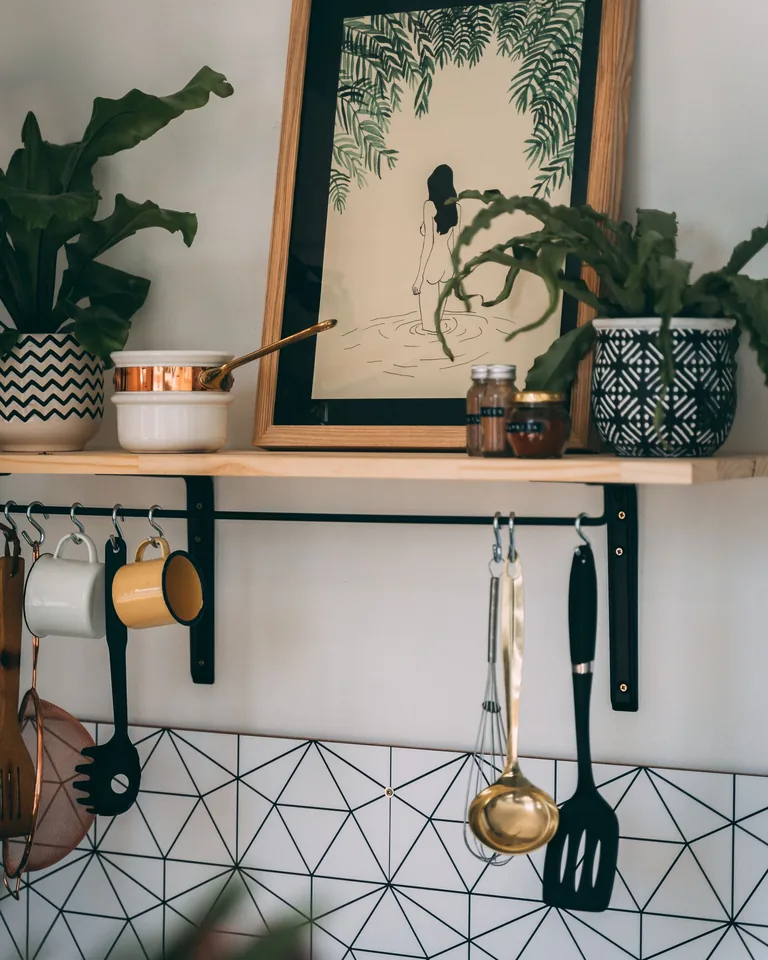
Mounting floating shelves above your coffee station instantly multiplies storage without taking a single inch of counter. Mugs on hooks underneath, beans and canisters on top, a small plant at the end — vertical styling draws the eye up and makes even a tiny corner feel like a designed moment.
Two shelves are the sweet spot: one for daily-reach items, one for display. Keep the everyday mugs (six to eight, the ones you actually reach for) on hooks under the lower shelf where they’re grabbable half-asleep. If your kitchen storage is maxed out generally, these small walk-in pantry ideas use the same vertical thinking at a bigger scale.
4. Convert a Kitchen Cabinet into a Coffee Nook
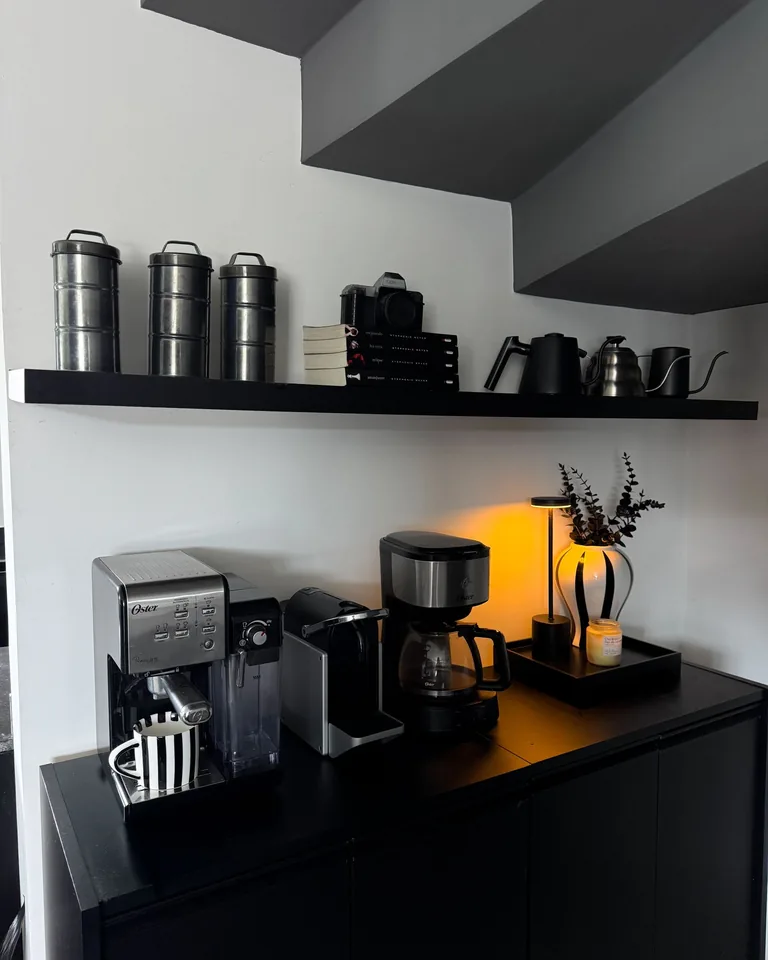
Got a deep cabinet or an awkward kitchen alcove that’s too small for anything useful? It’s the perfect coffee nook. Pull the doors off (or leave them open), add a shelf or two inside, run a small power strip to the back, and you’ve got a coffee station that closes away completely.
This is the neatest-looking option on the list: everything hidden behind closed doors when guests come over, everything within arm’s reach when it’s just you. Line the back of the cabinet with peel-and-stick wallpaper or paint it a moody color so opening the doors feels like a little reveal.
5. Style a Thrifted Sideboard as a Coffee Bar
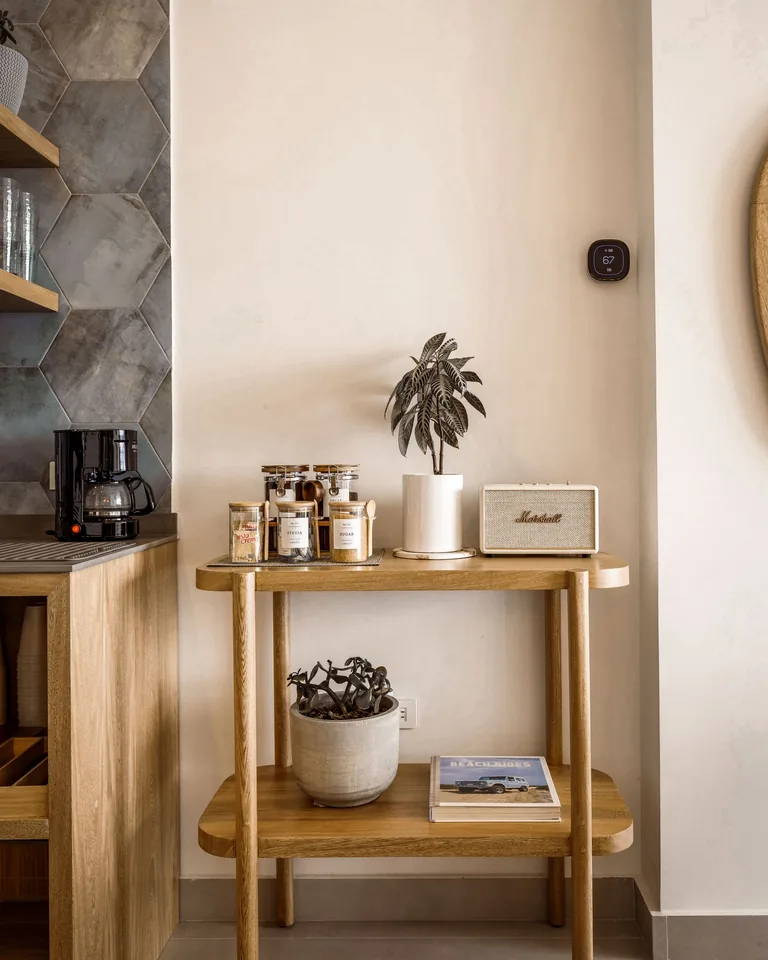
A vintage sideboard, buffet, or dresser makes a magnificent coffee bar — more storage than any cart, more character than any counter. Thrift stores are full of solid-wood pieces for under $100 that just need a wipe-down and maybe new hardware.
The wide top holds the machine and a styling tray; the drawers swallow filters, pods, and backup beans; the cabinets hide the ugly stuff. Top it with a small piece of art and a lamp and it reads as furniture first, coffee station second — which is exactly right for a living room or dining room placement. Pair it with the styling instincts in these cottagecore kitchen ideas if your taste runs rustic.
6. Steal the End of the Counter
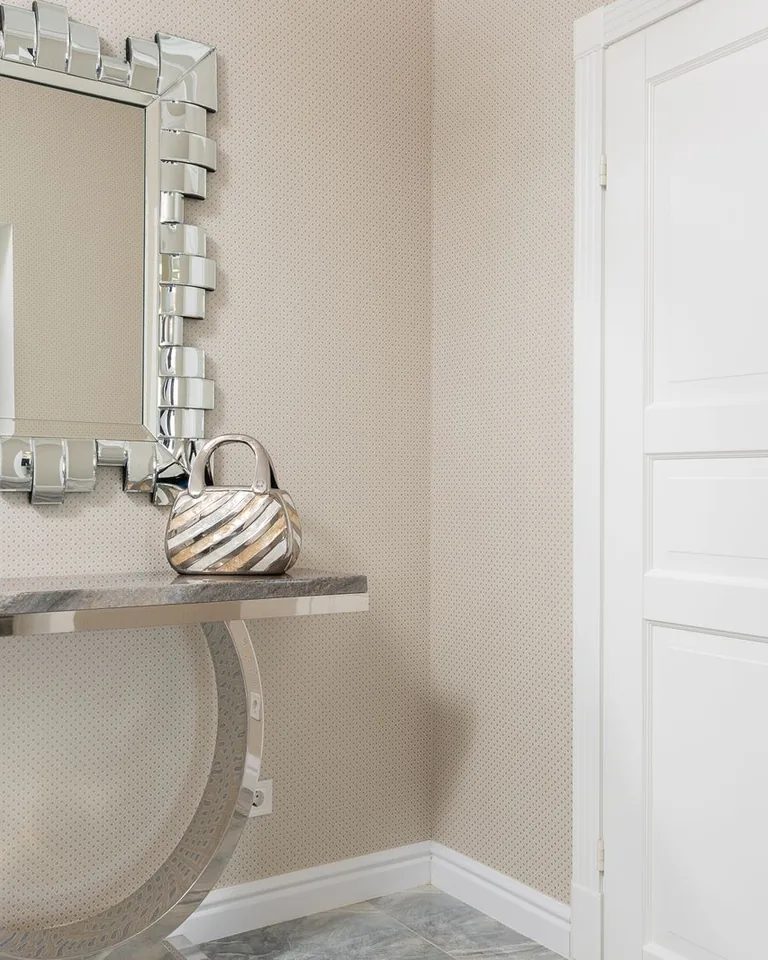
You don’t need a separate zone at all. The end of the kitchen counter, nearest the outlet and the sink, is prime coffee real estate that most people waste on a fruit bowl. Claim eighteen inches of it and defend the boundary with a tray.
The rule that keeps this working: nothing lives on the tray that isn’t used daily. The minute the tray spreads across the whole counter, the magic’s gone and you’re back to junk-drawer territory. A narrow console table (12 inches deep or less) against a nearby wall can absorb the overflow — mugs, beans, the pretty stuff — without touching your prep space.
7. Mount a Fold-Down Table for Truly Tiny Kitchens
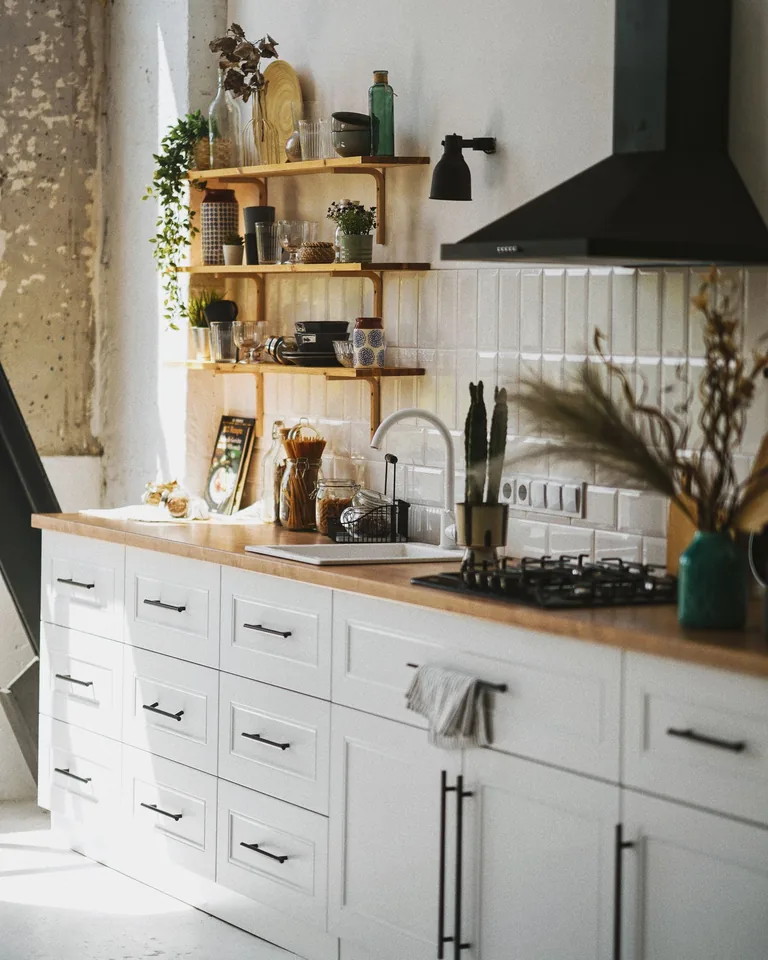
When there’s genuinely no counter to spare, a wall-mounted drop-leaf table folds up completely when you’re not brewing and drops down to hold the French press and two mugs when you are. It’s the Murphy bed of coffee stations.
Mount it at counter height near an outlet, and pair it with one floating shelf above for the beans and cups. The whole station occupies zero floor space and about two square feet of wall. For renters, look for versions that mount with heavy-duty removable brackets rather than lag bolts.
8. Build Up with a Tiered Tray
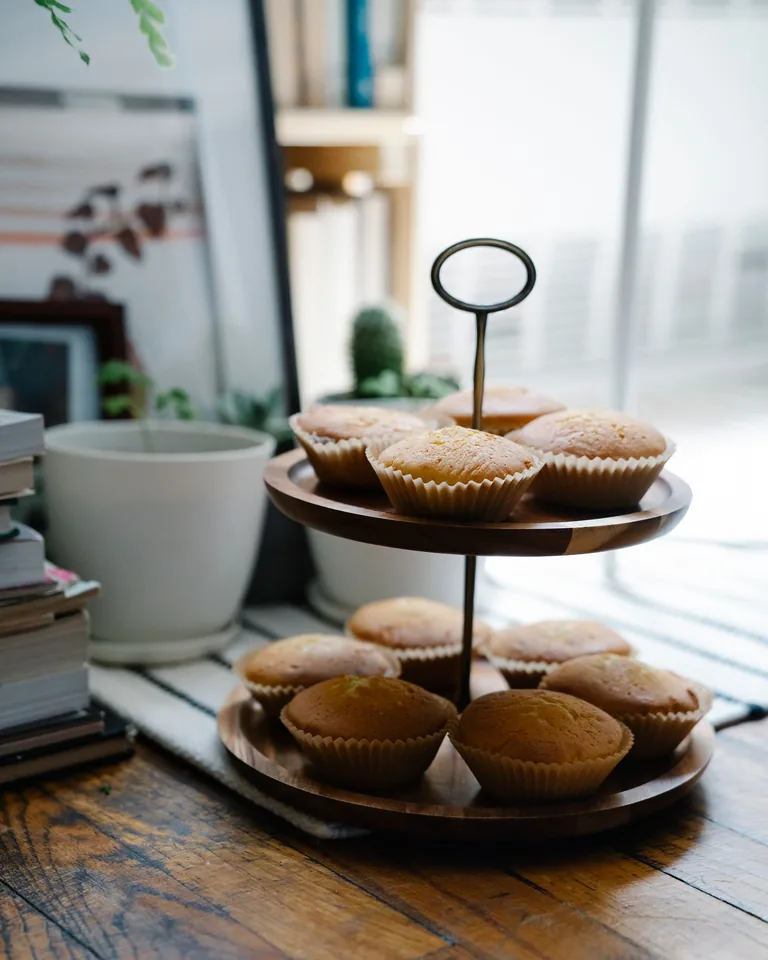
A two- or three-tiered tray is the coffee corner’s hardest-working organizer. Syrups and sweeteners on top, stirrers and filters in the middle, napkins or pods at the bottom — everything visible, everything reachable, nothing sprawling.
Tiered trays also solve the styling problem: they turn a pile of supplies into a display. Choose one in wood, marble, or black metal to match your kitchen, and leave one tier slightly sparse — a tiny plant or a single pretty jar keeps it from reading as a condiment caddy. Restock it Sunday night and the whole week runs smoother.
9. Hang Mugs on Hooks and a Rail
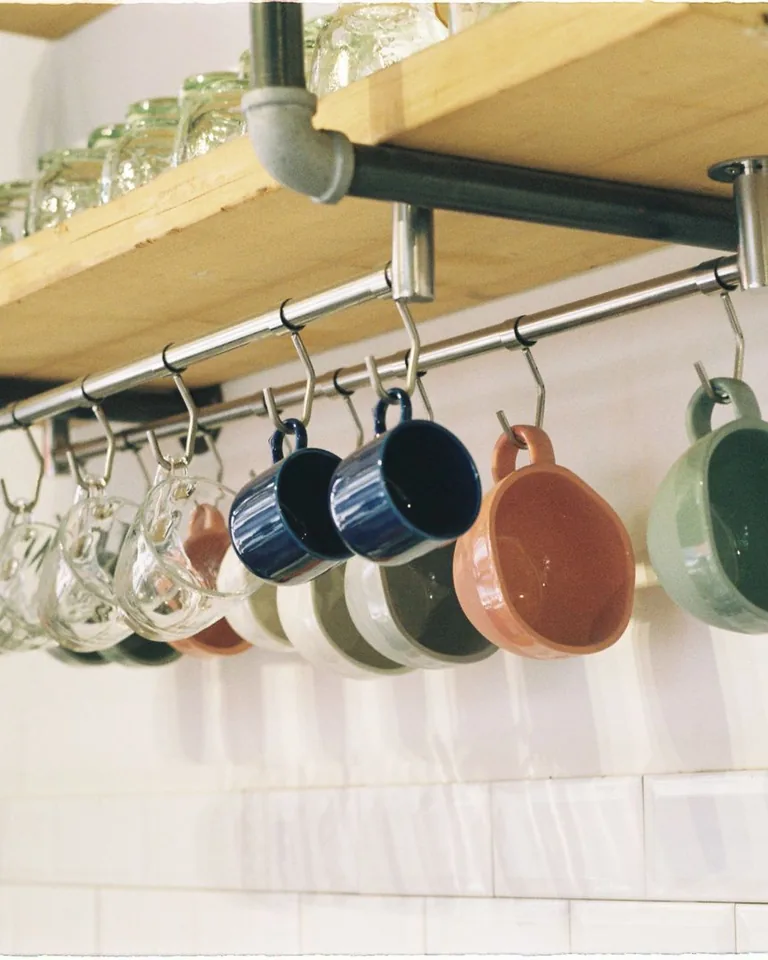
You will accumulate mugs — it’s a law of nature — and the coffee corner becomes a mug graveyard if you let it. The fix is a rail with hooks under a shelf or on the wall: it stores the six to eight mugs you actually use, keeps them visible and reachable, and reads instantly as café.
Pick the heavy ones with good handles, the kind that feel nice at 7am. The novelty mugs and the gift ones you feel guilty about can live in a cabinet elsewhere; they don’t all need to be here. A row of hanging mugs is also one of the few coffee-corner decorations that’s genuinely functional, which is the whole aesthetic to aim for.
10. Add Warmth with a Lamp and a Rug
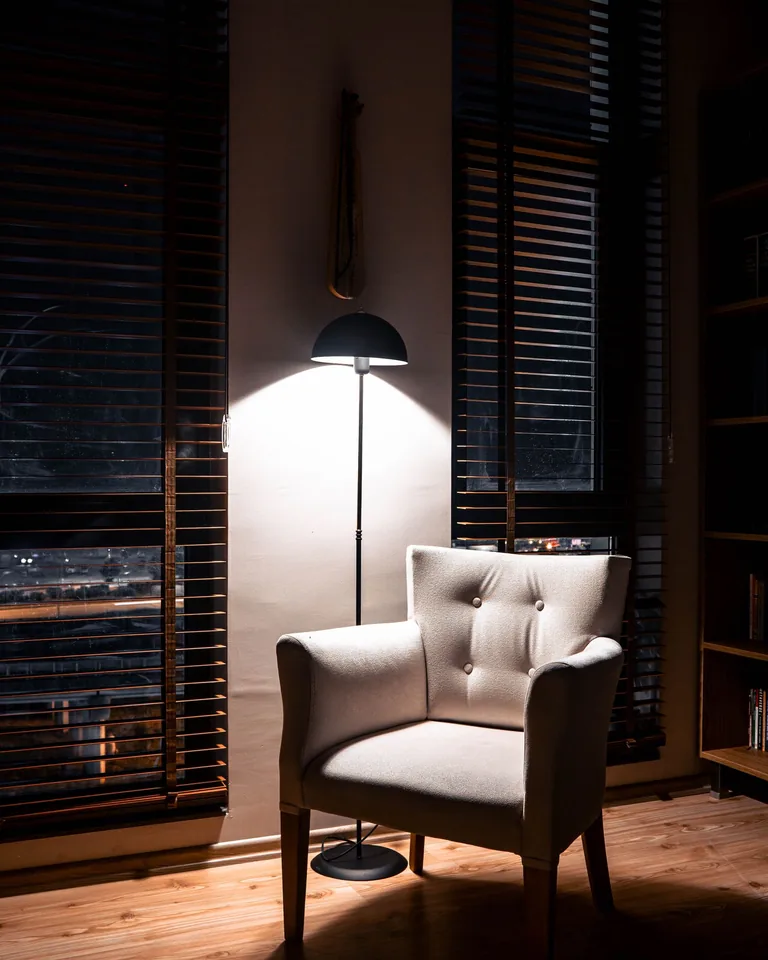
Here’s the soft part, but it’s true: a café feels like a café because of texture and light, not equipment. A little warm lamp instead of the overhead kitchen light, a small rug underfoot, a wooden board under the machine — these do more for the atmosphere than any appliance.
A small runner in front of the counter can genuinely make a strip of laminate feel like a destination, like a spot you go to rather than a counter you stand at. Add one framed print — nothing that announces COFFEE, just something you like looking at while the kettle boils — and a pothos or other neglect-proof plant. That’s the whole ambiance budget, and it’s under $50.
11. Personalize with Art, Not Clichés
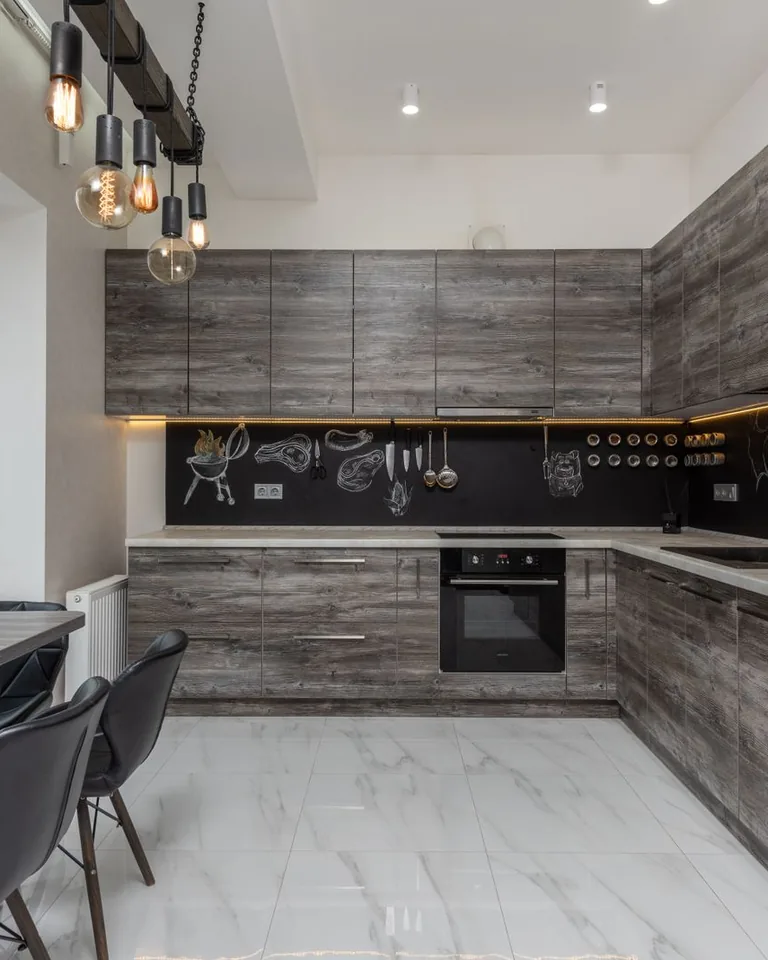
The wall-menu sign that says ESPRESSO ~ LATTE ~ CAPPUCCINO in cursive is the fastest way to make a home coffee station look like it’s trying too hard. A café doesn’t put up a sign telling itself what it sells. Personalize instead: framed café photos from your travels, a cherished recipe card, a small chalkboard with an actually-useful note like the wifi password for guests.
One or two personal pieces beat a wall of coffee-themed word art every time. If you love the chalkboard look, use it for something real — a rotating “menu” of the beans you’re currently brewing is charming and genuinely informative. Bare wall around the station? These ways to fill a blank wall without buying art keep the budget at zero.
12. Keep Beans Fresh: The Storage Rules That Matter
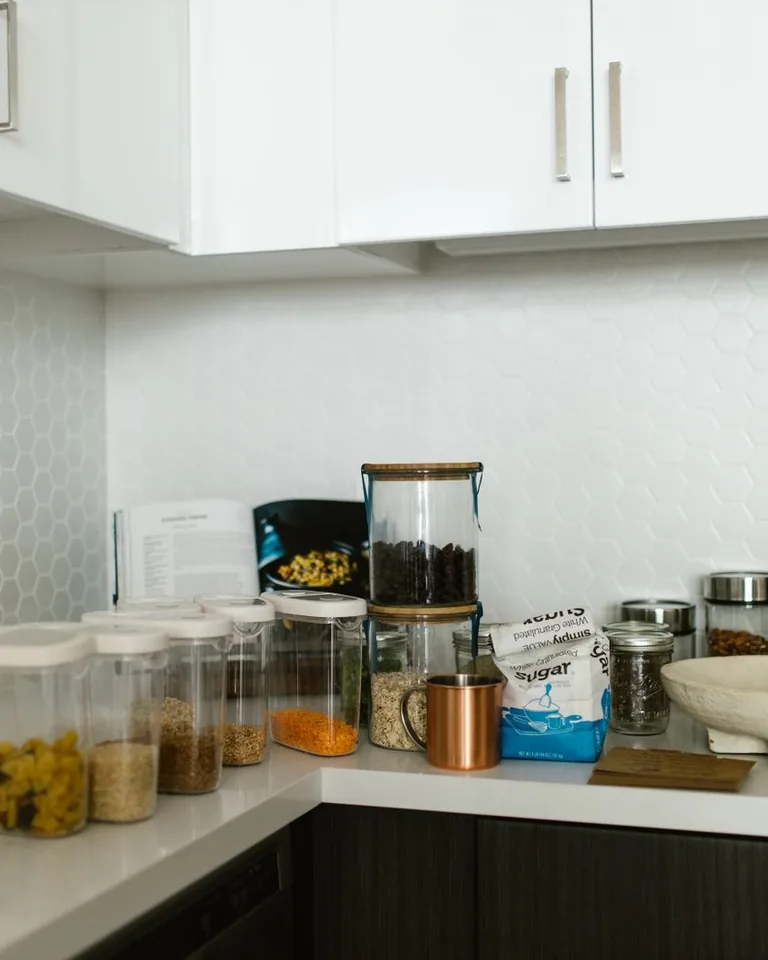
The gorgeous clear glass canisters full of coffee beans in every coffee-bar photo? They’re a trap. Beans hate light and air; in a clear jar on an open shelf they’ll go stale and flat within days, and your lovely corner will brew disappointing coffee. It photographs beautifully and tastes worse by day five.
Keep beans in something opaque and sealed, in a cupboard, and only put a small amount in the pretty jar if you must have the look — or fill the display jars with sugar, pods, or oat milk sachets instead. And remember the real hierarchy: fresh beans and a decent burr grinder (even a $40–$100 one) do more for your cup than a $700 machine paired with stale pre-ground beans. Grind right before you brew. That smell is half the café feeling, free. If clutter still creeps in despite your best tray, these small closet organization ideas apply the same containment logic everywhere else.
Frequently Asked Questions
What do you need for a home coffee bar?
The functional essentials: a brewer you actually like using (French press, pour-over, drip, or espresso), a burr grinder, fresh beans, your daily mugs, and storage for filters and sweeteners. The styling essentials: a tray to corral it all, hooks or a shelf for mugs, and one warm light source. Everything beyond that — the cart, the canisters, the art — is personalization, not requirement.
How do you make a coffee corner in a small kitchen?
Go vertical or go mobile. A rolling bar cart gives you a full station that wheels away when you need the space; floating shelves plus a wall-mounted drop-leaf table create a station with zero footprint. The key discipline is containment: one tray, one shelf, one defined zone. A good small coffee station is less about square footage than about not letting it sprawl — and cottagecore styling ideas show how small, layered vignettes punch above their size.
Where is the best place to put a coffee station at home?
Somewhere near an outlet, within a few steps of the sink, on a path you already walk every morning. The end of the kitchen counter, an awkward corner too small for anything else, a slice of the dining area, or even your home office all work. If the station is in a room you never enter before 9am, you won’t use it — convenience beats aesthetics every time.
How should I store coffee beans at home?
In an opaque, airtight container, away from light and heat — a cupboard, not the countertop. Buy whole beans in quantities you’ll use within two to three weeks, and grind only what you need right before brewing. Those clear display canisters are fine for sugar or pods, but they’re the enemy of fresh beans.
How much does it cost to set up a coffee bar at home?
A genuinely good setup runs about $80–$150: a cart or claimed shelf, a $40–$100 burr grinder, a French press or pour-over cone, a tray, some hooks, and beans from a local roaster. Most of that is the grinder, and it’s the money that actually improves the cup. You can spend many hundreds more on espresso machines and ceramics — both are fine, but spend where the cup gets better and decorate with whatever’s left.
The corners that work are the ones that fight clutter on purpose and put the coffee first. Pick your spot, buy the grinder before the sign, and give yourself one good mug — the one that makes the whole two-minute ritual feel like a small treat.