19 Small Walk-In Pantry Ideas That Make Tiny Kitchens Work Harder
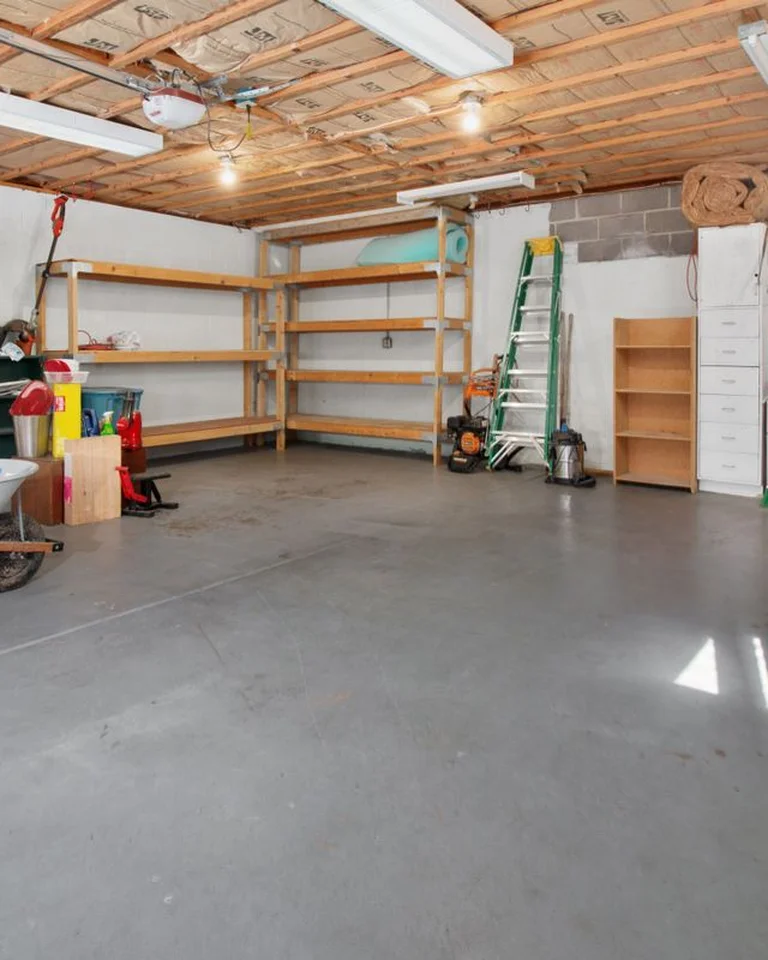
A small walk-in pantry works when three things line up: a layout that fits the room's shape, shelves shallow enough that nothing hides, and a zone for every category of food. Get those right and even a 4-by-4-foot pantry can hold a family's groceries without the avalanche. Below are 19 ideas that make tight pantries store more, stay visible, and stay organized — from layout choices to lighting and labeling.
Line shelves along a single wall

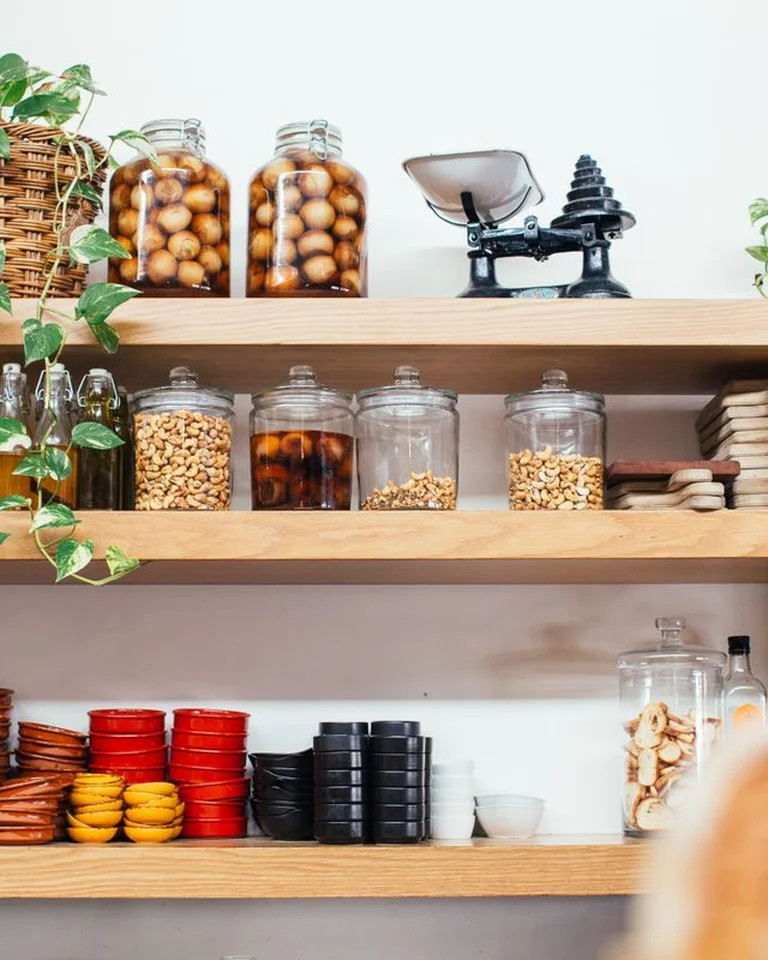
If your pantry is narrow — too tight for shelving on both sides — put storage on one wall only and leave the rest open. A single-wall layout keeps every item in one sightline, so you never lose a can behind another can. It suits apartment kitchens, hallway nooks, and converted closets. Keep the walkway side completely clear: no bins on the floor, no hooks at hip height. Everything stays visible and reachable in one pass.
Try a galley layout with a center walkway

When the room is wide enough for shelves on two opposite walls, a galley layout doubles your storage in the same footprint. Keep at least 30 inches of walkway between the shelf fronts so two people can pass or one person can crouch comfortably. If the room is on the tight side, make the shelves on one side shallower — deep storage on the dominant wall, slim storage opposite. Put the items you grab daily on the side closest to the kitchen door to shorten every trip.
Wrap shelves around the corner in an L shape

Two adjacent walls of shelving give you generous storage without boxing in the center of the room. The L shape fits square-ish pantries that feel awkward with a single wall. The corner itself needs a plan, though — it is the classic dead zone. A turntable or a simple corner basket keeps that spot working instead of becoming the place where old cake mix goes to expire.
Go U-shaped when the room allows it
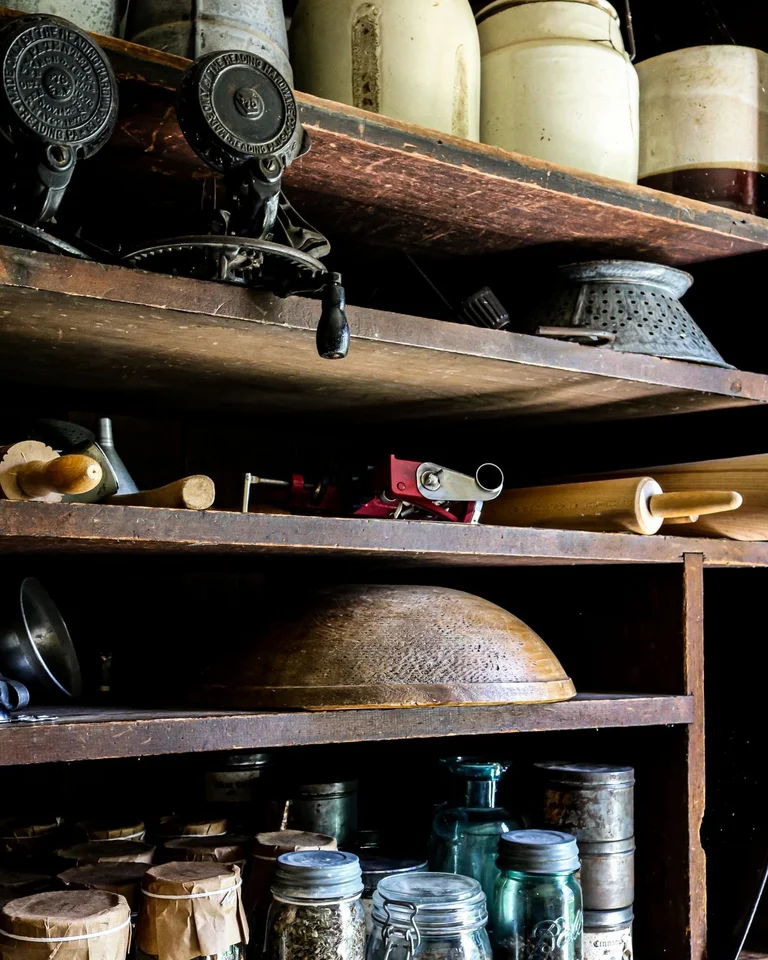
A U-shaped pantry lines three walls with shelves and delivers the maximum storage per square foot of any layout. It only works if the room is wide enough to keep a comfortable walkway after all three walls are loaded — measure first, because a U that is too tight feels like a corridor of cans. Reserve the far wall, the one you see when you walk in, for backstock and bulk items you grab least often.
Build shelves to the ceiling and keep a step stool handy
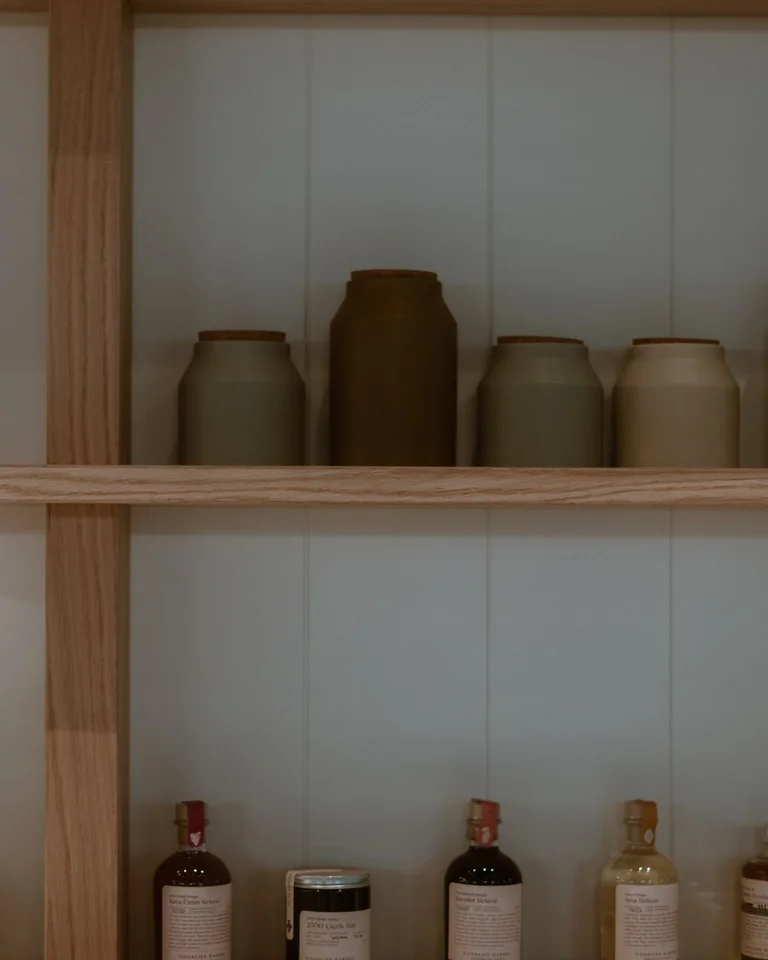
Floor-to-ceiling shelving is the single biggest storage gain in a small pantry, because most pantries waste the top two feet entirely. Dedicate the highest shelves to backstock, seasonal serving pieces, and bulk paper goods — things you need a few times a year, not a few times a week. Daily cooking staples live between knee and eye level. Hang a slim folding step stool on the inside of the door or on an empty wall patch so reaching the top is a five-second job, not an excuse to leave things on the counter.
Use adjustable shelf tracks instead of fixed shelves
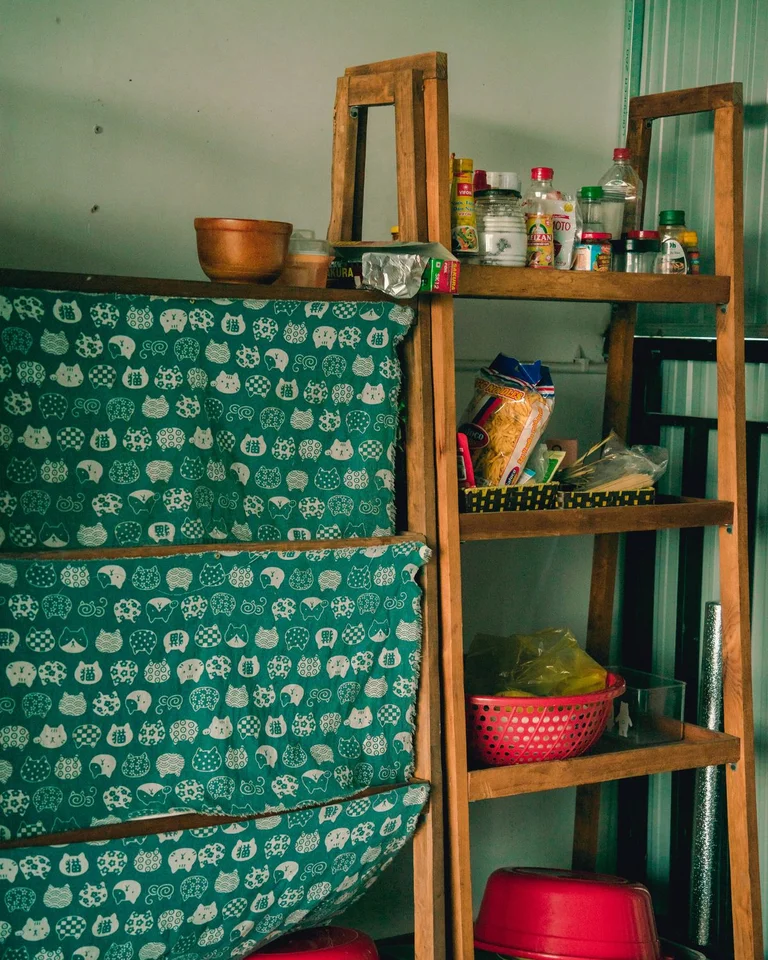
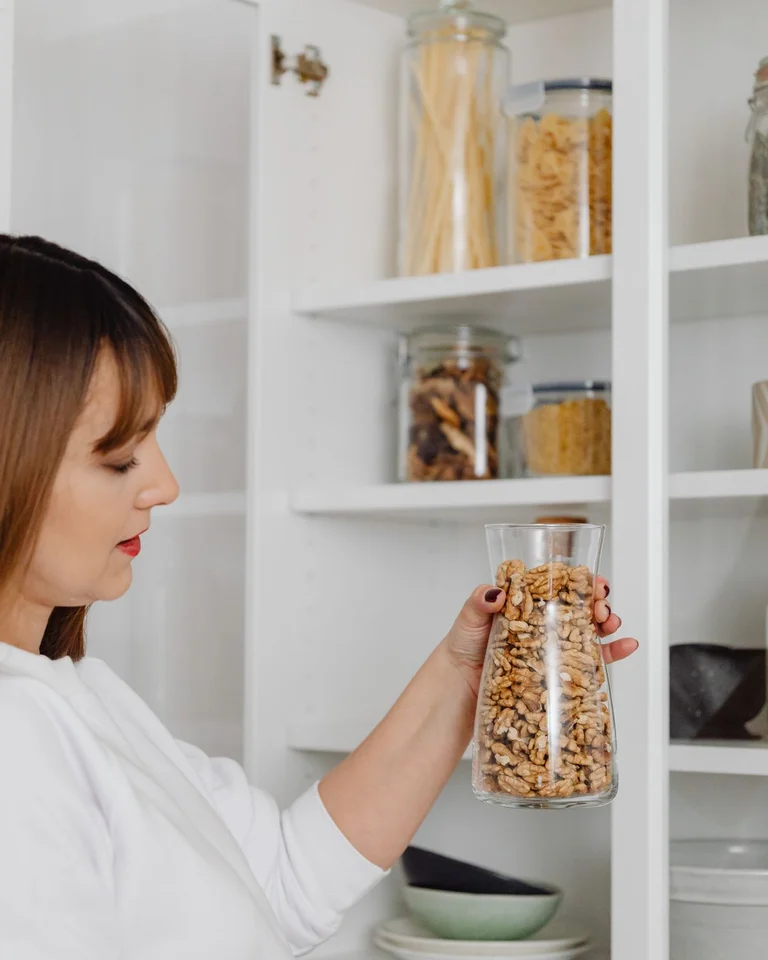
Fixed shelves lock you into spacing that stops making sense the moment your shopping habits change — tall cereal boxes one month, a bulk olive oil haul the next. Shelf standards with clip-in brackets let you re-space everything in minutes without tools or new lumber. Leave a couple of spare bracket positions so future adjustments don't mean a hardware store run.
Keep shelf depth between 10 and 14 inches
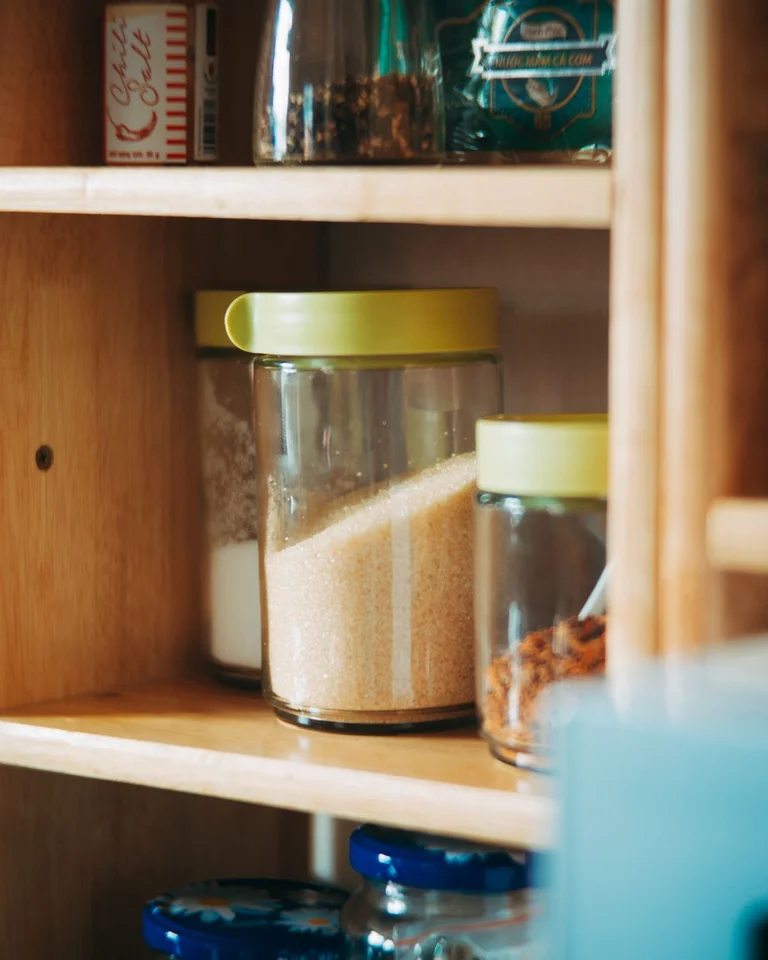
Deep shelves feel generous but they create a second row you cannot see, and that hidden row is where food expires. Ten to fourteen inches holds a single row of cans, jars, and boxes with everything facing forward. If your pantry already has deep shelves, don't rebuild — add slide-out baskets or risers (ideas 8 and 13) to bring the back row forward.
Add pull-out sliding baskets to deep shelves

A deep shelf with baskets on glides behaves like a set of drawers: pull and the entire contents come to you. This is the fix for lower shelves where bending and digging gets old fast. Wire baskets keep things visible and light; solid bins hide clutter better. Label the front of each basket so the system survives the rest of the household.
Put slim racks on the back of the door
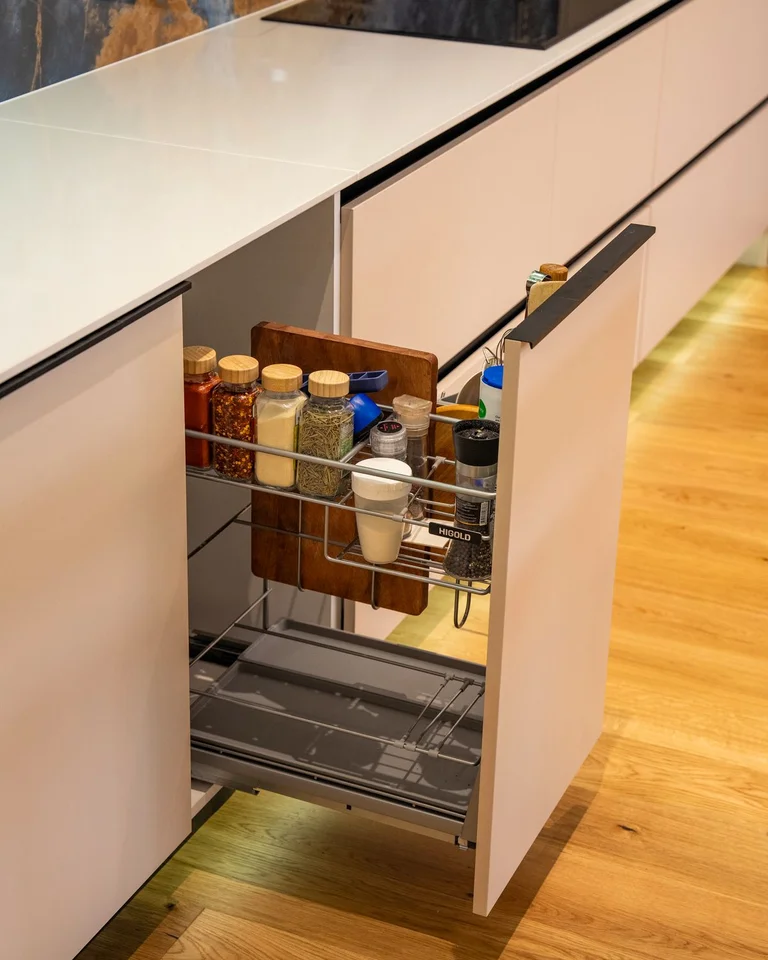
The inside of the pantry door is free storage most people ignore completely. A shallow over-the-door rack or a set of mounted rails holds spices, foil and wraps, seasoning packets, and small bottles — exactly the fiddly items that clutter shelves. Check the door's swing clearance and the rack's depth first so the door still closes flush against loaded shelves.
Swap a swing door for a sliding or pocket door
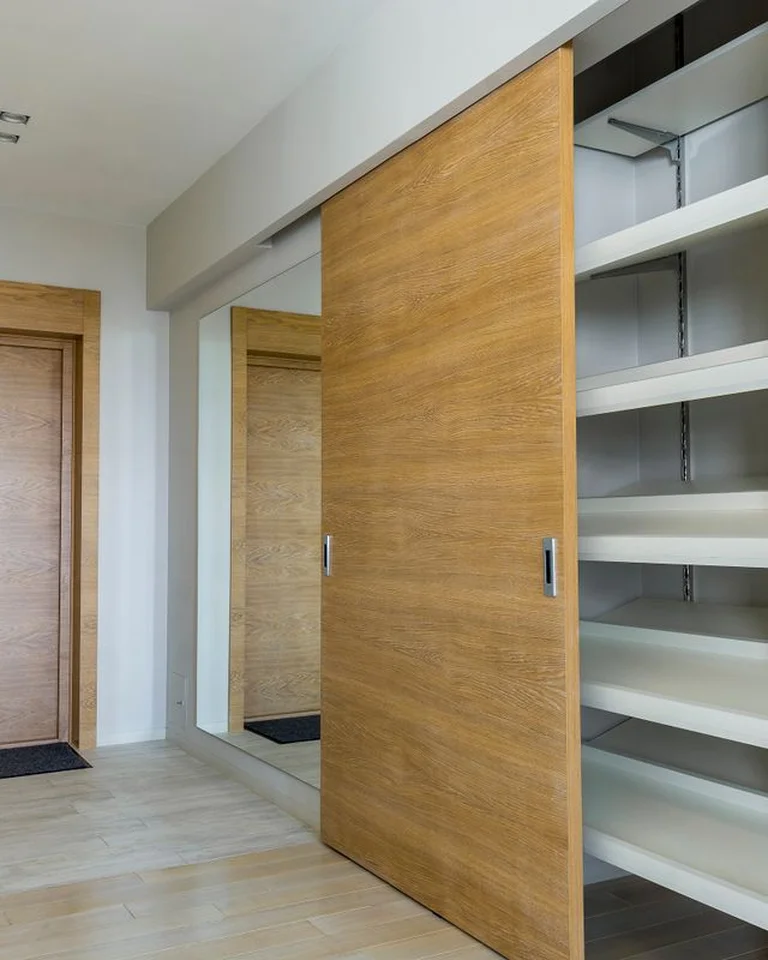
A standard swing door needs a clear arc of floor space to open, and in a small pantry that arc is often the difference between one wall of storage and two. A pocket door disappears into the wall cavity; a surface-mounted sliding door glides along the wall instead. Either option frees the entire doorway zone for slim shelving or hooks. Pocket doors take more planning when the wall holds plumbing or wiring, so check first. A barn-style slider on an exterior track is the simpler retrofit and adds character for relatively little money.
Decant dry goods into clear airtight containers

Bags collapse, boxes go stale, and half of them hide what's inside. Moving flour, rice, pasta, cereal, and snacks into clear airtight containers keeps food fresher and turns the shelf into an inventory you can read at a glance. Square and rectangular containers tile together with almost no wasted gaps; round ones look nice but leave dead space. Wash and fully dry containers before refilling, and keep the original cooking directions until you know them by heart.
Divide the pantry into zones by category

An organized pantry is really just a set of neighborhoods: breakfast, baking, snacks, canned goods, dinner staples, backstock. Assign each category a shelf or a section and put everything back in its zone. Add one "use first" bin for items nearing their date — it quietly cuts food waste because the almost-expired box of crackers stops hiding behind the new one.
Label everything, even the obvious


Labels are what keep a pantry organized after the first month, when the initial enthusiasm fades. Everyone in the house can put things back in the right spot without asking. Use printed or chalk labels on bins and the shelf edge for categories; chalk or dry-erase works best for containers whose contents rotate. Keep wording short — "Pasta," not "Gluten-Free Penne (Backup)."
Give spices a tiered corner they deserve

Spices are the worst offenders for shelf chaos: small, numerous, and impossible to find in a single row. A stepped riser or a small turntable in one dedicated corner turns them into a readable staircase. Group by how you cook — everyday seasonings front and center, specialty blends behind — rather than alphabetically, unless your household actually maintains that.
Hide small appliances behind a pantry "garage"

Toasters, blenders, and air fryers eat counter space in small kitchens. A low shelf or a dedicated cabinet section inside the pantry gives them a home with the door closed, and the kitchen instantly looks bigger. If your pantry has an outlet — or you can add one — you can even run the coffee maker in there and skip the counter clutter entirely. Keep appliance cords wrapped and the shelf clear of food crumbs.
Light every shelf with LED strips or motion lights
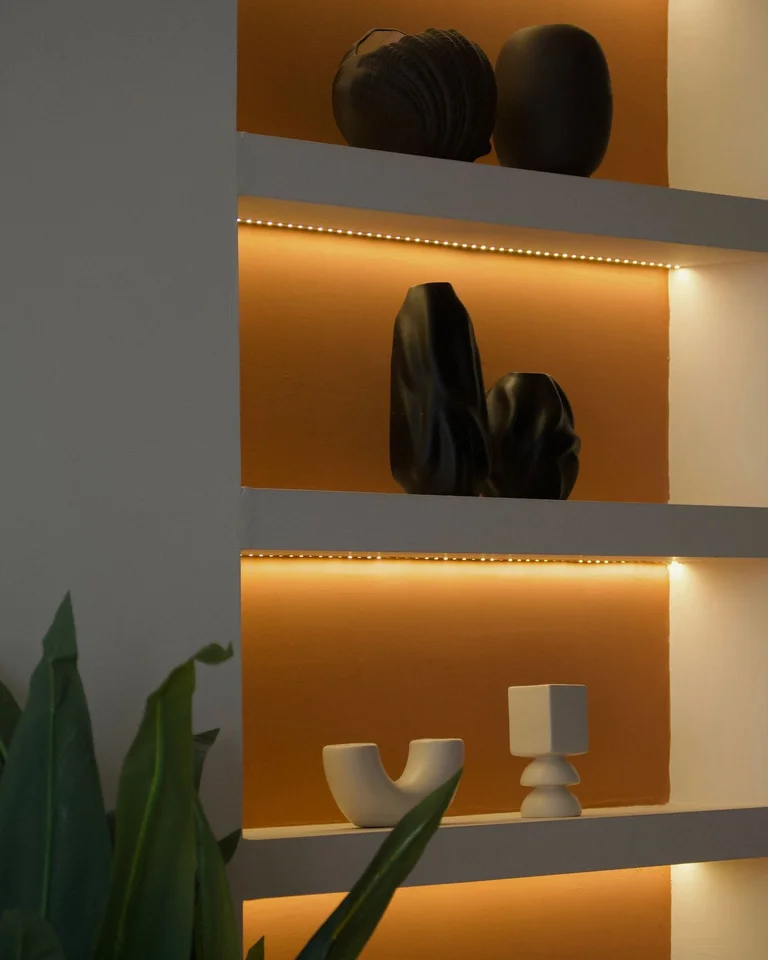
A dim pantry makes labels unreadable and corners into black holes. Self-adhesive LED strips under each shelf put light exactly where your eyes need it, and battery-powered motion-sensor pucks do the same job with no wiring at all. Warm white light (around 3000K) reads labels accurately and makes food look appetizing; cool blue light flatters nobody's tomato sauce.
Park a rolling cart in the leftover gap
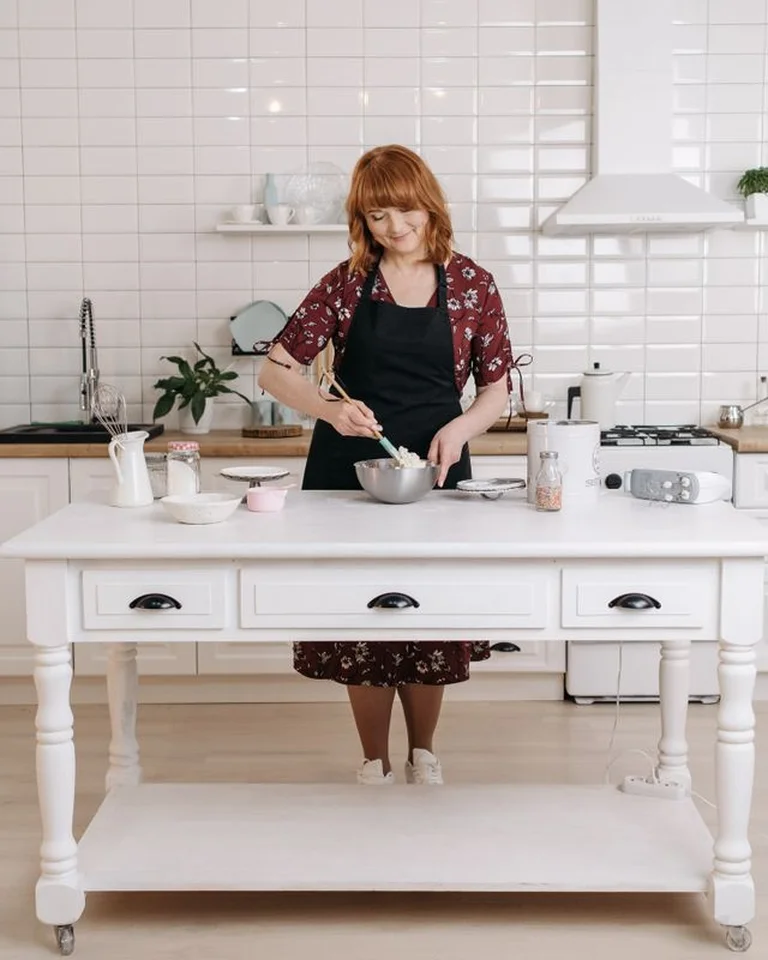
A narrow rolling cart slides into the awkward gap between shelving and wall, beside the door, or at the end of a galley — space that fits nothing else. Load it with the week's most-used cooking oils, snacks, or lunch-packing supplies, and wheel it to the counter when you cook. It doubles as a restocking shuttle on grocery day: load at the car, roll to the pantry, shelve in one trip.
Keep a small landing counter for unpacking
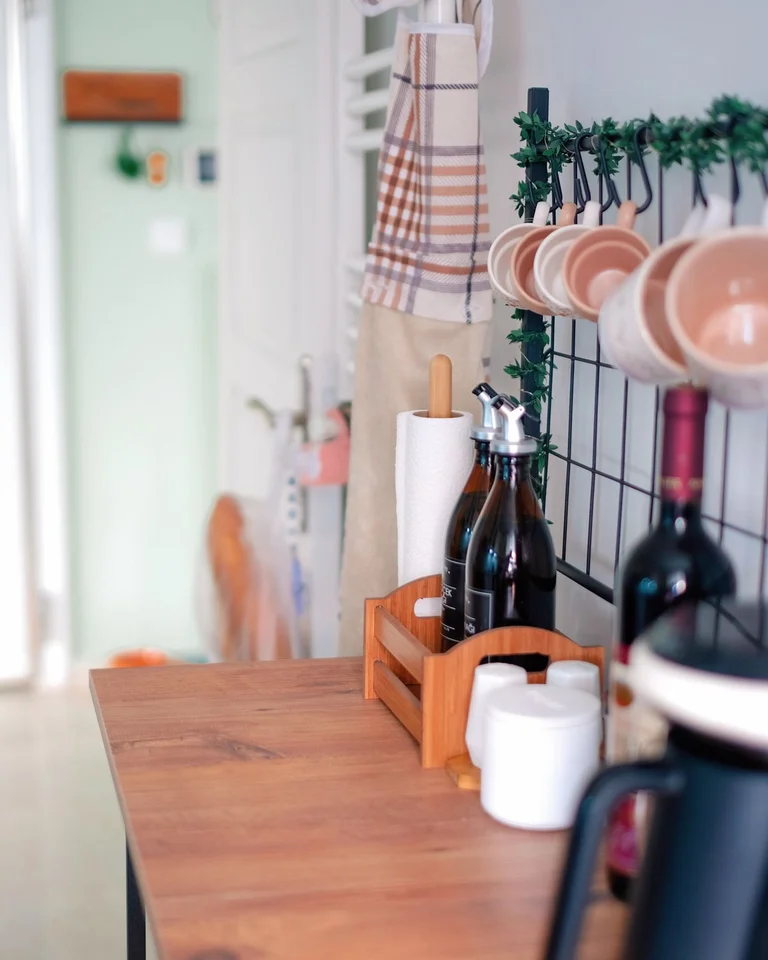
Even a 12-inch-deep counter at the end of a shelf run changes how the pantry functions. It is the staging area for grocery bags, the spot to decant bulk buys into containers, and a temporary home for the slow cooker on busy days. A butcher-block remnant or a sturdy shelf board on brackets costs little and handles real weight. Keep it mostly clear — a landing zone buried under clutter is just another shelf.
Set reach zones for the people who use them
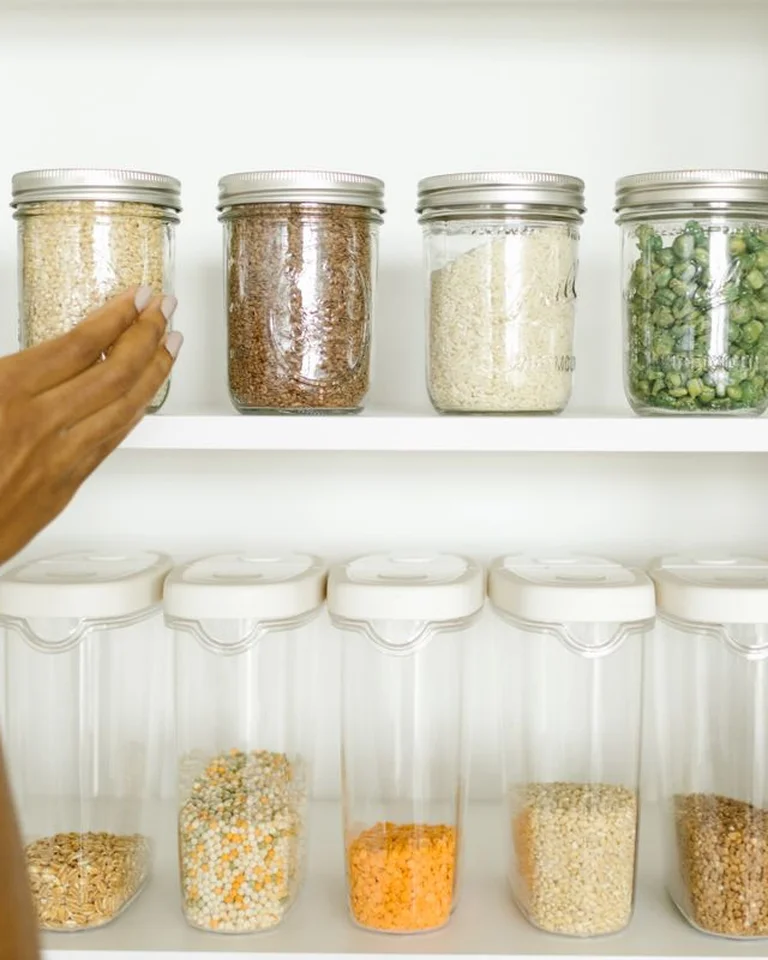
Store by frequency and by person: daily items between knee and eye level for whoever cooks most, kids' snacks on a low shelf they can reach without climbing, heavy items (bulk drinks, big pots) on the lowest shelf for safety. Top shelves stay reserved for backstock and rarely used gear. When every person in the house can reach what they need without a stool, the pantry stops being one person's system and starts being the household's.
Small Walk-In Pantry FAQs
How deep should walk-in pantry shelves be?
Ten to fourteen inches is the sweet spot for most pantries — deep enough for cans and cereal boxes in a single visible row, shallow enough that nothing hides behind. Go deeper only if you add pull-out baskets or drawers to bring the back row forward.
What is the minimum size for a walk-in pantry?
A roughly 4-by-4-foot space can work as a small walk-in with single-wall shelving. Anything narrower is usually better planned as a reach-in pantry with pull-out storage rather than a true walk-in, since you need room to stand and turn comfortably.
How much does a small pantry makeover cost?
A DIY refresh — adjustable shelf tracks, baskets, containers, labels, and stick-on LED lights — typically runs a few hundred dollars. Custom built-ins with cabinetry and wiring cost several times more. Start with layout and containers; add built-ins only if the layout proves itself.
Making a Small Pantry Work for You
Small walk-in pantries reward planning more than square footage. Pick the layout that fits your room's shape, keep shelves shallow and adjustable, give every category a labeled zone, and light it so you can actually see what you own. Do that, and the smallest pantry in the house becomes the hardest-working room in it.