18 Dark Academia Storage Ideas for Small Bedrooms That Stay Clutter-Free
Small dark academia bedrooms have a storage problem, not a style problem. The look demands books, textiles, candles, and collected objects, but a tiny room punishes every stray pile. The fix is not to own less of what you love. It is to give everything a home that suits the aesthetic: tall narrow shelves instead of wide ones, furniture that hides storage inside it, and small rituals like labeled boxes and decanted jars that keep surfaces clear. Below are 18 storage and organization ideas built for small bedrooms with a moody, bookish soul.
What this guide covers: space-saving storage furniture, hidden compartments, shelf and drawer organization, and display ideas that keep a small dark academia bedroom tidy without diluting the atmosphere. Every idea works in a rental-friendly way where possible.

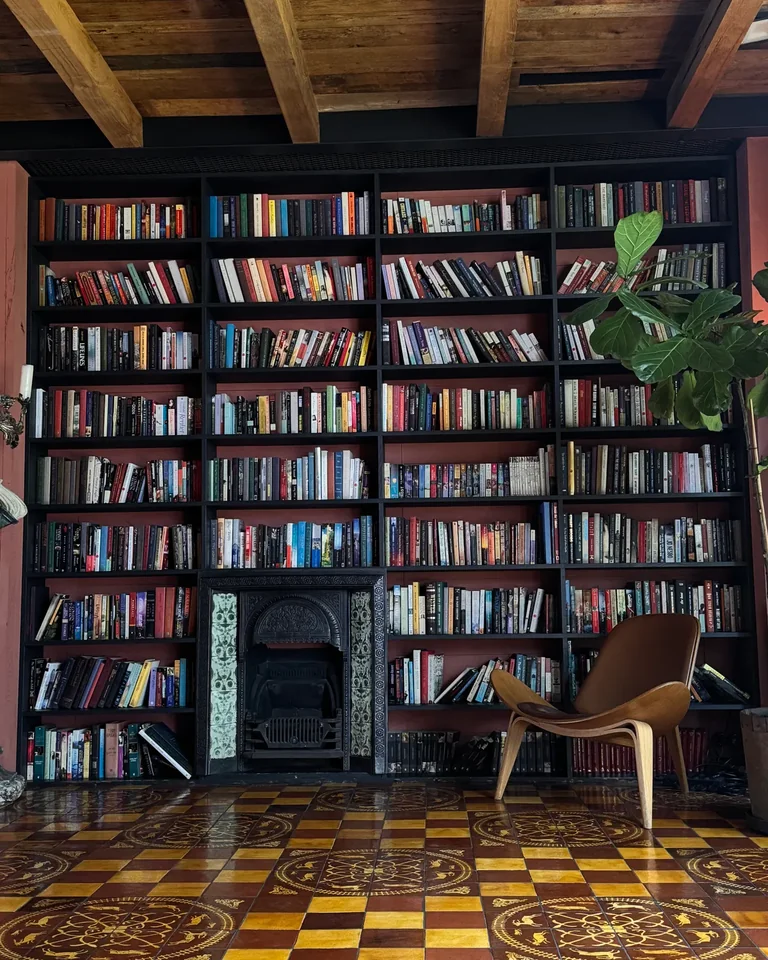
1. Go Tall With One Narrow Bookcase
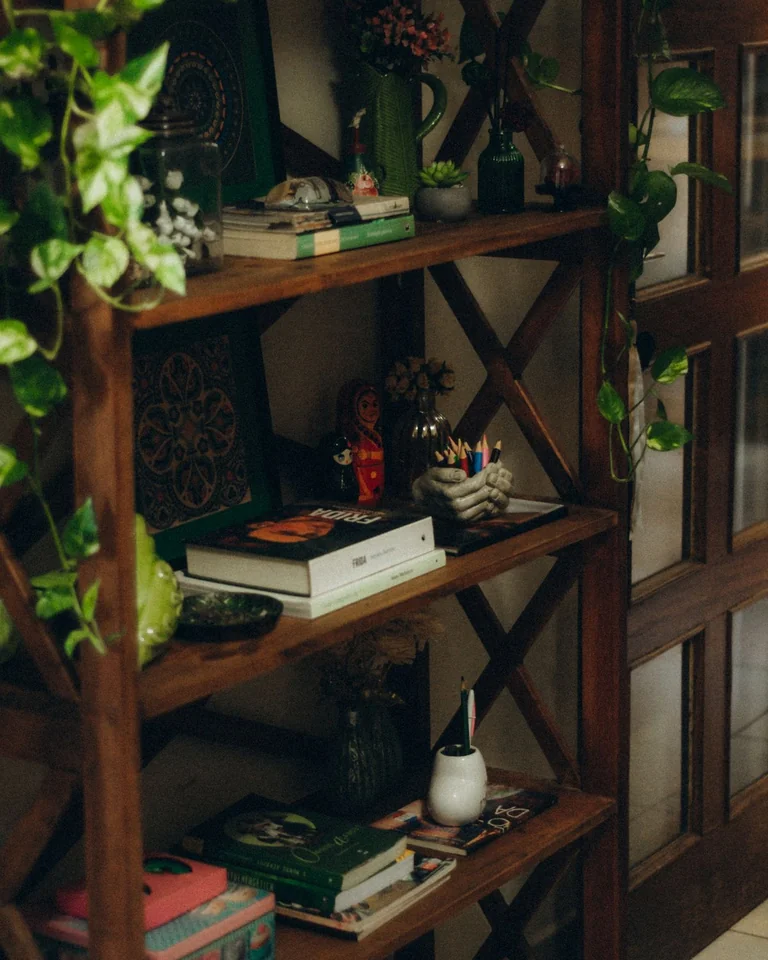
Books are the heaviest visual and physical load in a dark academia room, so the bookcase decision matters most. A tall, narrow unit draws the eye upward, which makes the ceiling feel higher, and it claims a fraction of the floor space a wide bookcase would. Choose dark wood with a slim profile and let it run as close to the ceiling as you dare. The vertical line does more for the room’s proportions than any other single piece.
Practical tip: Anchor it to the wall, especially in a rental where floors may be uneven. A tall narrow case is top-heavy once loaded with hardcovers.
2. Float Shelves to Reclaim Floor Space

Floating shelves hold books, framed prints, and small objects while using zero floor space, which is exactly the trade a small bedroom needs. Run two or three above the desk or beside the bed where a bookcase would jut into the walking path. Keep the styling slightly imperfect: a row of upright books, one horizontal stack, one object. The shelf becomes storage and wall decor at once.
Practical tip: Check the weight rating before loading shelves with hardcovers. Books are far heavier than decor, so use proper wall anchors, not just the screws in the box.
3. Let a Vintage Trunk Be Your Nightstand
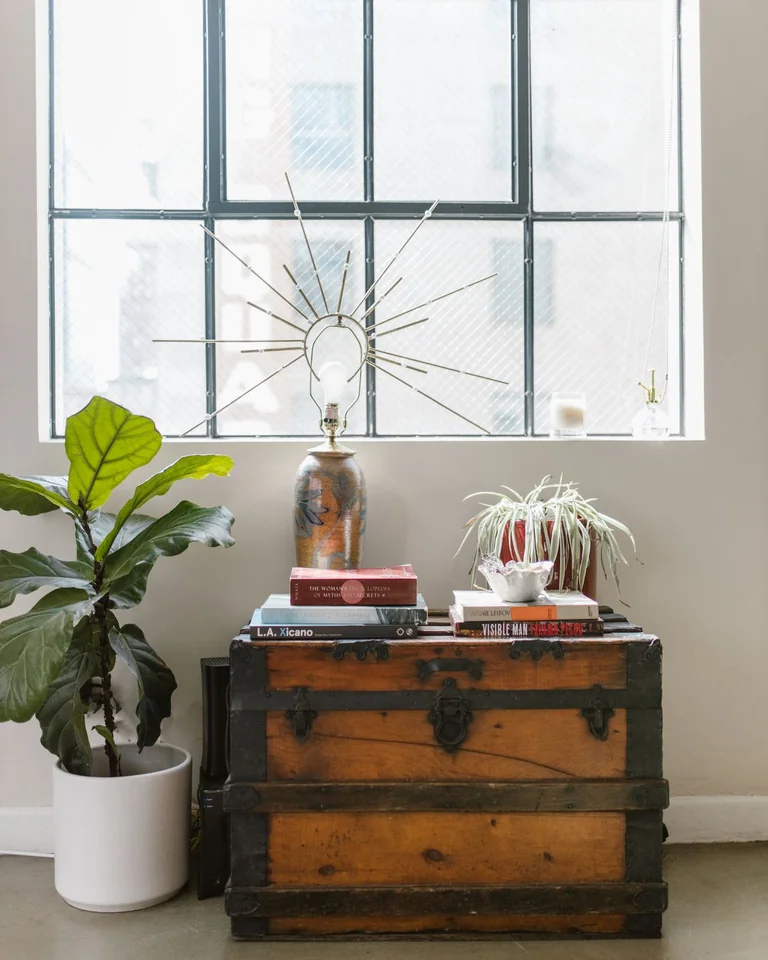
A trunk beside the bed is a nightstand with a secret: lift the lid and there is room for spare bedding, off-season clothes, or the books you swear you will read next month. Antique and vintage trunks were built to be genuinely useful, and their worn wood and metal hardware read as intentional dark academia rather than improvised storage. One trunk replaces a nightstand and a storage bin in a single footprint.
Practical tip: Line the inside with acid-free tissue or a cotton sheet before storing textiles, since old trunk interiors can be rough on fabric.
4. Slide Flat Boxes Under the Bed
The space under the bed is the largest unused storage zone in most small bedrooms, and it costs nothing to claim. Low, flat boxes with lids swallow spare sheets, winter layers, and the gift wrap you never admit to owning. Because they disappear completely under the bed skirt or frame, they add capacity without adding a single visible object to the room. Label the outward-facing end of each box so you can find things without dragging everything out.
Practical tip: Measure your bed’s clearance before buying. Many frames sit lower than standard storage boxes, and a box that sticks out ruins the effect.
5. Choose an Antique Wardrobe Over a Built-In Closet
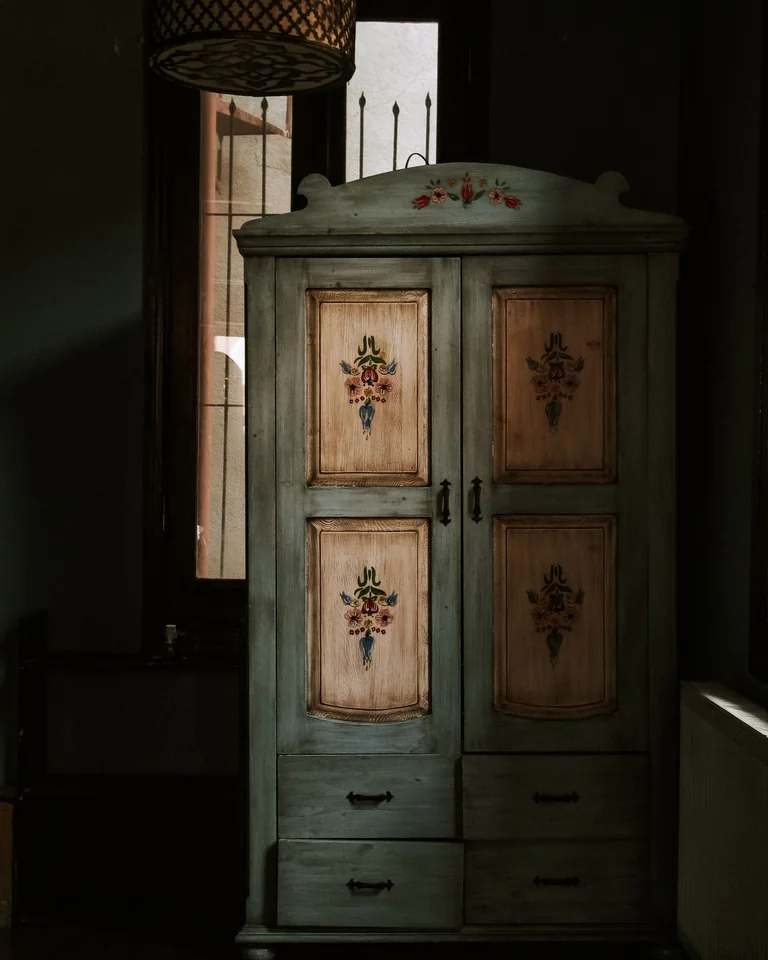
If your room lacks a real closet, a single antique wardrobe solves clothing storage while acting as the room’s substantial wood anchor. The carved details and aged finish do the decorative work that a flat-pack wardrobe never will, so you get storage and atmosphere from one purchase. Inside, add a hanging rod at two heights or stackable shelf inserts to double what the original interior was designed to hold.
Practical tip: Check the depth before committing. Antique wardrobes are often shallower than modern ones, so measure your bulkiest hangers against the interior, not just the exterior.
6. Pick a Writing Desk With Drawers You Will Actually Use

The scholarly heart of a dark academia bedroom is somewhere to read and write, and a desk with real drawers keeps that surface clear. Pens, journals, chargers, and correspondence all vanish into drawers instead of colonizing the desktop. A small vintage writing desk fits a corner or a window wall, and its drawers mean the top stays styled with just a lamp, a book stack, and one beautiful object.
Practical tip: Give each drawer one job: writing tools, paper and notebooks, tech and chargers. Three shallow organized drawers beat one deep chaotic one.
7. Decant Small Essentials Into Apothecary Jars
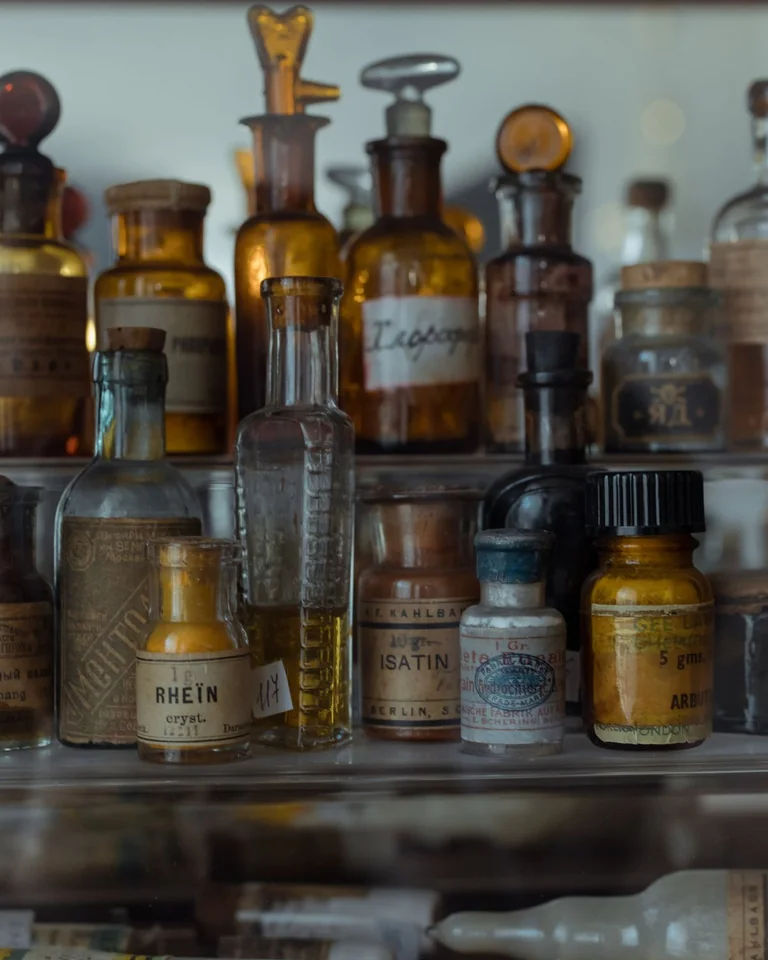
Cotton pads, hair ties, paper clips, spare buttons: the tiny things that make surfaces look messy. Decant them into glass apothecary jars and the clutter becomes a display. The glass-and-brass combination looks deliberately curated on a dresser or nightstand, and you can see at a glance what needs refilling. Group jars in odd numbers on a small tray so they read as one arrangement instead of scattered bottles.
Practical tip: Keep jars you open daily at the front and purely decorative ones at the back. Function first, then styling.
8. Park a Storage Ottoman at the Foot of the Bed
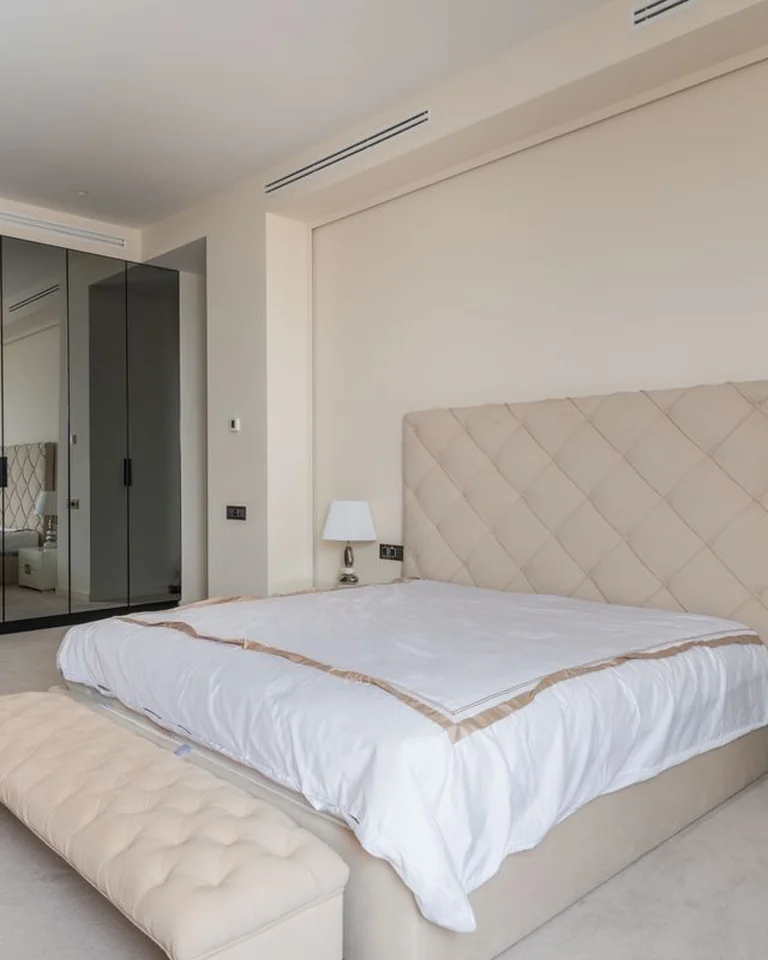
A storage ottoman at the foot of the bed is a seat, a footrest, and a blanket chest in one. It absorbs the throw blankets and spare pillows that otherwise end up draped over every chair, and it gives you somewhere to sit while putting on shoes. Choose one in a deep tone like oxblood, forest, or charcoal velvet so it contributes to the palette instead of interrupting it.
Practical tip: Pick an ottoman with a hinged lid rather than a lift-off top. Lift-off lids always end up leaning against the wall, which defeats the tidy purpose.

9. Corral Soft Clutter in Wicker Baskets

Not everything deserves a drawer. Throws, magazines, charging cables, and the book you are halfway through need somewhere to land that is not the floor. A lidded wicker or woven basket beside the bed or under a bench gathers soft clutter into one textured shape. The natural weave adds warmth against dark walls and heavy wood, which keeps the room from feeling flat and monochrome.
Practical tip: One basket per category. A single giant basket becomes a junk drawer you can see into, while two or three smaller ones stay honest.
10. Label Boxes Like a Library Archive

Labels are the difference between storage and a pile of boxes you are afraid to open. Borrow the library’s system: short, specific, honest labels on every box, bin, and drawer front. “Winter scarves” beats “misc.” Handwritten tags on kraft paper or small brass label holders suit the aesthetic far better than a label maker, and they make putting things back as easy as taking them out.
Practical tip: Date seasonal boxes lightly in pencil on the bottom. When you rotate them twice a year, you will know exactly what is due for a clear-out.
11. Lean a Ladder Shelf Into an Awkward Corner

Corners in small bedrooms tend to collect dead space or dead plants. A leaning ladder shelf turns one into graduated storage: deep shelves at the bottom for baskets and books, shallow ones at the top for candles and small frames. Because it leans rather than stands, it needs almost no floor depth, and the angled silhouette breaks up the boxy lines of the bed and wardrobe.
Practical tip: Secure the top to the wall with a discreet bracket. Ladder shelves look casual but should never be casual about tipping.
12. Give Every Drawer a Labeled Home

A chest of drawers only stays organized if each drawer has a defined purpose. Assign categories the way an archive would: correspondence, stationery, small electronics, personal items. Small drawer dividers or shallow trays keep categories from bleeding into each other, and a tiny label on each drawer front means guests and future-you both know the system. The outside stays handsome dark wood; the inside stays ruthlessly practical.
Practical tip: Do one drawer at a time, starting with the messiest. Empty it completely, discard what is broken or expired, then rebuild with dividers.
13. Zone Your Shelves: Books, Then Objects, Then Light
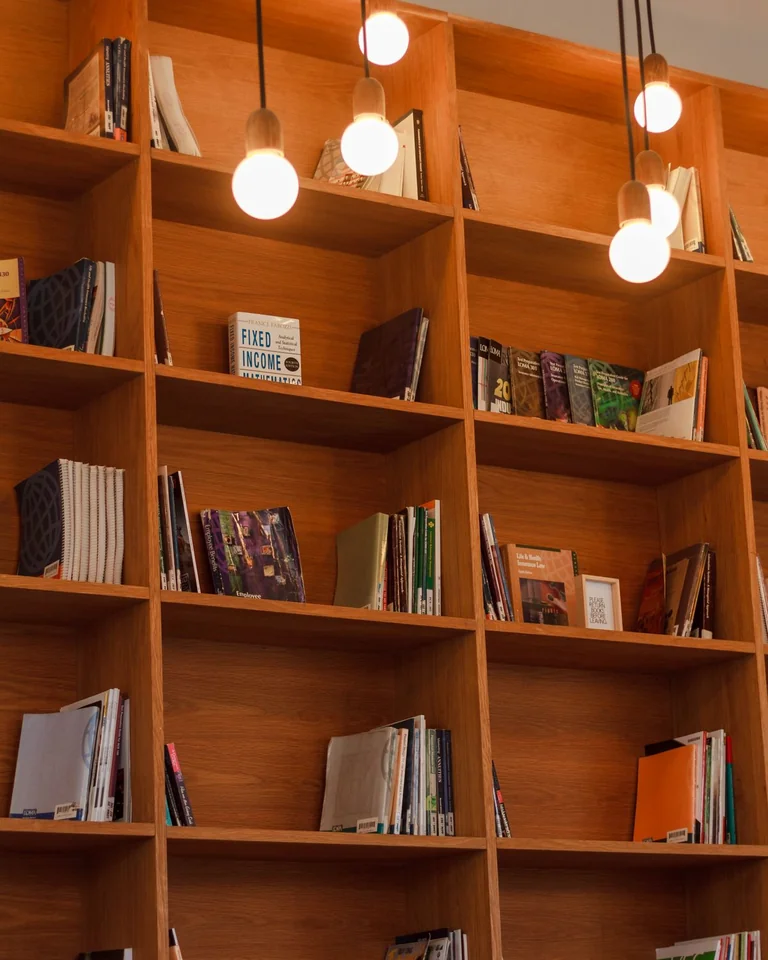
Shelves look cluttered when books, objects, and candles are randomly mixed. Zone them instead: dedicate the largest stretches to books arranged upright and in small horizontal stacks, reserve one or two shelves for objects like busts or framed prints, and leave breathing room around anything lit by a candle or lamp. The repetition of book-object-light across shelves creates rhythm, and rhythm reads as order even when every shelf is full.
Practical tip: Leave about a fifth of each shelf empty. Negative space is what separates a curated library wall from a storage unit.
14. Keep Jewelry and Keepsakes in One Vintage Box
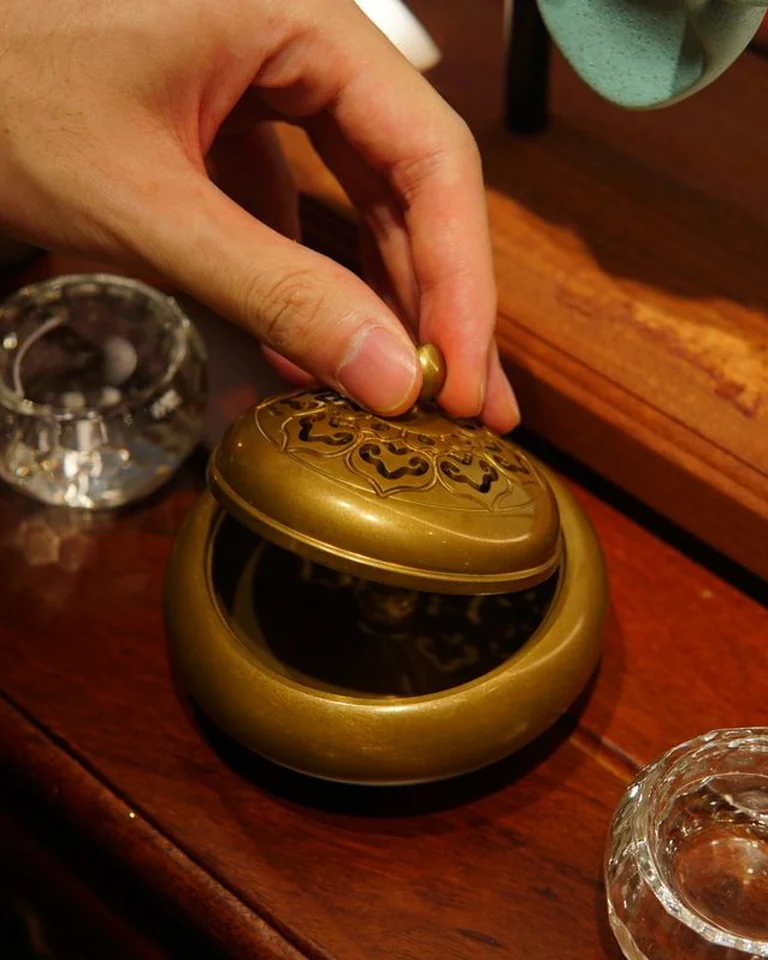
Rings on the nightstand, necklaces tangled in a drawer, cufflinks migrating between rooms: small valuables scatter fastest. One vintage jewelry box with compartments ends the migration. Keep it where you get dressed, not where you sleep, so the morning routine has a single start and end point. A box with a lid also protects silver and brass pieces from the dust that dark rooms seem to generate.
Practical tip: Add small anti-tarnish strips if you store silver. They are invisible, cheap, and save hours of polishing.

15. Hang Clothes on Matching Wooden Hangers

An open wardrobe or visible clothing rack lives or dies on its hangers. A matched set of wooden hangers turns hanging clothes into a calm, uniform row instead of a jumble of wire and plastic. Wood suits the aesthetic, supports garment shoulders properly, and makes the whole closet look deliberate even when it is full. Hang by category, then by tone, so getting dressed feels like browsing a small archive.
Practical tip: Standardize in one purchase rather than replacing hangers piecemeal. A half-converted closet looks messier than the wire hangers did.
16. Mount a Peg Rail for Robes, Bags, and Hats
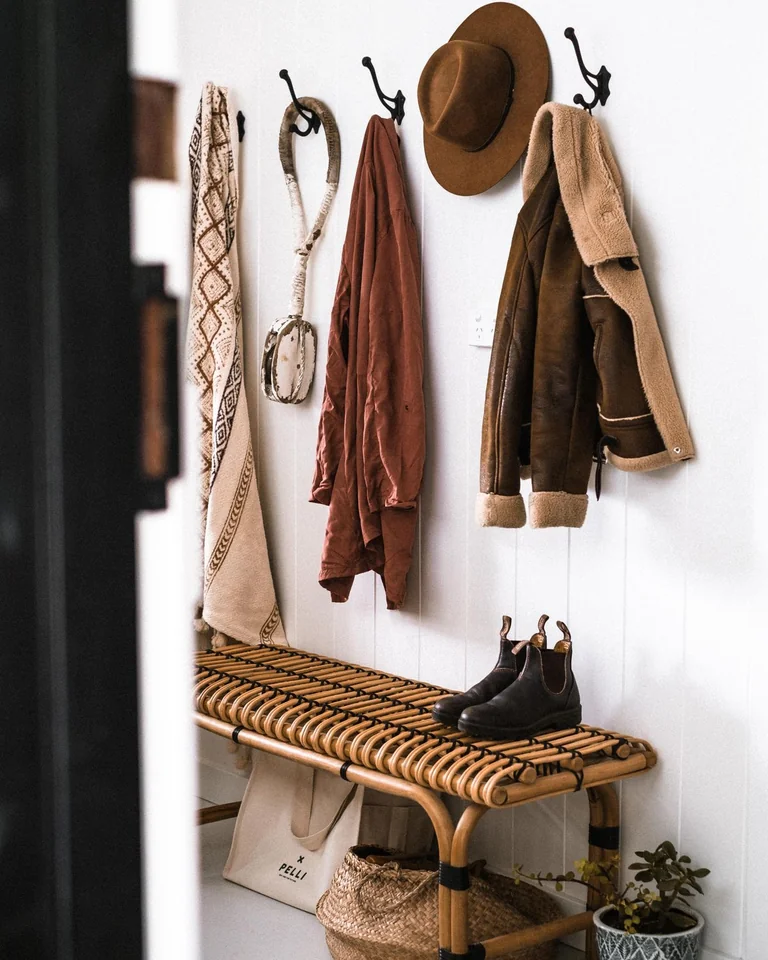
A wall-mounted peg rail beside the door or wardrobe catches the things that never make it into the closet: the robe, the tote bag, tomorrow’s coat. Hooks use wall space that furniture cannot, and a dark wood or brass rail looks like a period detail rather than an organization product. Limit yourself to the number of pegs on the rail; when every peg is full, something has to be put away properly.
Practical tip: Mount the rail at a height you can reach without stretching while holding something. Convenience is what keeps the floor clear.
17. Box Up Letters and Photos in Keepsake Boxes
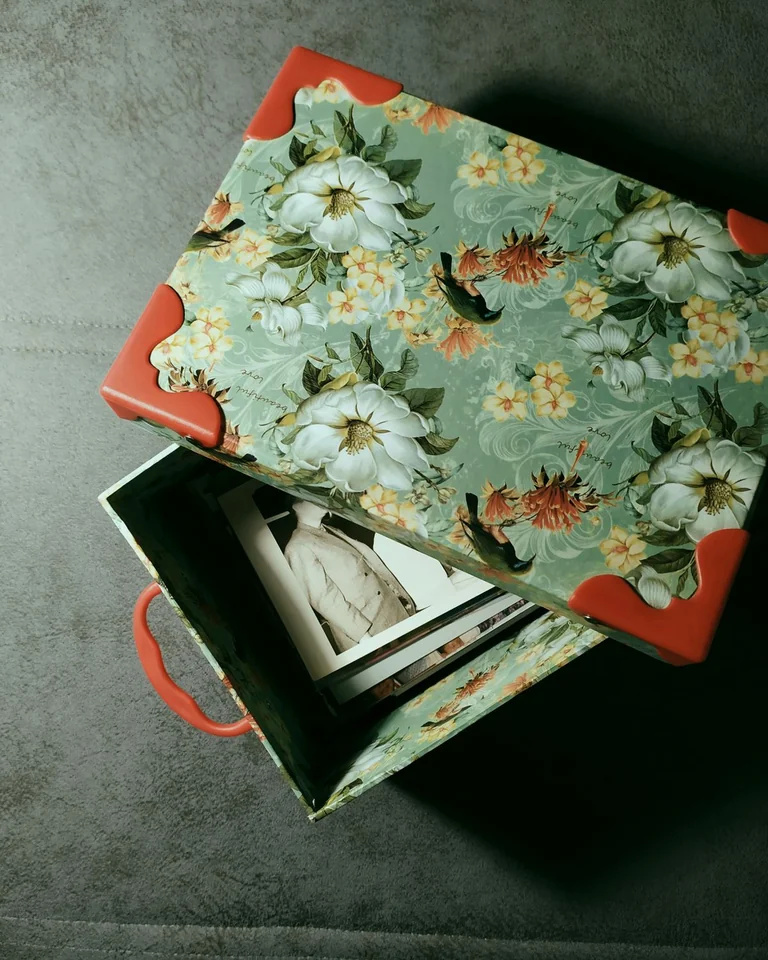
Dark academia runs on ephemera: letters, ticket stubs, pressed flowers, old photographs. Without a system they become the drifts of paper that make a small room feel chaotic. Give them archival homes: lidded keepsake boxes, sorted loosely by era or theme, stored on a shelf or inside the wardrobe. The memories stay accessible and the surfaces stay clear, which is the entire point.
Practical tip: Keep one small “inbox” box on the desk for new arrivals and file it into the archive boxes once a month. The system only works if intake has a path.
18. Display Curiosities Behind Glass, Not on Every Surface

A few strong objects beat twenty small ones, and glass makes the edit official. A small antique cabinet with glazed doors displays your best curiosities, a brass key, a mineral specimen, a framed miniature, while keeping them dust-free and visually contained. Everything behind glass reads as a collection; everything on open surfaces reads as clutter waiting to happen. Choose the pieces you love most and let the rest live in labeled boxes.
Practical tip: Edit the cabinet seasonally. Swapping two or three pieces keeps the display feeling alive without letting it creep across the room.
Dark Academia Storage FAQs
How do I keep a small dark academia bedroom from looking cluttered?
Give every category of belongings a closed home: drawers, lidded boxes, jars, or a wardrobe. Open surfaces should hold only what is currently in use or deliberately displayed. When in doubt, contain it.
What storage furniture suits dark academia best?
Pieces with age and weight: vintage trunks, antique wardrobes, wooden chests of drawers, and ladder shelves. They store generously while contributing the old-library atmosphere the style needs.
Can I organize a dark academia bedroom on a budget?
Yes. Thrift stores are the best source for trunks, wooden boxes, baskets, and brass trays, and labeled kraft boxes cost almost nothing. Spend money only on the one substantial piece, like the bookcase or wardrobe, that anchors the room.