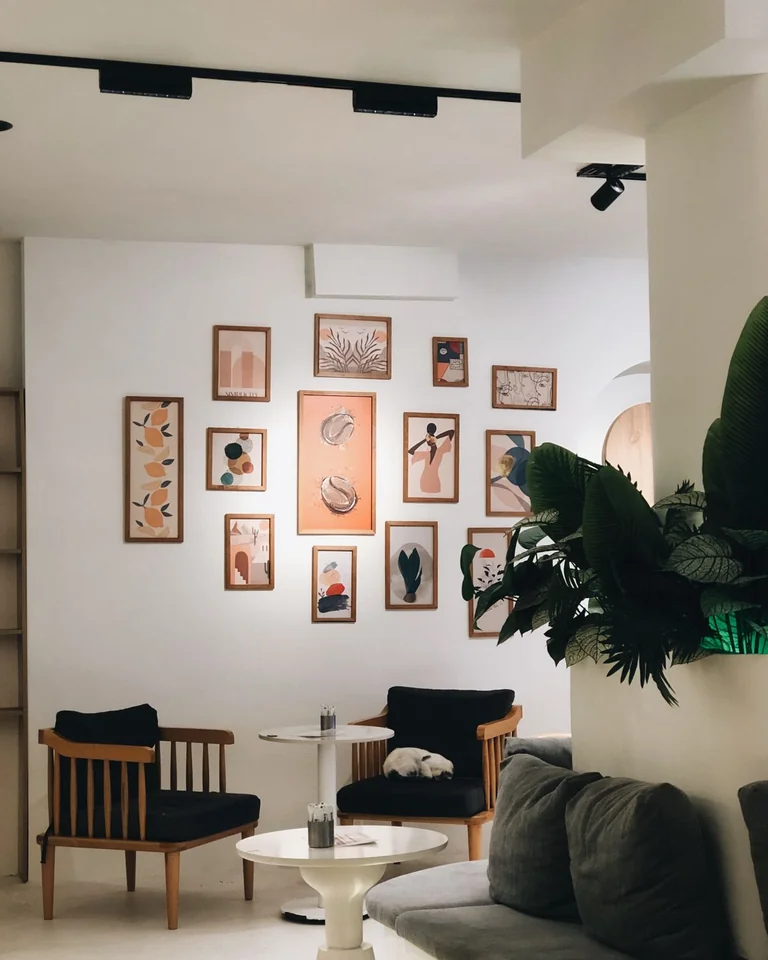
18 Ways to Fill a Blank Wall Without Buying Art
A blank wall does not need a shopping trip. The fastest way to fill one without buying art is to shop your own home first: textiles like quilts, rugs, and throws cover more wall per minute than anything else, and collections you already own — baskets, plates, hats — group into displays that look intentional. Below are 18 genuinely distinct ideas, all using things you likely own or can make for nearly nothing, with no new artwork purchased.

Hang a quilt or throw you already own

A quilt is the single fastest no-buy wall filler. Big, soft, and patterned, it covers more visual ground in one move than a dozen small frames, and it adds warmth and sound-softening that flat art never will. Fold a sleeve into the back or clip the top edge to a slim curtain rod or wooden dowel, then hang it from two small hooks. Vintage quilts look especially good against simple painted walls. When you tire of it, it goes right back on the bed — nothing wasted.
Put a flatweave rug on the wall

Rugs are not only for floors. A flatweave, kilim, or even a patterned bath mat with character hangs flat without rippling, which makes it easier to live with than most fabric. Drape it over a sturdy rod, or use a wooden rug hanger that clamps the top edge. Because rugs are heavy, they read as deliberate and grounded rather than improvised. If you rotate rugs seasonally anyway, the wall is simply where the spare one lives for half the year.
Drape fabric from a tension rod
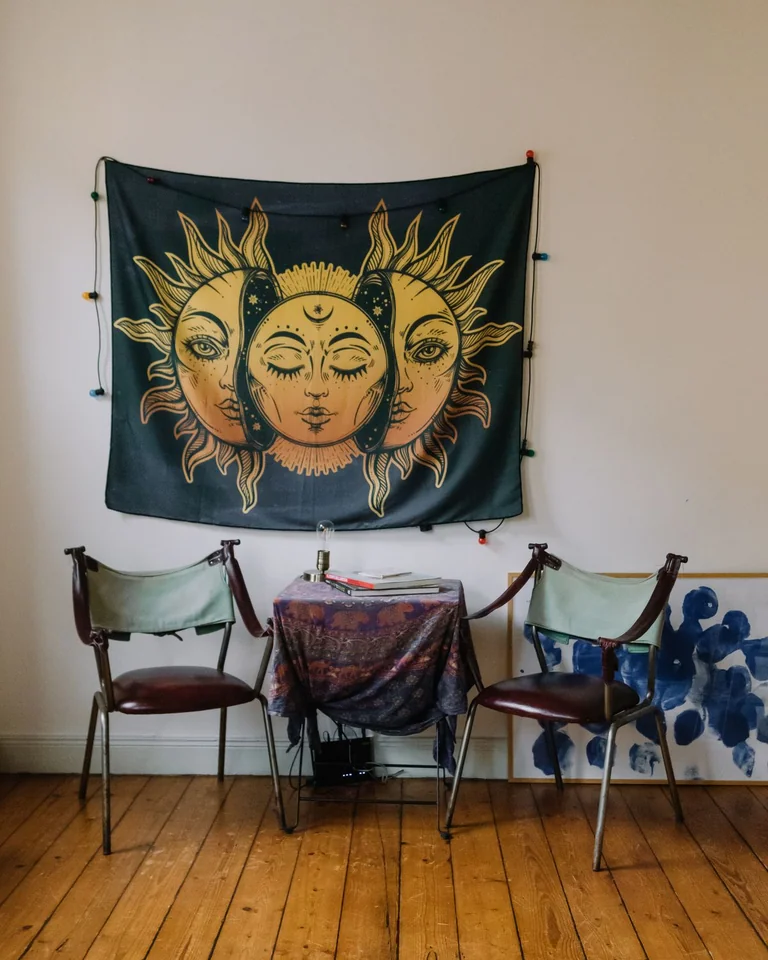
A spring-loaded tension rod wedged between two walls, inside a window recess, or across an alcove holds a length of fabric with zero drilling and zero adhesive. A tapestry, a patterned throw, even a beautiful scarf or sarong works. The softness breaks up hard plaster lines and adds color fast. Because nothing is fixed, you can swap the fabric with the seasons — lighter weaves in summer, heavier patterns in winter — without touching the wall.
Frame wallpaper or fabric scraps
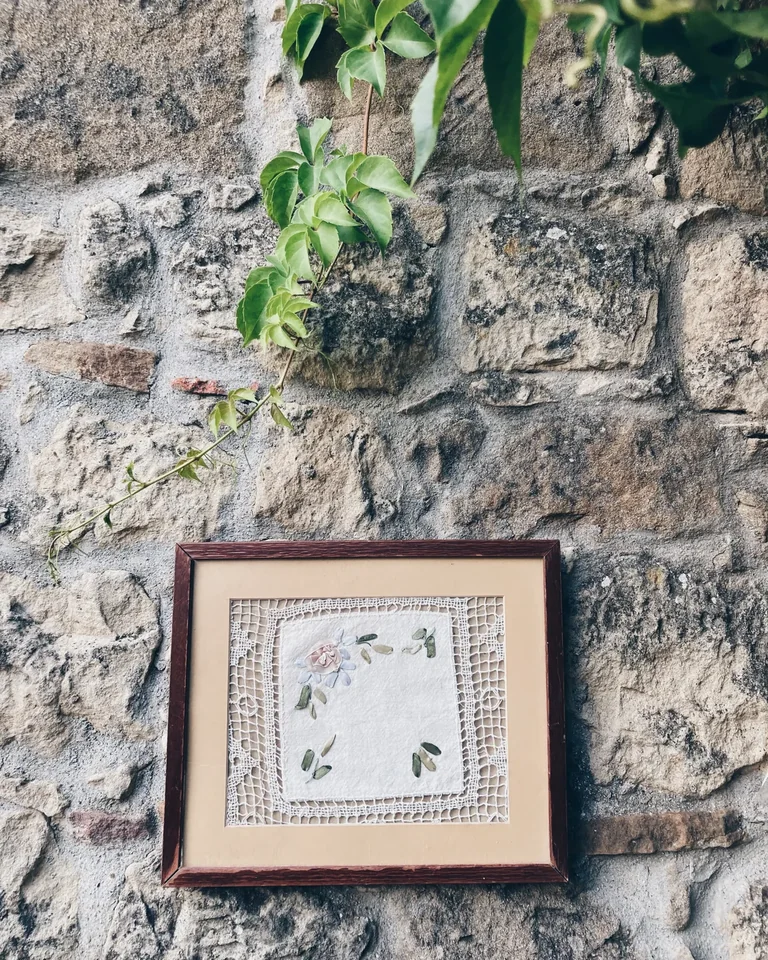
An offcut of wallpaper, a fabric remnant, a tea towel with a good print — anything flat with a strong pattern looks like real art the moment a frame goes around it. The frame does the selling, not the contents. Hang three or four matching frames with different scraps from the same color family for a coordinated set, or go big with one oversized frame around a single bold pattern. Raid the frames you already own before considering new ones.
Hang a blank canvas as-is
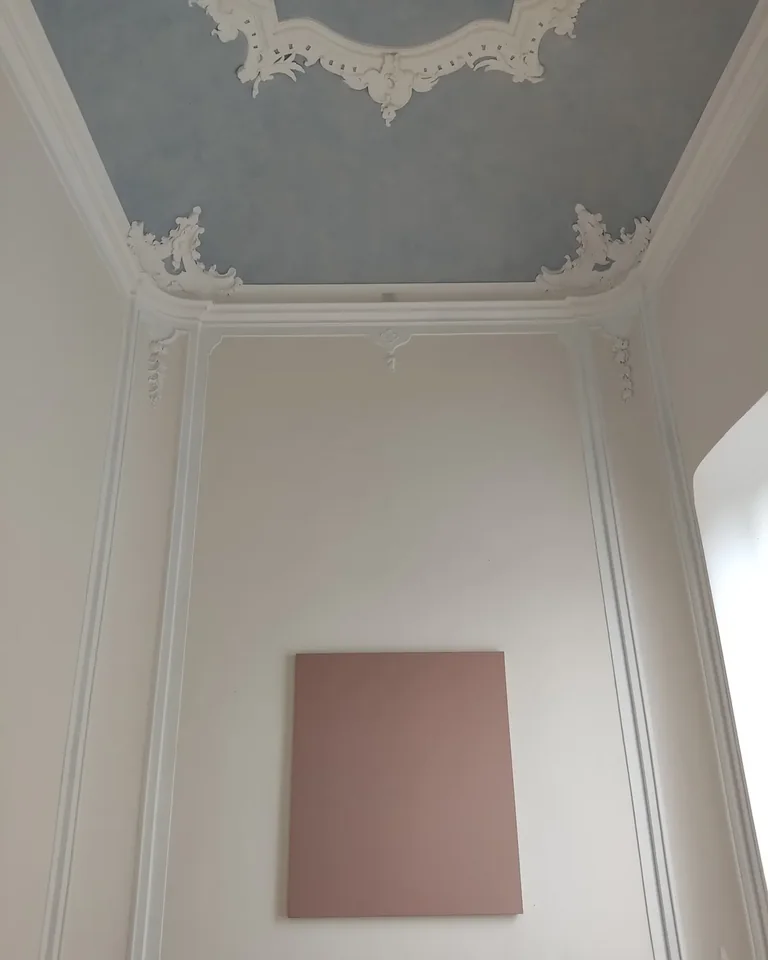
A large stretched canvas, completely blank, has enough presence to hold a wall on texture alone — especially against a colored wall where the white or natural canvas pops. It is the cheapest option on this list and the most minimalist. Hang it slightly lower than you think; a big pale rectangle reads as a deliberate gallery gesture when it sits in proper relationship to the furniture below it. If you ever decide to paint it, you have lost nothing.
Let oversized empty frames do the work
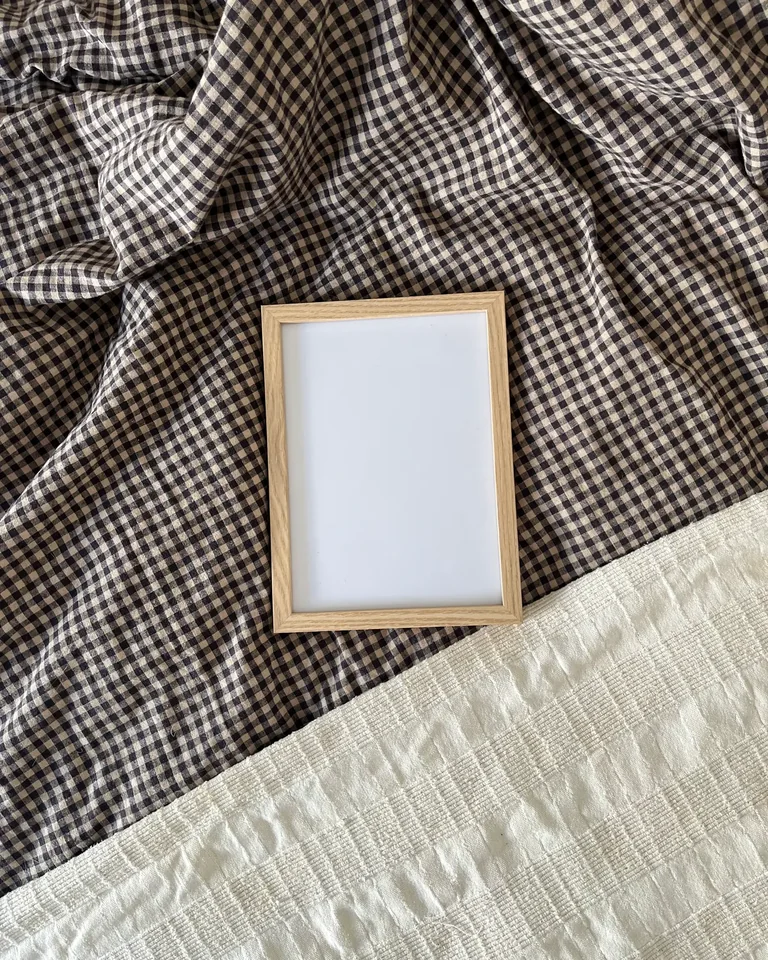
Small photos and prints get lost on a big wall, but an oversized mat changes the math: a 5×7 photo floating in a huge mat inside a large frame suddenly carries the presence of something far bigger. Charity shops and attics are full of large empty frames. Paint mismatched frames one color for cohesion, then fill them with what you have — small photos, postcards, or nothing at all. A row of empty frames in identical finishes reads as a confident design choice, not an unfinished project.

Lean a tall mirror
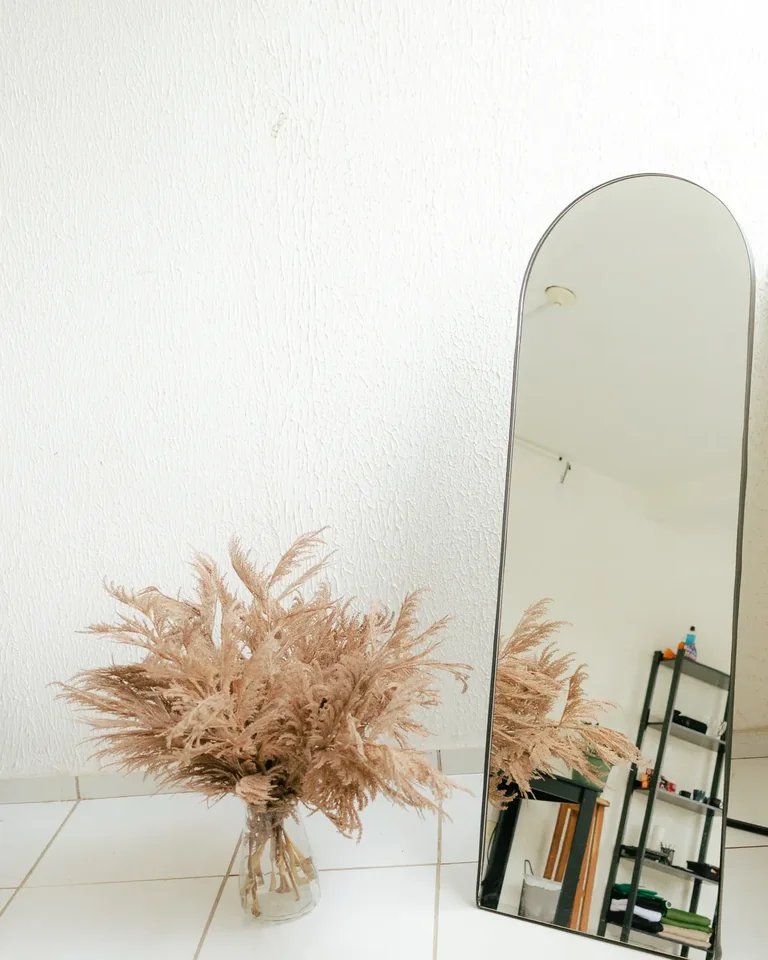
A tall mirror is the closest thing to a shortcut: it fills the space, bounces light around the room, and makes everything feel larger — jobs no painting will ever do. Leaning it against the wall means no anchors and no commitment, and the casual angle reads as relaxed and intentional. Place it where it reflects a window or a plant rather than a blank stretch of the opposite wall, and it earns its keep twice. Secondhand shops are full of large mirrors people could not face moving.
Cluster woven baskets and trays

Any collection of flattish things you already own can go up as a group, and woven baskets are the best of them. Vary the sizes, overlap them slightly, and arrange around an imaginary center rather than a rigid grid so it reads as a composition. The weave adds texture and shadow that flat art cannot. Hang them on small nails straight through the weave or on adhesive hooks, and they come back down to hold fruit or laundry whenever you need them to.
Arrange decorative plates in a loose cluster
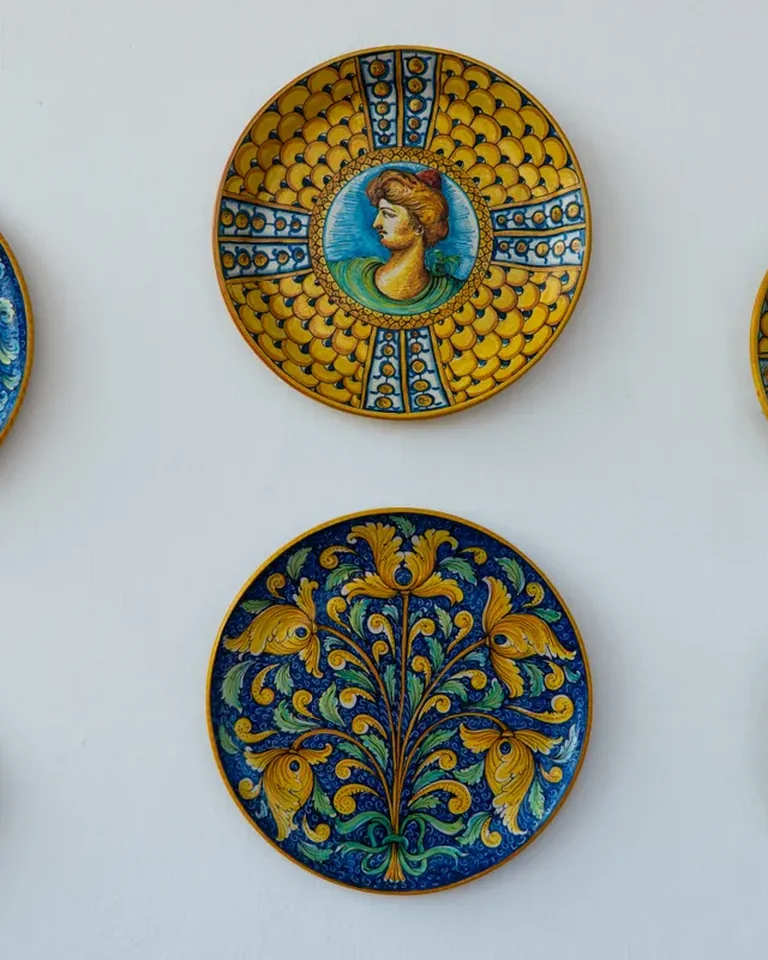
Decorative plates — market finds, inherited sets, hand-thrown dinner plates — look charming grouped on a wall. Plate hangers cost very little, and removable adhesive strips hold the lighter ones. Mix sizes and patterns within one color family for cohesion, and keep the arrangement loose rather than symmetrical; a slightly organic cluster feels collected, not showroom. This is one of the few wall ideas that genuinely looks better with mismatched pieces than with a matching set.
Hang your hats on wall hooks

Hats are storage that wants to be seen. A scatter of straw hats, caps, and a felt fedora on plain hooks turns an everyday pile into a display and solves the eternal problem of where hats actually go. It works best when the hats vary in shape and color. Line them up a hallway wall or cluster them above a bench, and you have filled the wall with things you wear — functional decor at its most honest.
Pull furniture in front and style the top
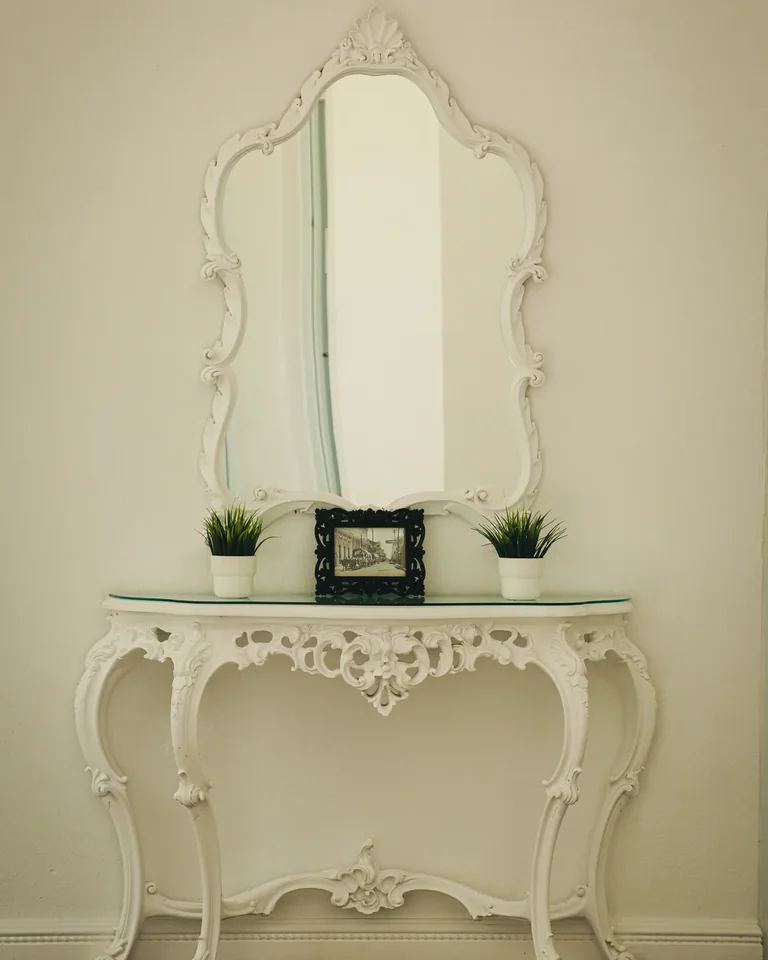
Sometimes the wall is not the problem — the empty floor beneath it is. Push a console, low chest, or bookshelf against the blank stretch and the bottom third of the wall disappears behind furniture, quietly changing the proportion of everything above it. Then style the surface: a tall vase with branches, a stack of books, a lamp, a couple of frames leaned rather than hung. Height on the surface carries the eye upward, so the remaining wall reads as breathing room instead of emptiness.
Mount a floating picture ledge
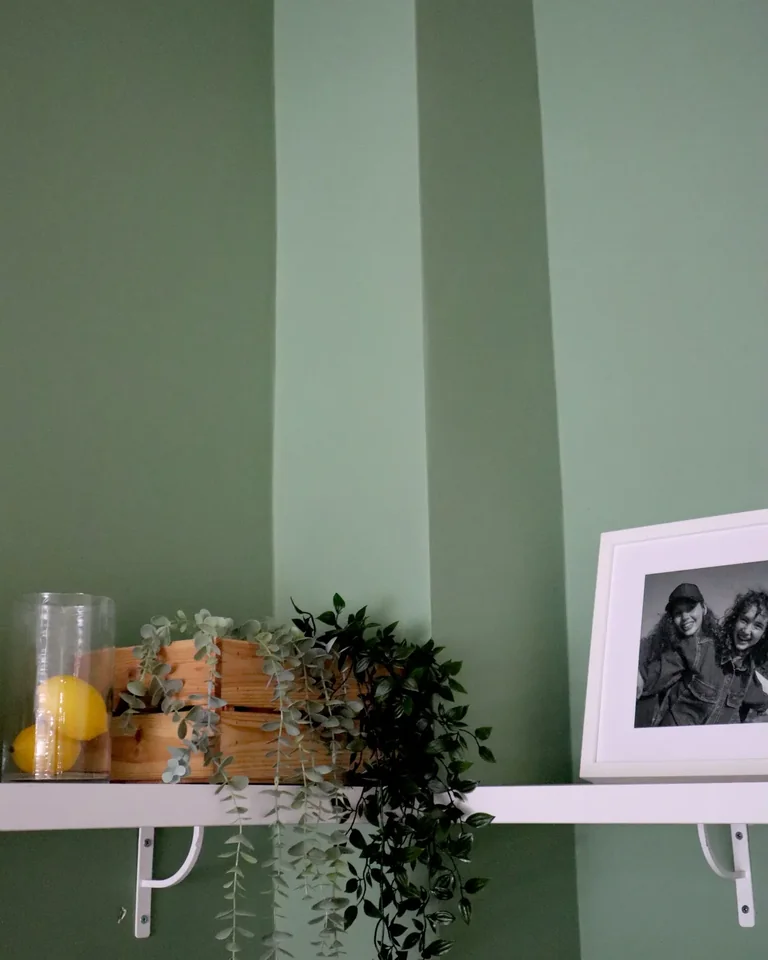
One long, narrow picture ledge across the wall gives you a stage for leaning frames, small plants, and objects you already own — with only two or three fixing points instead of a nail per frame. Prop things against the wall rather than centering them, overlap pieces, and leave gaps. The real advantage is flexibility: when the mood changes, you restyle the ledge in ten minutes without patching a single hole. Two ledges stacked at even intervals cover a surprising amount of wall.

Paint an arch — or highlight the one you have
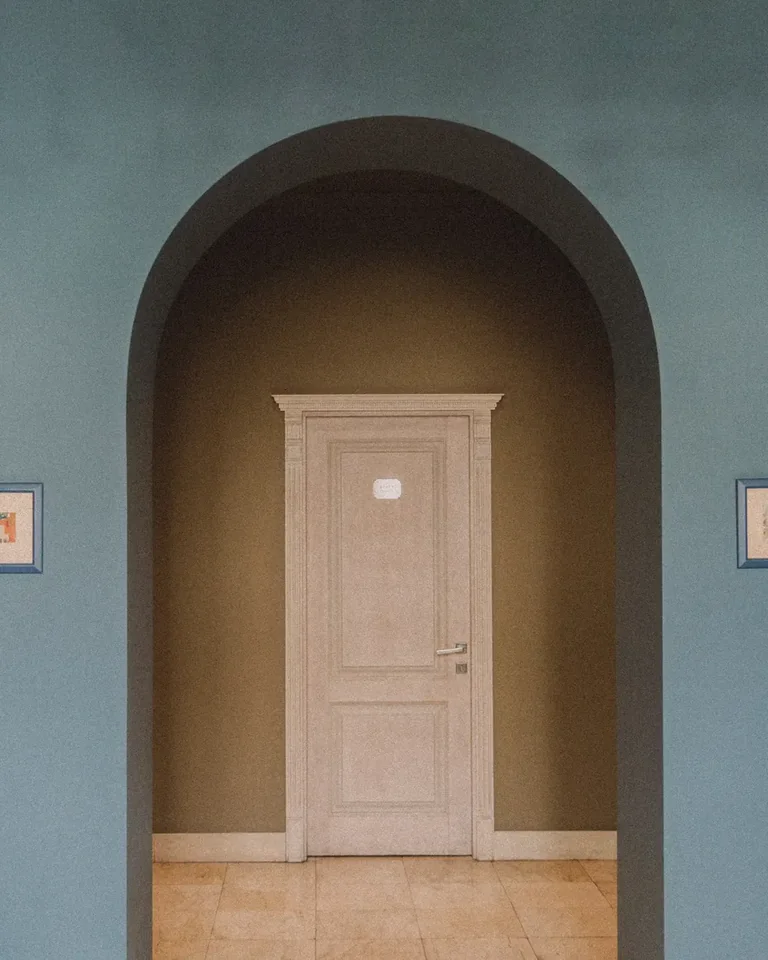
A painted arch behind a chair, console, or bed frames the furniture like a headboard made of color. It costs a small pot of paint and an afternoon, defines a zone in an open room, and makes the wall feel designed with no objects at all. If your home already has an arched doorway or niche, treat it as the feature: keep the surrounding wall quiet and let the architecture do the talking. Either way, shape beats stuff when the goal is interest without clutter.
Tape a graphic pattern with washi tape
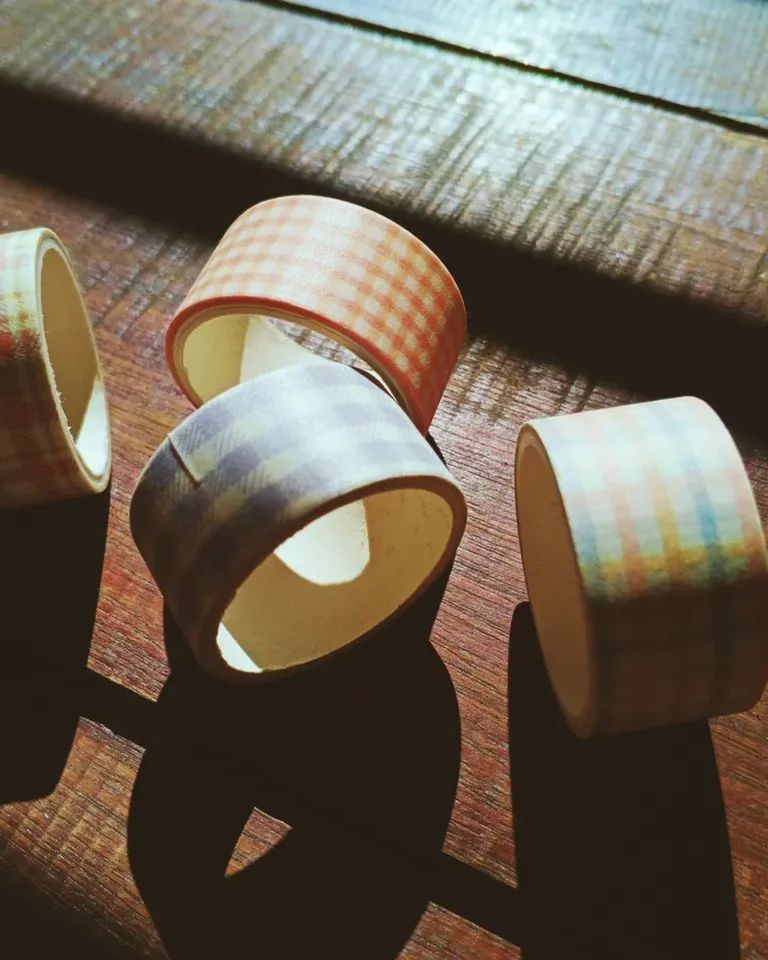
Decorative washi tape creates stripes, grids, geometric shapes, or faux frames directly on the wall — no paint, no holes, no commitment. It repositions easily if a line goes crooked and peels off cleanly, which makes it ideal for renters and kids’ rooms. Plan the pattern lightly in pencil first, keep to two or three tape colors for a grown-up look, and step back often. A bold diagonal stripe or a large-scale grid can carry an entire wall for the price of a few rolls.
Stand a bare branch in a tall vase
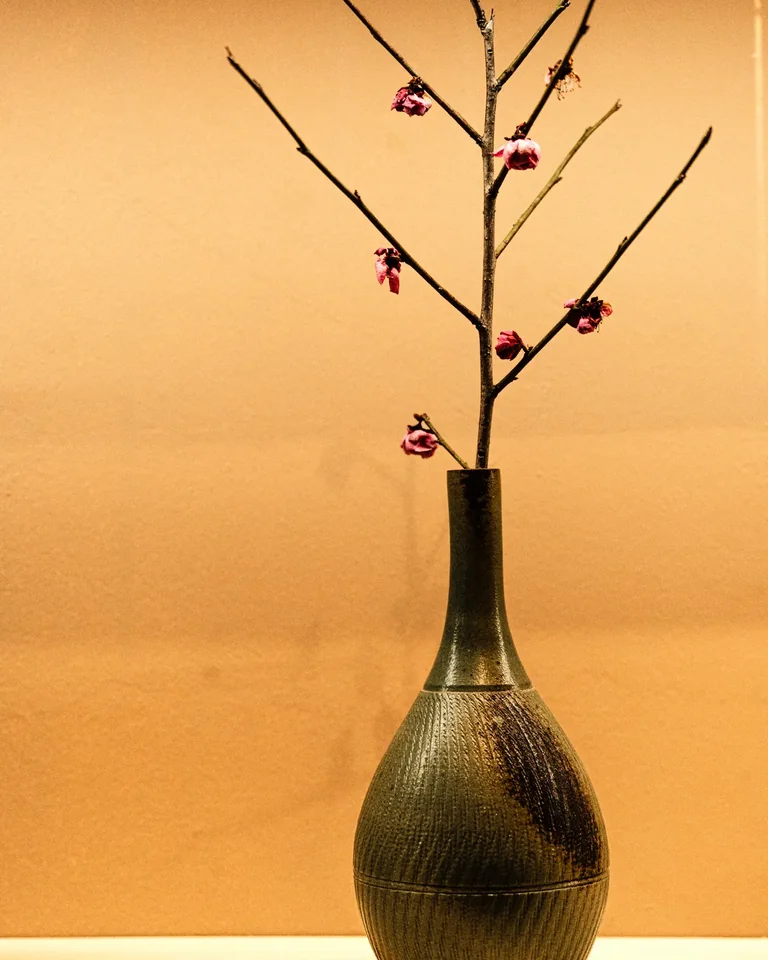
You do not have to hang anything at all. A sculptural bare branch — manzanita, birch, curly willow, or whatever fell in the park — in a tall floor vase fills a startling amount of vertical space for something that cost a walk outside. It reads as a stylist staple, adds organic line against flat plaster, and the silhouette changes beautifully through the day as light moves. Choose a vase with enough weight at the base that the branch cannot tip it.
Lean a blanket ladder

A wooden ladder leaned against the wall, draped with throws and quilts, fills vertical space and gives blankets a real home instead of a sofa pile. It suits the lower two-thirds of a wall, so pair it with something higher up — a shelf, a small cluster — if the wall is tall. Old ladders turn up at flea markets and thrift stores for very little, and flaking paint is part of the look. No mounting required; gravity does the work.
Build a wall of plants
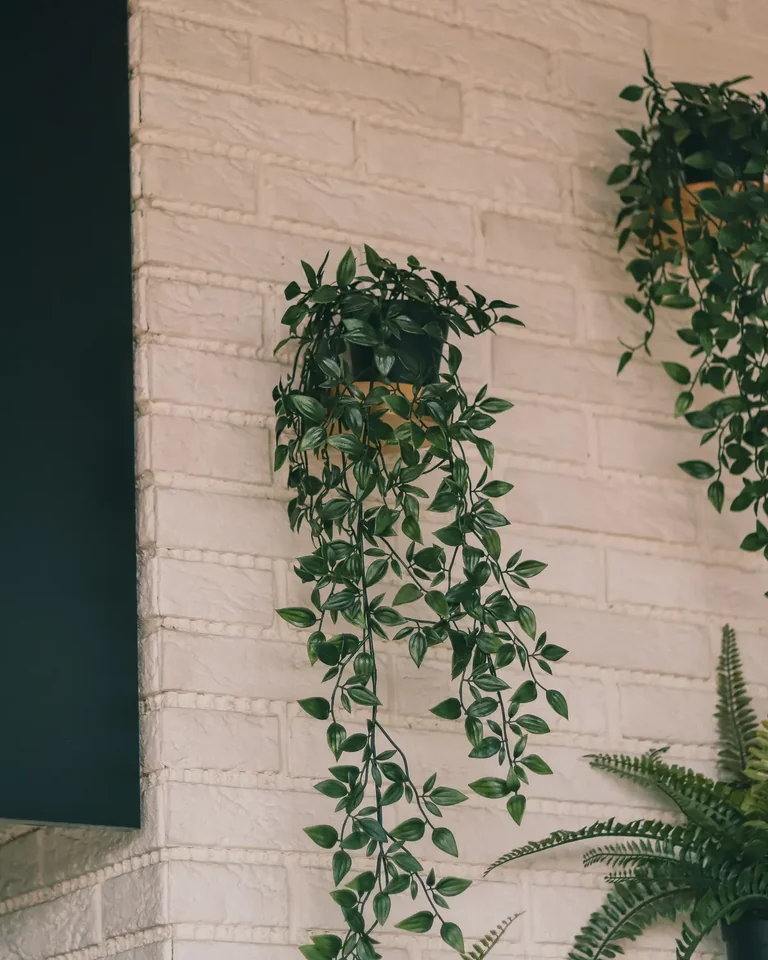
Plants break up a wall the way nothing flat can, because they move and they are alive. A row of wall-mounted planters, a couple of trailing pothos on hooks, or one big leafy plant on a stand pushed against the blank space all work. Green softens hard lines and adds depth through layered leaves. Start with forgiving plants — pothos, philodendron, spider plant — and hang them where you will actually remember to water them. If your track record with plants is poor, convincing faux trailing greenery gives the same movement with none of the watering.
Hang a statement clock

A large clock is functional art: it fills scale, adds a focal point, and tells the time. An oversized clock alone can anchor a whole wall, and a cluster of two or three smaller vintage clocks makes a collected, gallery-like arrangement. Hang it at a height where it is genuinely readable from the seating area — roughly eye level from where you sit, not from where you stand — and it stops being decoration and starts being the most-used object in the room.
Frequently asked questions
Can I decorate a blank wall without putting holes in it?
Yes. Lean large pieces against the wall, use tension rods, removable adhesive strips and hooks, washi tape, and freestanding furniture like ladders and consoles. Heavy items such as big mirrors still need proper anchoring for safety — leaning is fine on a stable floor, but secure anything that could tip in a home with kids or pets.
What is the cheapest way to fill a large blank wall?
Textiles you already own. A quilt, rug, or throw hung on the wall covers more area per dollar — zero dollars, in fact — than any other option, and paint or washi tape for an arch or pattern costs only a few dollars in materials.
How do I hang a quilt without damaging it?
Sew or clip a fabric sleeve across the back top edge and slide a dowel or curtain rod through it, then rest the rod on two hooks. Avoid nails or staples through the quilt itself, keep it out of direct sunlight to prevent fading, and take it down occasionally to air it.
Will hanging plates or baskets damage my walls?
Plate hangers use small nails, but lightweight baskets and plates can go up with removable adhesive strips or small hooks that leave minimal marks. Test one hook first, and check weight limits — ceramics are heavier than they look, so use hardware rated for the actual weight.