16 Cottagecore Bed Styling Ideas for a Dreamy, Storybook Bedroom
Cottagecore bed styling is all about the layers: natural linen against your skin, a vintage floral quilt folded just so, a knit throw tossed over the foot, and pillows that look collected rather than matched. The goal isn’t perfection — it’s a bed that looks like it belongs in a storybook and feels like a deep exhale at the end of the day.
Below are 16 cottagecore bed styling ideas you can mix and match, whether you’re starting from scratch or just refreshing the bedding you already own. Most of them cost little to nothing if you shop your linen closet and a local thrift store first.
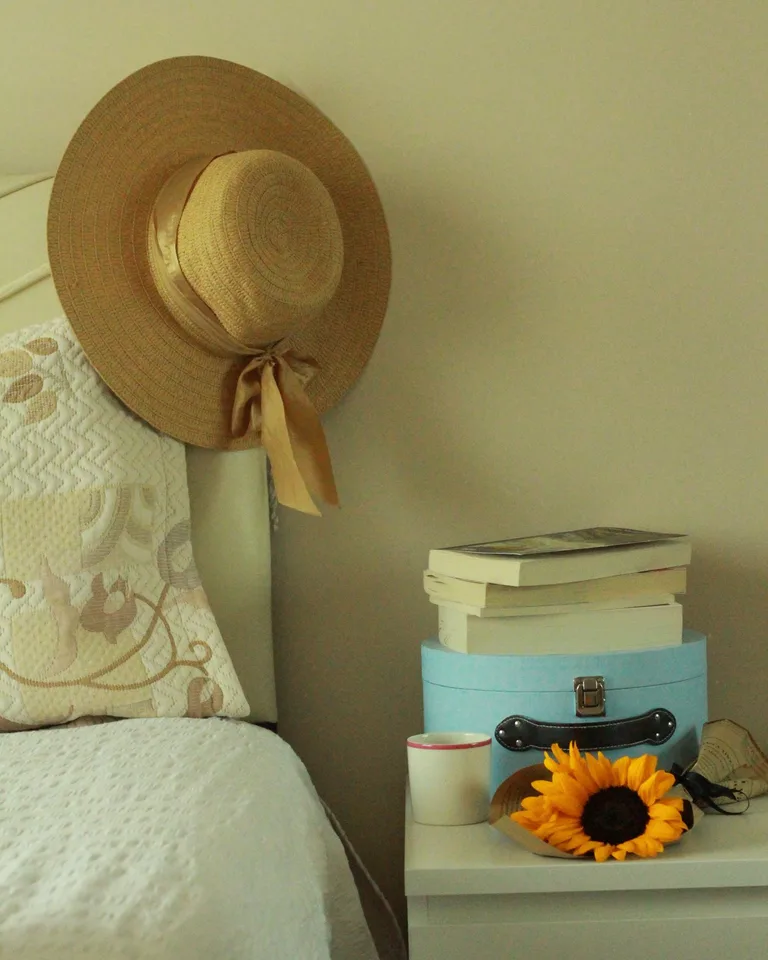
1. Start With Natural Linen or Cotton Sheets
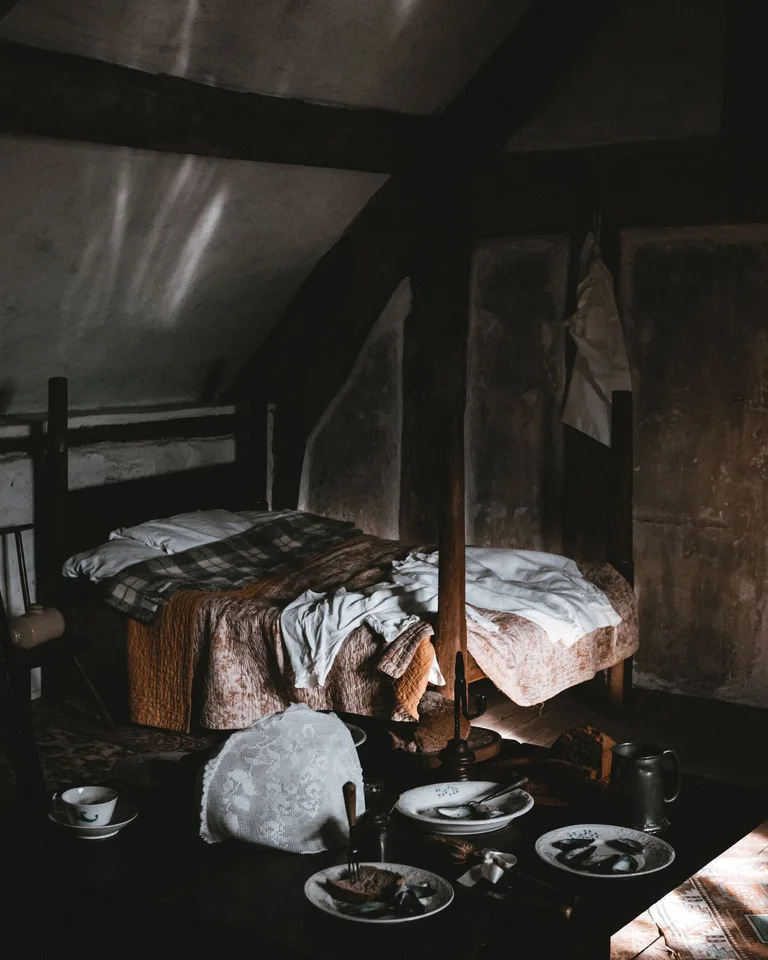
Every cottagecore bed starts with breathable, natural-fiber sheets — linen or washed cotton in white, cream, oatmeal, or a soft sage. Skip the high-shine sateen; cottagecore is matte, softly wrinkled, and touchable. Linen’s lived-in texture is the whole point, so don’t iron it. If real linen is out of budget, a washed cotton percale gives you 80% of the look.
Wash new sheets twice before styling so they soften up and lose that stiff, store-bought drape. Slightly rumpled is correct here — a bed that looks slept-in (in the charming way) is the aesthetic.
2. Layer a Vintage-Style Floral Quilt on Top
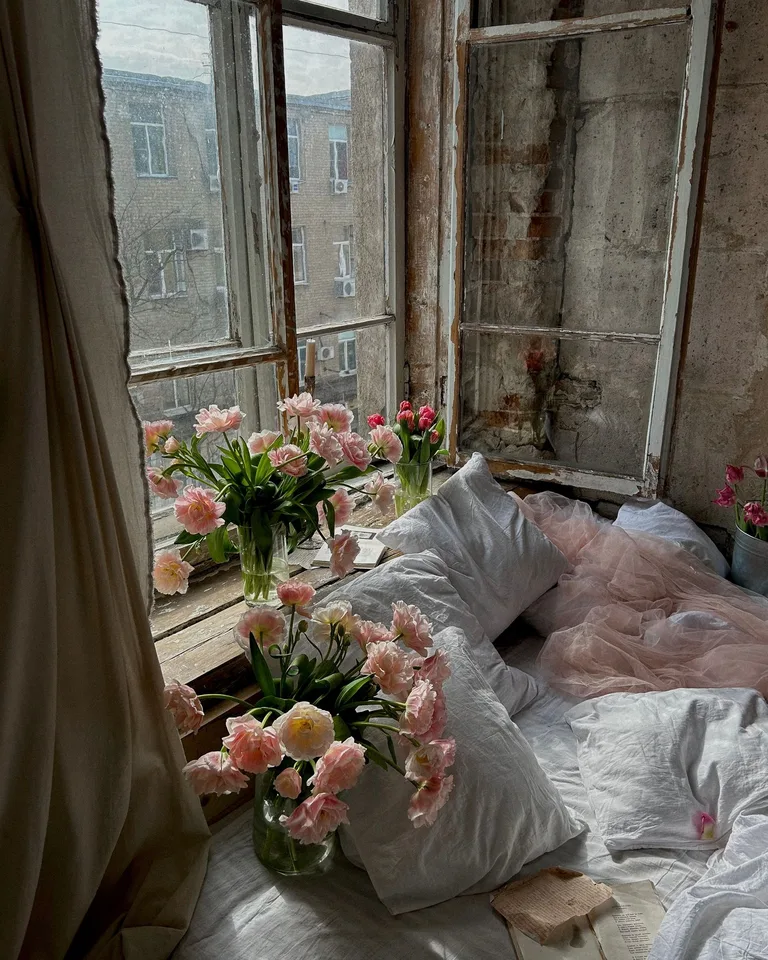
The quilt is the statement piece of a cottagecore bed. Look for florals, calico prints, or simple patchwork in faded reds, dusty pinks, or indigo. Fold it across the lower third of the bed rather than pulling it all the way up — that casual fold shows off the layers underneath and makes the bed feel inviting instead of showroom-stiff.
Thrift stores are goldmines for real vintage quilts with the soft, washed-out patina you can’t fake. Check for thin spots before buying, and air it outside for a day to freshen it up naturally.
3. Mix Pillow Sizes Instead of Matching Sets
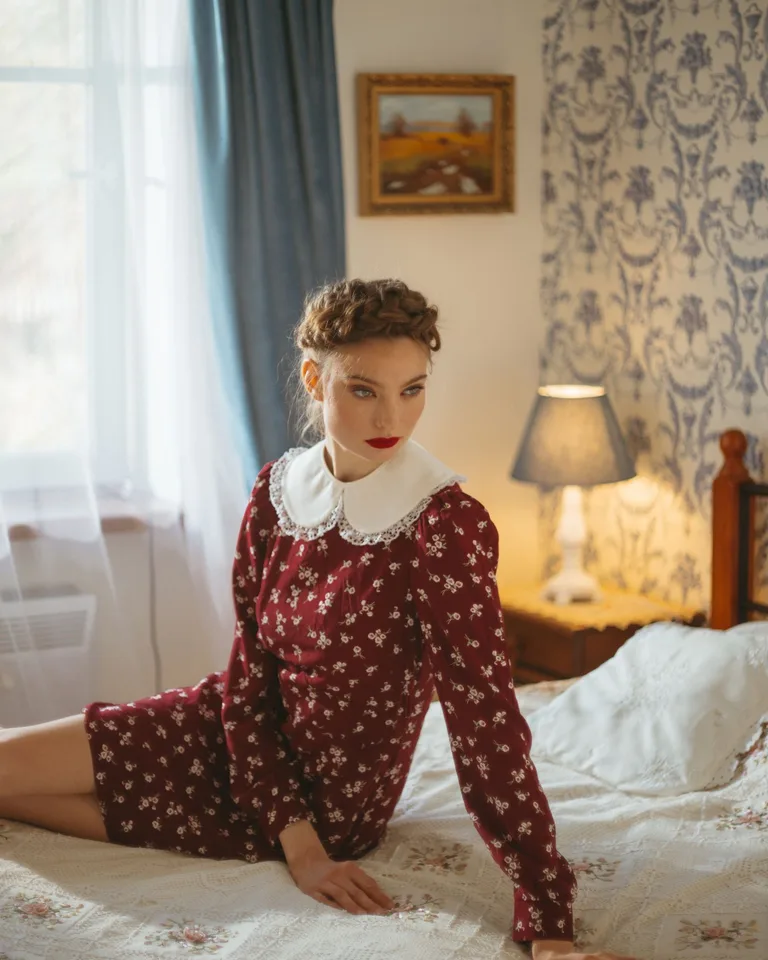
Forget the matching pillow set that came with your comforter. Cottagecore pillows are a collected mix: two Euro shams at the back, standard sleeping pillows in front of those, then a couple of smaller accent cushions and one lumbar pillow up front. Vary the patterns — a small floral, a stripe, a solid linen — but keep them in one color family so it reads as intentional.
The arrangement trick is simple: tallest in back, smallest in front, and karate-chop the centers of the accent pillows for that soft, lived-in dent.
4. Drape a Chunky Knit Throw Across the Foot
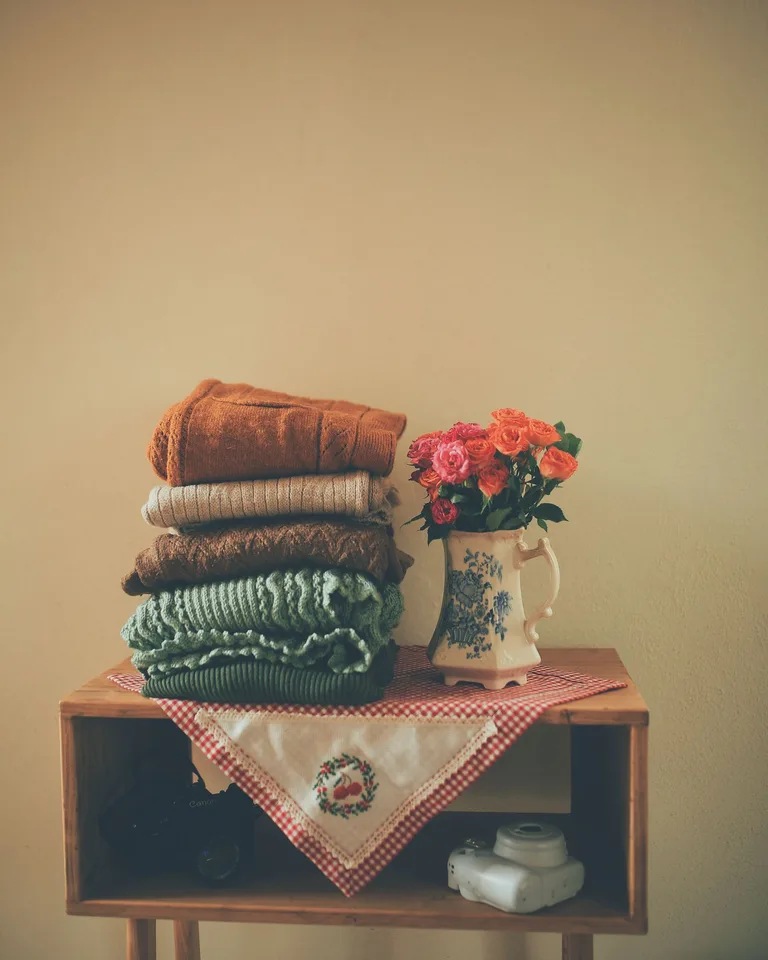
A heavy knit throw folded over the foot of the bed adds the texture contrast that flat bedding lacks. Cream, oatmeal, or rust cable-knits all work; the chunkier the better. Drape it at a slight angle rather than perfectly straight — asymmetry is what keeps cottagecore from tipping into “hotel bed.”
If you knit or crochet, this is your moment: a handmade throw is the most cottagecore thing you can put on a bed. If not, thrift stores almost always have them for a few dollars.
5. Add Lace and Ruffle Details Sparingly
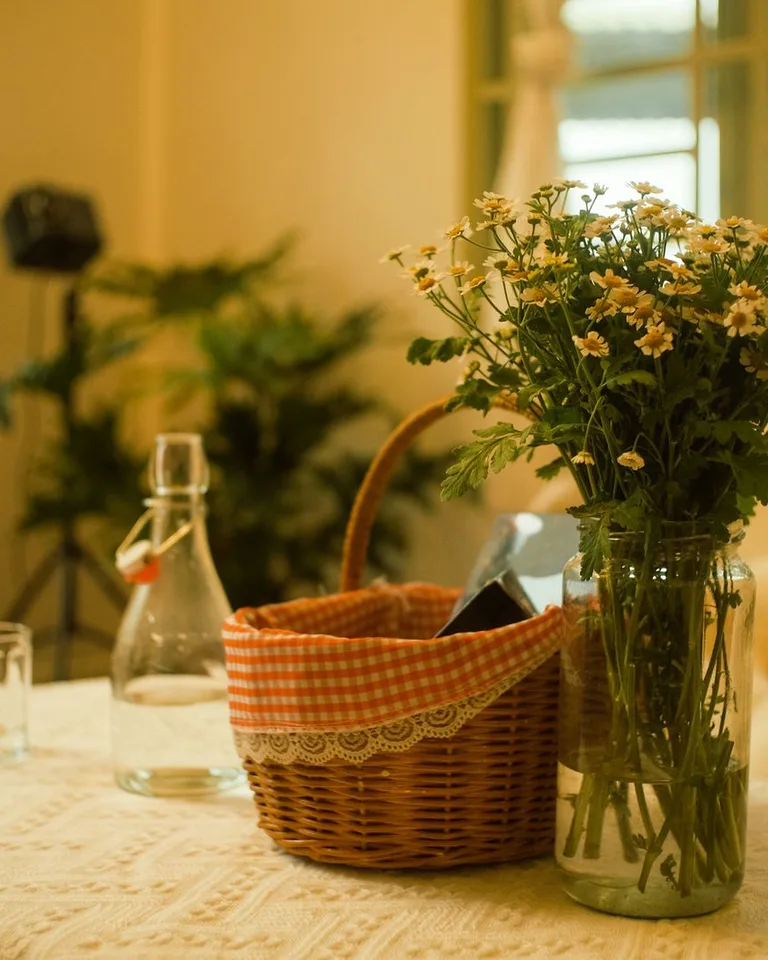
A little lace goes a long way. One ruffled pillow sham, a lace-edged throw folded over the quilt, or a vintage lace runner across the foot of the bed is enough to nod to the romantic side of cottagecore without turning the room into a Victorian parlor. White or ivory lace over a colored quilt is the classic combination.
Estate sales and flea markets are the best sources for real cotton lace — the machine-made polyester kind looks flat by comparison. Layer it over texture (knits, quilts) rather than other flat fabrics so it stands out.
6. String Fairy Lights for a Soft Evening Glow
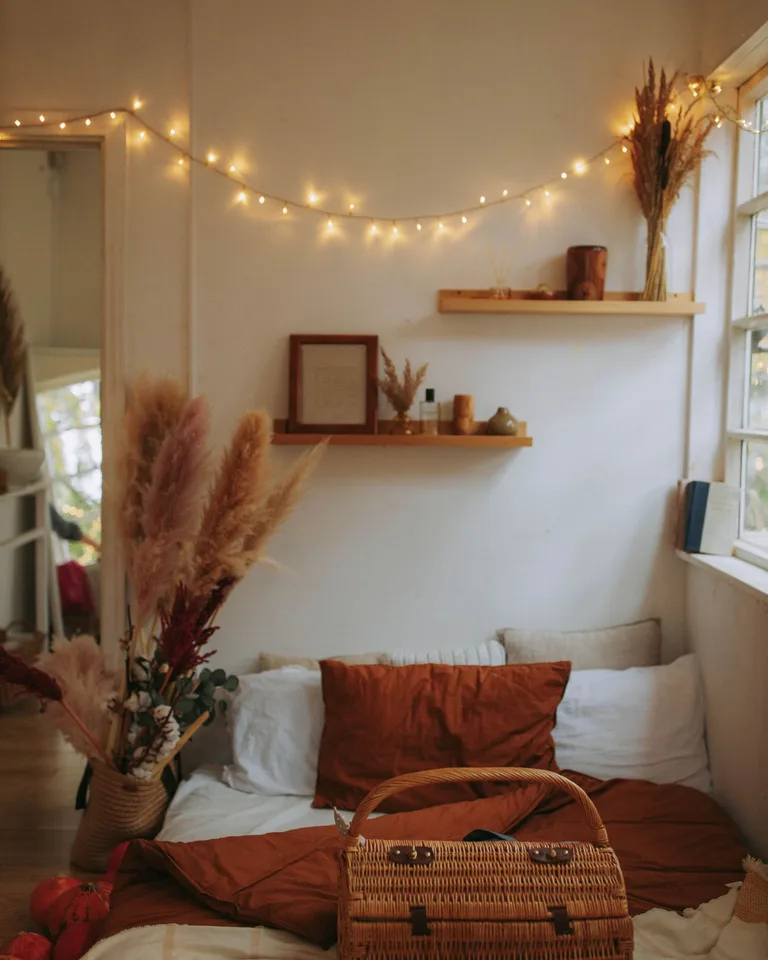
Warm-white fairy lights woven through the headboard or draped along a wall shelf turn the bed into a glowing retreat after dark. Use copper-wire strands — they practically disappear in daylight and give the most delicate glow at night. Battery-operated strands with a timer mean you never have to remember to switch them off.
Keep the lights warm white (2700K or lower). Cool-white LEDs read as modern and clinical, which fights the whole aesthetic. For more small bedroom ideas that balance coziness with storage, lighting like this does double duty as decor.
7. Style a Dried-Flower Posy on the Nightstand
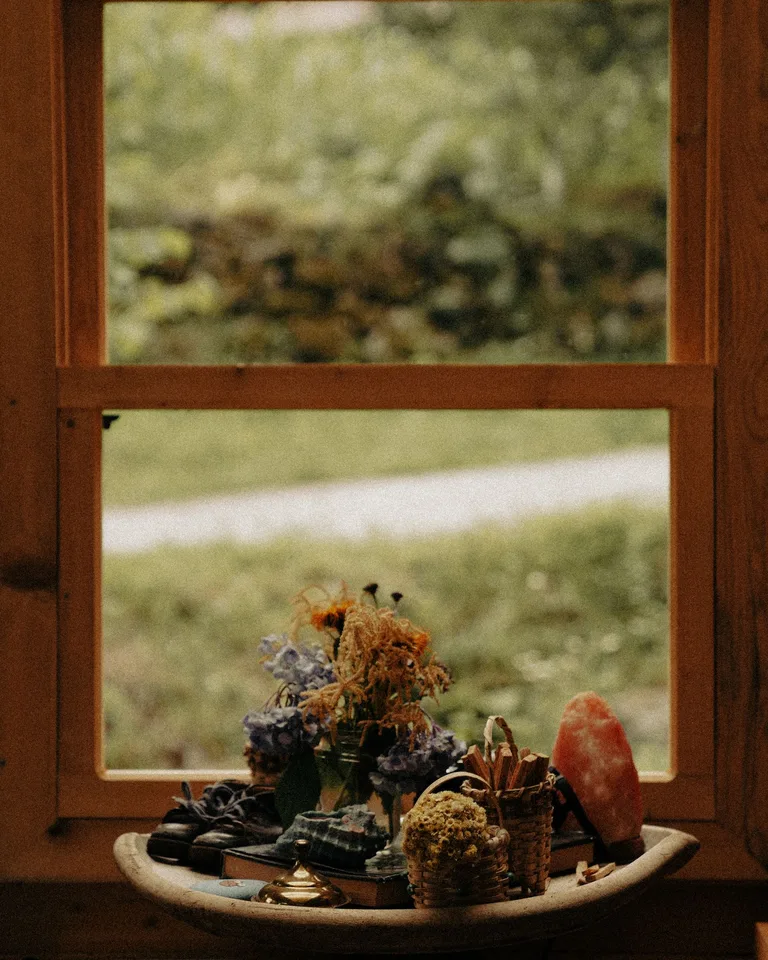
A small bundle of dried lavender, wheat stalks, or baby’s breath in a bud vase keeps the bedside feeling cottagecore even when fresh flowers aren’t in season. Dried arrangements last for months and cost almost nothing if you dry blooms from your own garden at summer’s end.
Pair the posy with a short stack of books and a candle, and the nightstand tells the same slow-living story as the bed. Swap the varieties with the seasons — wheat in fall, dried eucalyptus in winter.
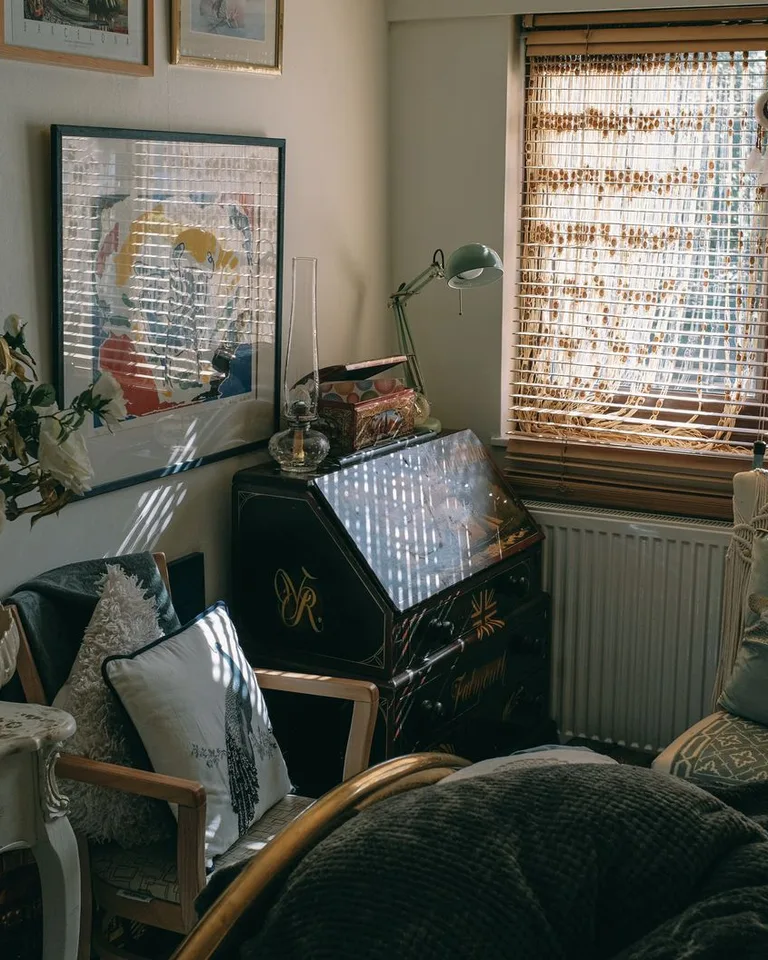
8. Keep Fresh Wildflowers in a Vintage Jug
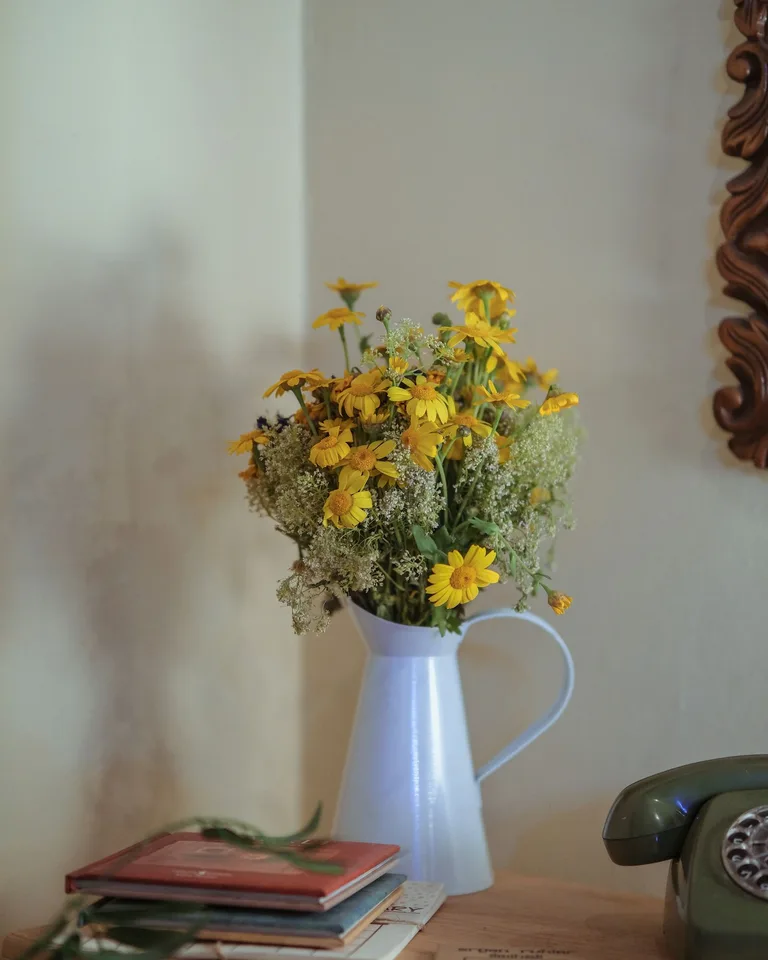
When flowers are in season, nothing beats a loose bunch of wildflowers in an old enamel jug, mason jar, or chipped ceramic pitcher on the dresser or nightstand. The cottagecore rule: arrange them like you just walked in from the meadow — a little wild, stems at different heights, no florist foam in sight.
One generous bunch beats three fussy little arrangements. If you’re growing a cutting garden, even a small one, you’ll have free bedside flowers from June through September.
9. Set Out a Bedside Tea-and-Book Tray
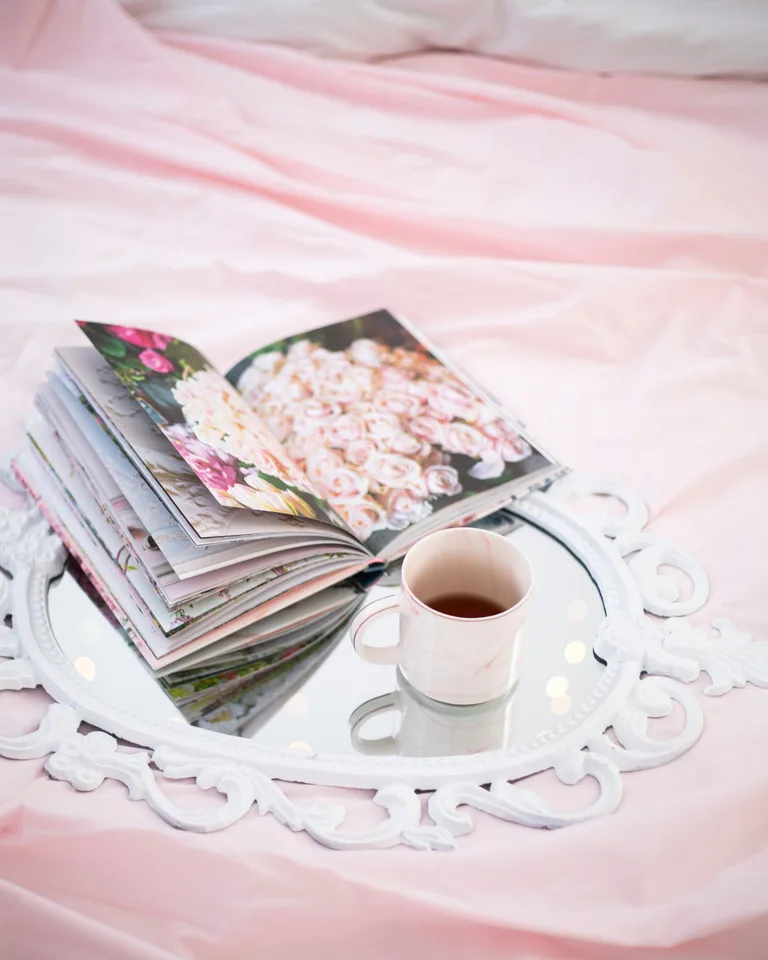
A small wooden tray on the nightstand holding a teacup, a candle, and the book you’re currently reading turns the bed into a ritual, not just furniture. It’s styling that doubles as function — you’ll actually use it every evening, which is the cottagecore ideal of beautiful things earning their keep.
Choose a tray with a lip so nothing slides off, and keep the palette to wood, ceramic, and linen. A tiny vase with a single stem makes even a plain tray feel styled.
10. Hang Floral Wallpaper Behind the Bed
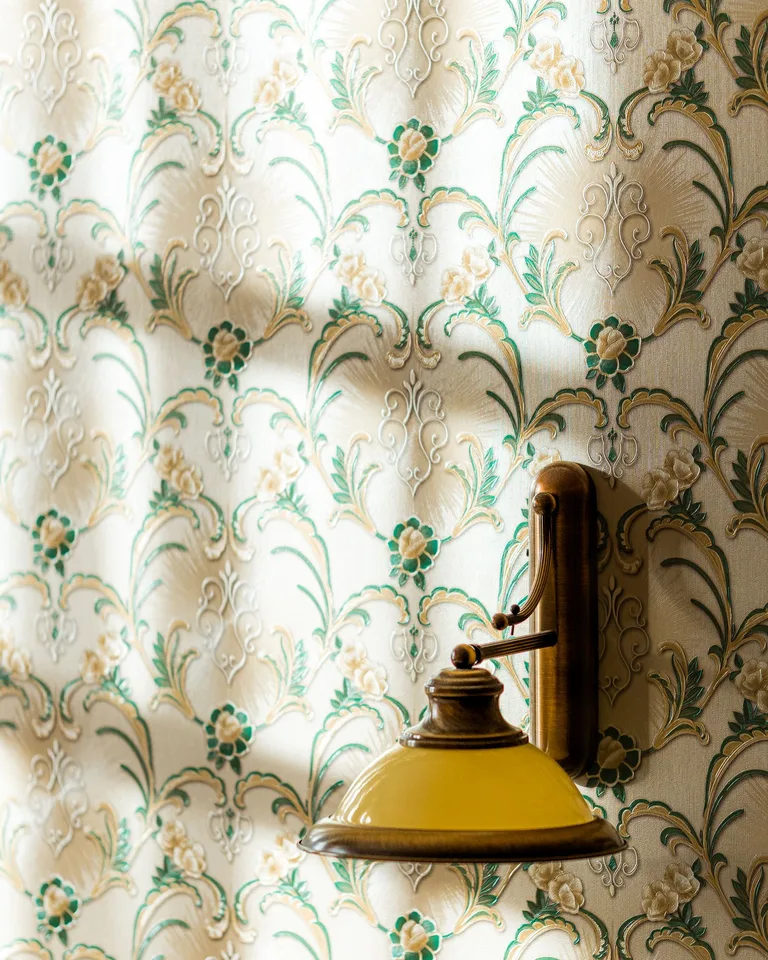
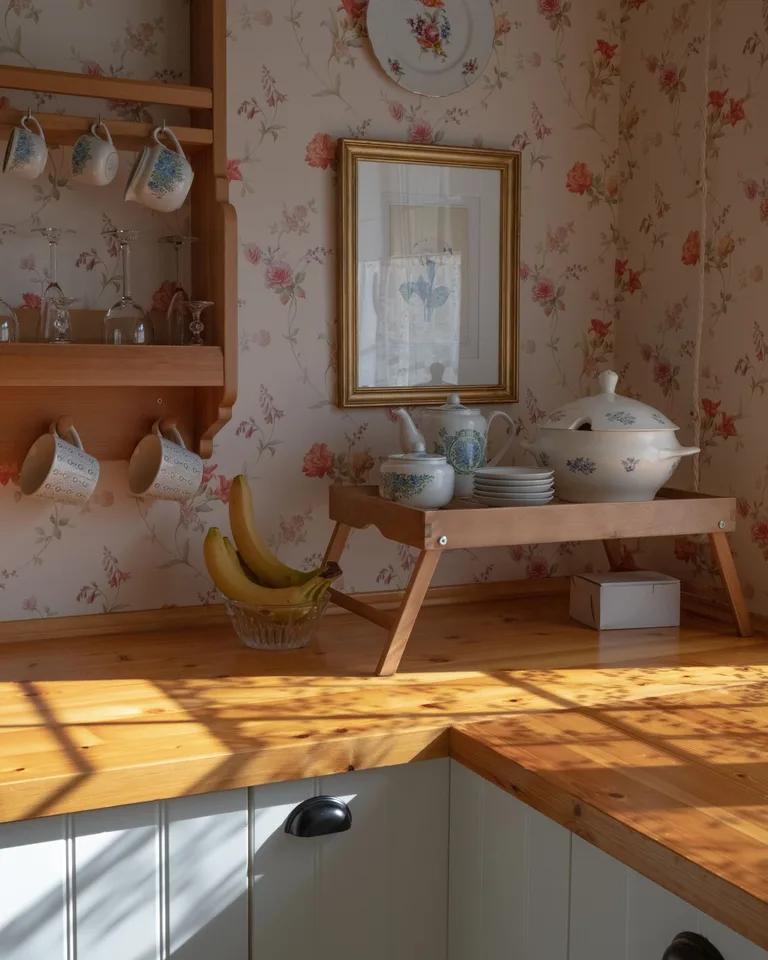
If you want maximum cottagecore impact for minimum effort, one wall of floral wallpaper behind the bed does it. Small ditsy prints read vintage; larger botanical prints read romantic. Either way, keep the bedding quieter when the wall is busy — cream linen and a solid quilt let the wallpaper be the star.
Renters can get the same effect with peel-and-stick wallpaper, which has gotten remarkably good. One accent wall takes an afternoon and changes the entire feel of the room. For art to pair with a patterned wall, see these ideas to fill a blank wall without buying art.
11. Tuck a Woven Basket of Blooms Beside the Bed
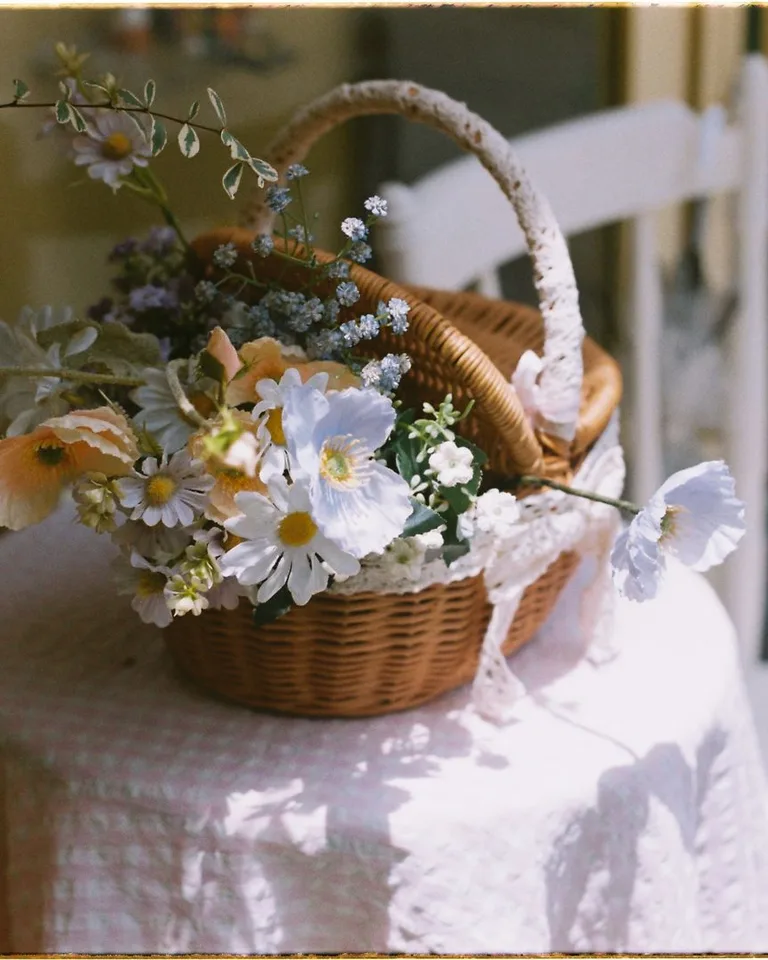
A low wicker basket filled with seasonal stems — real or good-quality faux — sitting on the floor beside the bed adds height and texture at the edge of the frame. It’s also practical: toss the throw blanket in it during the day and the bed looks effortlessly styled.
Look for baskets with handles and a slightly irregular weave; perfect, machine-made baskets look too new. A basket that’s a little battered is a basket with character, which is exactly right.
12. Let Morning Light Do the Styling
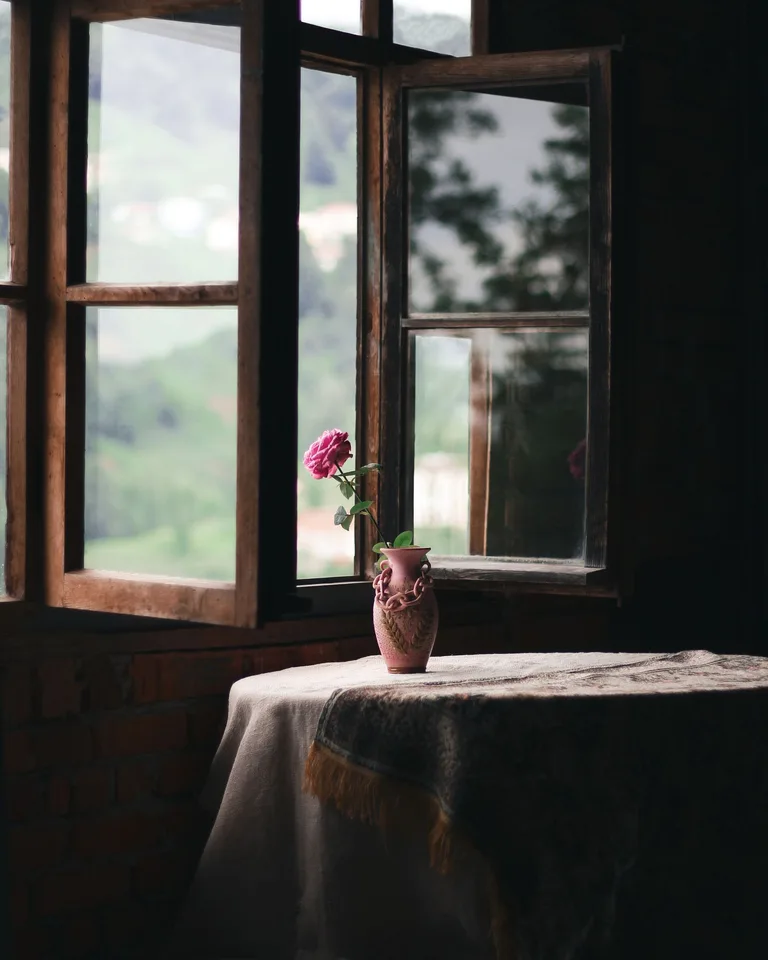
Sheer linen curtains that filter morning light are doing quiet work in every cottagecore bedroom photo you love. They soften the whole room, make bedding look luminous, and cost far less than new furniture. Hang them high and wide so the window feels grand even when it’s small.
Keep windowsills mostly clear — one small vase, one candle — so the light itself becomes the decoration. If your room faces away from the sun, a warm-toned daylight bulb in the bedside lamp fakes the effect convincingly.
13. Use a Single Wildflower Posy in Vintage Glass
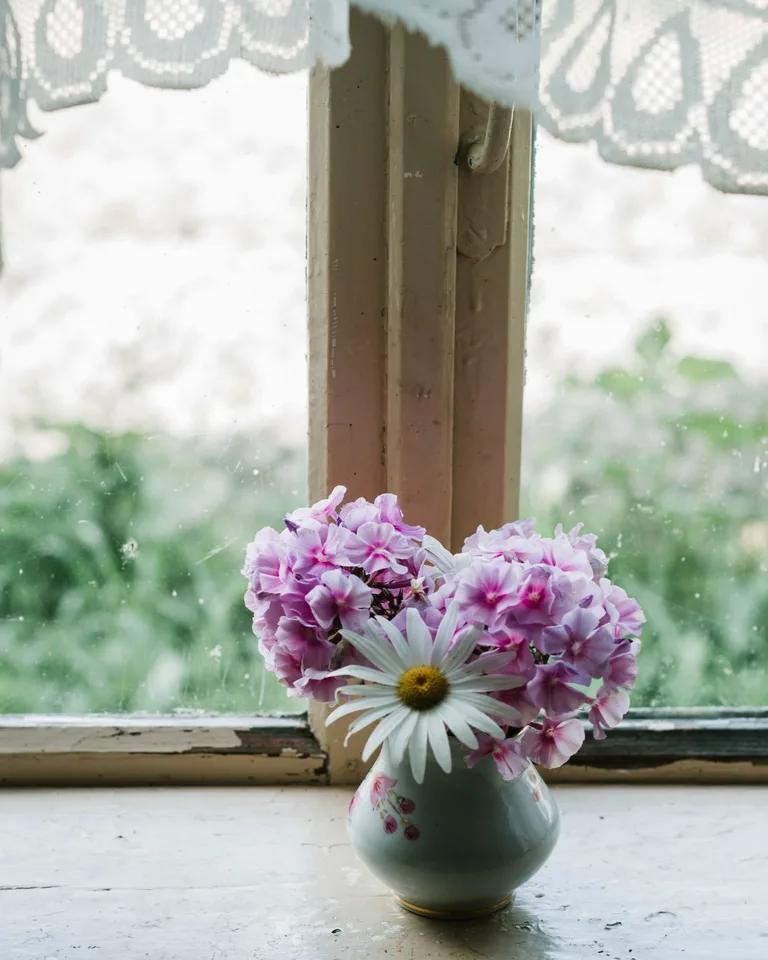
Colored vintage glass — amber, green, pale blue — turns even grocery-store stems into something special. The trick is scale: a small posy in a small bottle, grouped in threes on a dresser or deep windowsill. Mismatched bottles are better than a matching set.
Check thrift stores for old apothecary bottles and bud vases; they’re usually under two dollars. Fill them with whatever’s blooming, even if it’s just a few stems snipped from the yard.
14. Forage Your Own Bedside Wildflowers

The most cottagecore flower arrangement is the one you gathered yourself. A basket, a pair of scissors, and a walk through a meadow (or your own garden) beats any florist run. Queen Anne’s lace, black-eyed Susans, and cosmos all arrange themselves — just cut stems at varying lengths and let them fall naturally.
A note on foraging etiquette: only pick where it’s allowed, never take more than a third of what’s growing, and skip anything you’re not sure is safe to handle. Your garden is the easiest ethical source.
15. Layer Blankets Like You Mean It
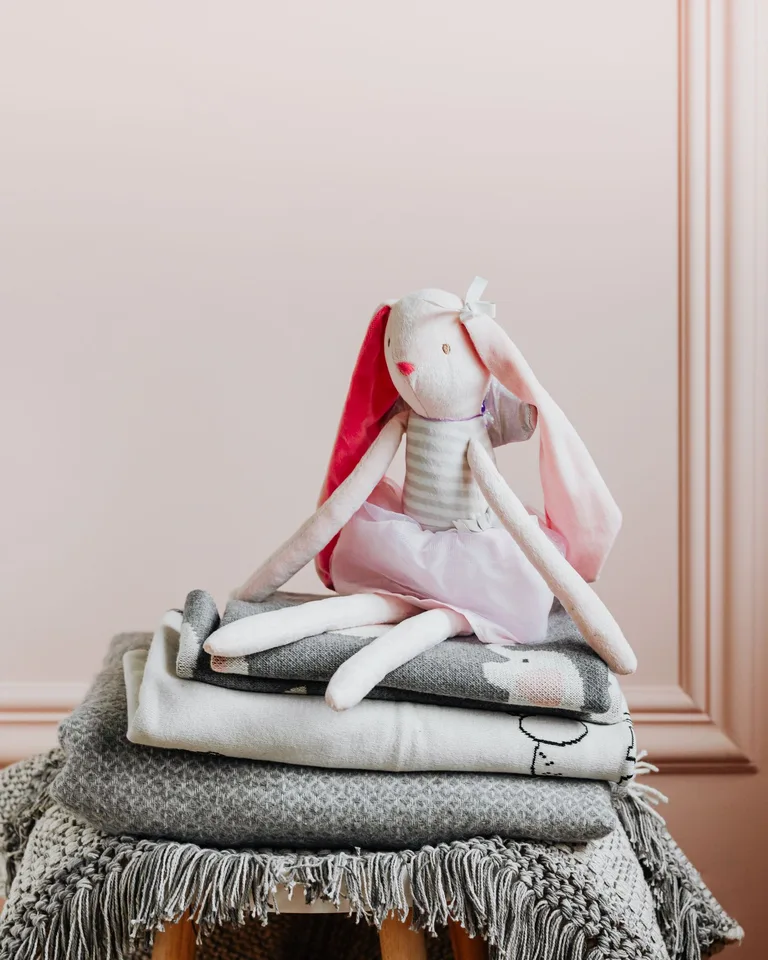
Cottagecore beds are never made with a single cover. Stack them: sheet, light blanket, quilt, throw — each layer slightly askew so every texture peeks out. The bed should look like you could burrow into it, because you should be able to. Three to four visible layers is the sweet spot; more than that gets fussy.
Vary the weights as well as the patterns: a nubby wool throw over a smooth cotton quilt over crisp linen. That contrast is what makes people want to touch the bed, which is the whole game.
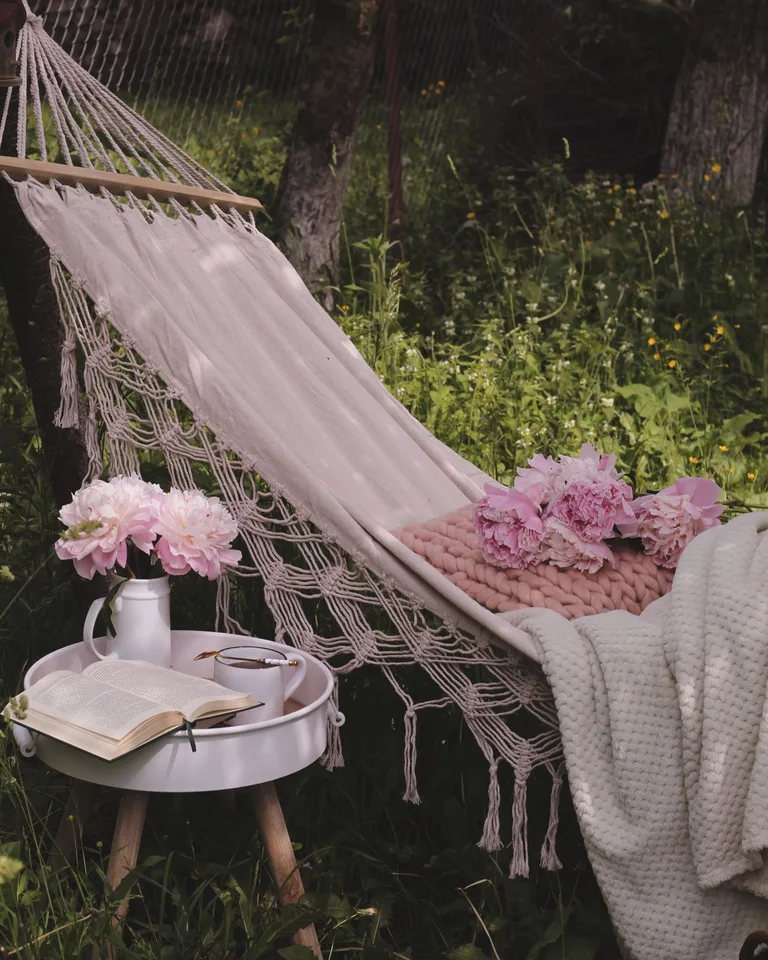
16. Finish With Vintage Fabric Accents

The final layer is the small stuff: a folded vintage tablecloth as a bed runner, a patchwork cushion made from old shirts, a length of floral fabric draped over the headboard. These are the details that make a cottagecore bed feel collected over years rather than bought in a weekend.
If you sew even a little, cushion covers from vintage fabric are a perfect starter project — straight seams, instant charm. No sewing machine? A folded quilt square tucked behind the pillows gives you the patchwork hit with zero effort. To carry the look beyond the bedroom, these cottagecore kitchen ideas use the same collected-over-time approach.
Frequently Asked Questions
What is cottagecore bed styling?
It’s a romantic, vintage-inspired way of dressing a bed: natural-fiber bedding, layered quilts and throws, mixed-pattern pillows, and nature touches like dried flowers or linen curtains. The look is cozy and slightly imperfect — collected over time rather than bought as a matching set.
How do you layer a bed for the cottagecore look?
Start with linen or cotton sheets, add a light blanket, then a floral or patchwork quilt folded across the lower third. Finish with a knit throw at the foot and pillows arranged tallest-to-smallest. Aim for three to four visible layers with varied textures.
What colors work best for cottagecore bedding?
Soft, muted tones: cream, oatmeal, sage green, dusty rose, faded indigo, and warm white. Keep the palette to three or four tones so mixed patterns feel coordinated. Small doses of rust or mustard add autumn warmth without breaking the softness.
How can I get the cottagecore bedroom look on a budget?
Thrift the quilt, throw, and pillow covers; buy only the sheets new. Peel-and-stick floral wallpaper, foraged wildflowers, and a $5 lace tablecloth used as a bed runner deliver most of the look for very little. Shop your own linen closet first — you likely own half of what you need.
What patterns are considered cottagecore?
Small florals (ditsy prints), calico, gingham, ticking stripes, and simple patchwork. The key is scale and softness: faded, small-scale prints in muted colors. Mix two or three patterns max, anchored by plenty of solids.
Can cottagecore bed styling work in a small bedroom?
Absolutely — it may work even better, since the coziness suits small spaces. Keep the palette light, use vertical styling (wallpaper, a tall headboard, hanging plants), and choose bedding that doubles as storage, like a lidded basket at the foot. These small bedroom storage ideas pair well with the look.
Sharing a room? These dorm room ideas for two roommates with different styles show how to blend aesthetics without clashing. And if you love the handmade side of this look, a budget built-in bookshelf makes a perfect bedside book nook.