16 Cottagecore Bookshelf Styling Ideas for a Cozy, Collected Look
Cottagecore bookshelves aren’t organized — they’re composed. Like a still-life painting you can rearrange, the look comes from layering old books with living plants, thrifted treasures, and soft candlelight until the whole shelf feels collected over a lifetime rather than styled in an afternoon.
These 16 cottagecore bookshelf styling ideas work on any bookcase, from a flea-market find to a basic big-box shelf. None require buying a whole new look — most start with what you already own, rearranged with intention.
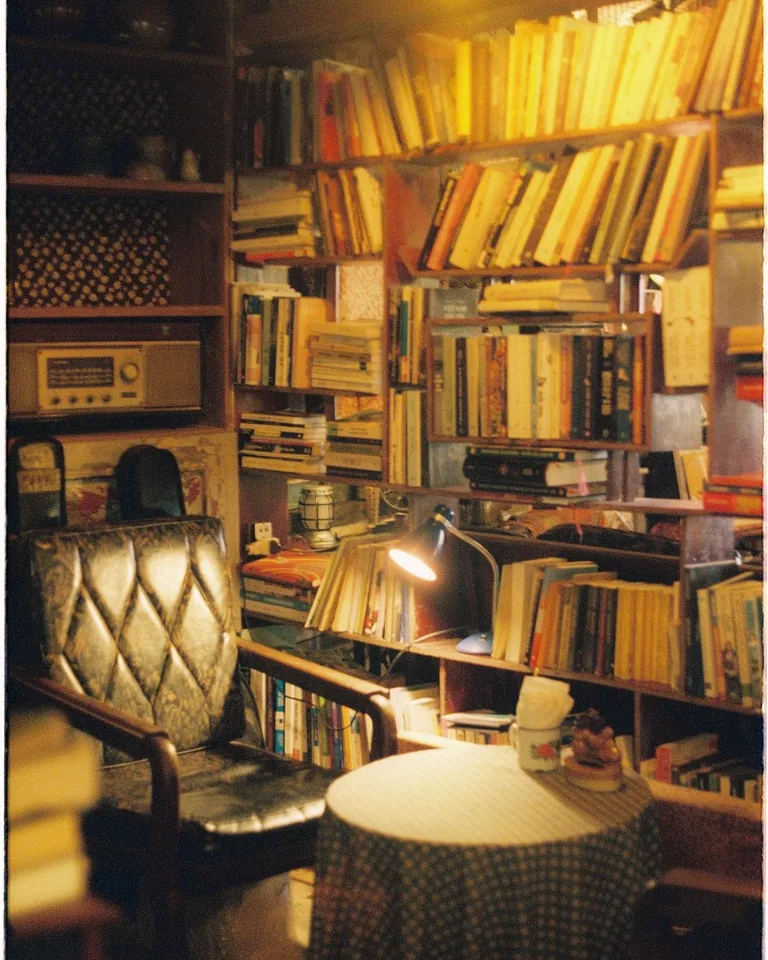
1. Stack Some Books Horizontally
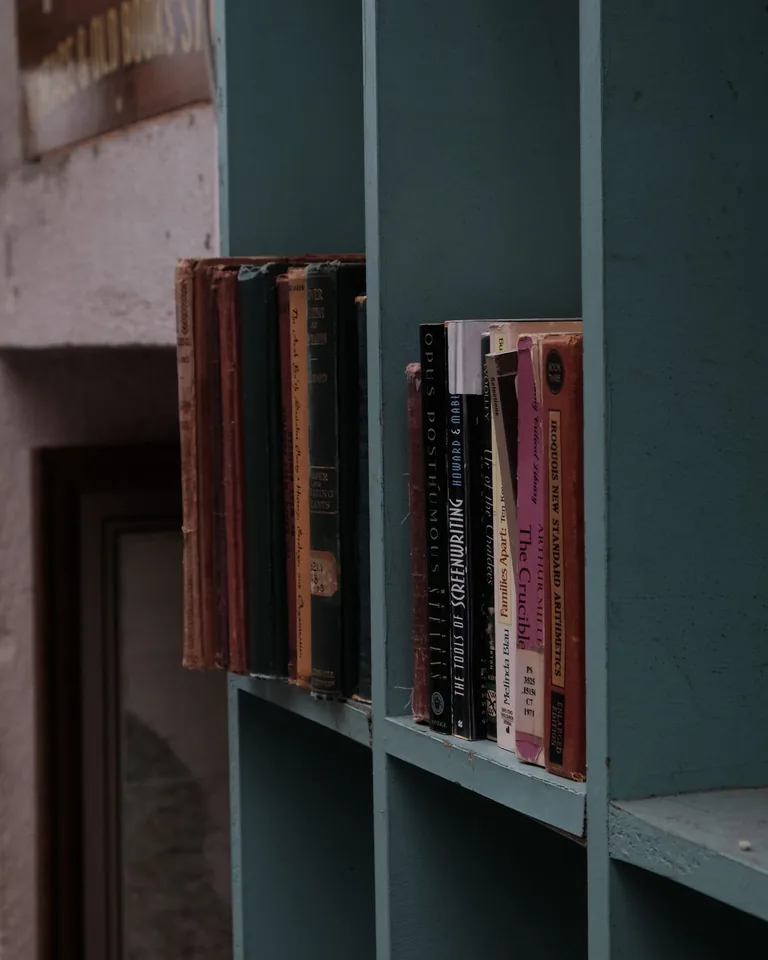
A whole shelf of vertical spines reads as a library; breaking the rhythm with horizontal stacks reads as a home. Stacks create natural pedestals for the objects that make cottagecore shelving sing — a teacup, a candle, a small plant.
Keep stacks to 3–6 books, largest on the bottom, and vary the heights between stacks across the shelf. Alternate one horizontal stack with one vertical run per shelf section and the whole bookcase instantly feels curated rather than crammed.
2. Trail a Pothos Across the Top Shelf

Nothing says cottagecore like something alive softening all those right angles. A trailing pothos or ivy spilling over the top shelf adds movement, color, and that gently overgrown storybook feel — and pothos thrives on the neglectful watering schedule of real life.
Let vines drape 12–18 inches down the side of the bookcase, trimming when they reach the books below. If your shelf is far from a window, a small grow light tucked behind the plant keeps it happy without ruining the mood.
3. Lean Botanical Prints Against the Back

Instead of hanging art on the wall, lean small framed botanical prints against the back panel of the shelf, in front of the books. The layering creates depth, and vintage-style fern or wildflower illustrations are practically the cottagecore mascot.
Thrift frames in mismatched wood tones and print free vintage botanical illustrations — the patina of age is the whole point, so don’t worry about matching. Two small frames per bookcase is plenty; this is an accent, not a gallery wall.
4. Perch a Vintage Teacup on a Stack

A single vintage teacup — especially one with a floral pattern or gold rim — is the fastest cottagecore signal you can put on a shelf. It suggests slow afternoons, borrowed sugar, and a life lived gently.
Set it atop a horizontal book stack where it won’t get knocked, or tuck an empty cup sideways into a gap between books. Solo cups read as intentional; a whole tea set reads as storage — one perfect cup is all you need per shelf. The cottagecore kitchen is the natural hunting ground for these treasures.
5. Tuck Dried Flowers Between Books

Fresh flowers die; dried flowers linger for months in exactly the faded, romantic palette cottagecore loves. A bundle of dried lavender, wheat, or baby’s breath slipped vertically between book groups adds texture and a whisper of scent.
Keep bundles small — three to five stems tied with twine — and wedge them where they won’t topple onto the books. Dried citrus slices hung from a shelf edge with string add a subtle autumnal note that photographs beautifully.
6. Add Candlelight for Evening Glow
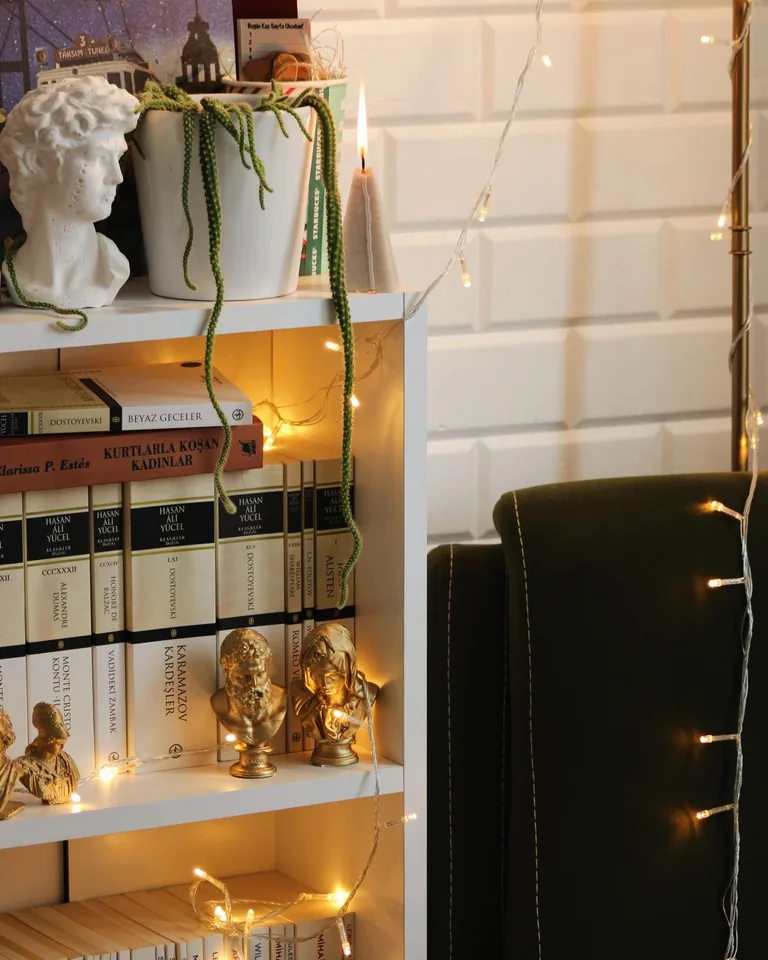
Cottagecore is a mood as much as a look, and nothing sets the mood like candlelight flickering across book spines. A pillar candle or two on the top shelf transforms the bookcase into the room’s evening focal point.
Use real candles only where they’re stable, away from draping plants and paper, and never left burning unattended — or sidestep the worry entirely with good flameless candles, which now flicker convincingly. Cluster odd numbers (three reads best) at varying heights.
7. Display Found Treasures

The soul of cottagecore shelving is the stuff with a story: a smooth stone from a walk, an old brass key, a jar of sea glass, a spool of thread from grandmother’s sewing box. These found objects are what separate a styled shelf from a decorated one.
Give each treasure its own moment — a small object lost in a crowd reads as clutter, but one shell on a book stack reads as poetry. Rotate them seasonally; the shelf should feel like it evolves with your life, because it does.

8. Leave Breathing Room

The most common cottagecore mistake is stuffing every inch. Negative space is what lets each object be seen — a half-empty shelf with five perfect things beats a packed shelf where nothing registers. Restraint is the luxury here.
Aim to fill roughly two-thirds of each shelf, leaving the rest open. If removing things feels wrong, box the extras for a month; when you don’t miss them, donate them. Your shelf (and your dusting routine) will thank you.
9. Mix Old Clothbounds With New Paperbacks

A shelf of only new books looks like a store; a shelf mixing worn clothbounds, faded hardcovers, and fresh paperbacks looks like a life. The variation in size, color, and wear is the texture cottagecore is built on.
Hunt thrift stores for old books with beautiful spines — they cost little and bring instant patina. Intermix rather than segregating old and new; the conversation between a 1960s clothbound and this year’s paperback is the whole aesthetic.
10. Weave in Fairy Lights
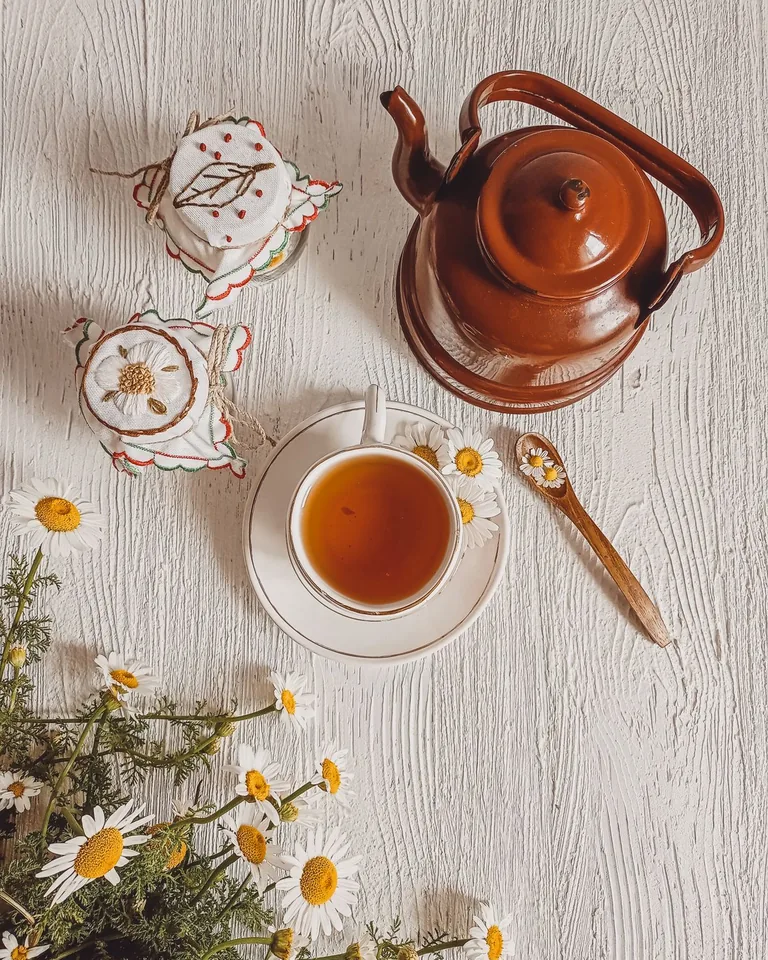
A string of warm-white fairy lights woven along the back edge of a shelf turns an ordinary bookcase into something out of a novel — especially in the dark months when evenings come early. The glow makes book spines look richer and the whole corner feel enchanted.
Choose warm white (never cool blue), battery-operated with a timer so they glow each evening automatically. Drape rather than stringing taut — a gentle swag between anchor points looks organic, not engineered.
11. Frame a Tiny Portrait or Photo

A small framed photo — grandparents, a childhood home, a beloved pet — tucked among the books makes the shelf unmistakably yours. Black-and-white or sepia prints blend most seamlessly with the vintage palette.
Keep frames small (4×6 or 5×7 max) and lean rather than hang them, slightly overlapping a book stack for that casual, collected feel. One personal photo per bookcase is the sweet spot; more starts to feel like a mantel.
12. Add Seasonal Touches

Cottagecore lives close to the seasons, and your shelves should too: small pumpkins and dried corn in fall, evergreen sprigs and pinecones in winter, a budding branch in spring, wildflowers in summer. Four tiny refreshes a year keep the shelf feeling alive.
Keep a small “seasonal shelf box” in a closet with your rotation pieces so the swap takes ten minutes. The books stay; only the accents change — which is exactly how a real cottage would evolve through the year.
13. Corral Clutter in Woven Baskets Below

Every beautiful shelf needs somewhere for the un-beautiful necessities: chargers, remotes, the books you’re actually reading. Lidded woven baskets on the bottom shelf swallow clutter while adding the natural texture cottagecore craves.
Choose baskets that fit the shelf opening snugly — two or three across the bottom shelf creates a calm, uniform base that makes the styled shelves above look even better. Seagrass, rattan, and willow all age gracefully.
14. Group Spines in Soft, Muted Tones

You don’t need a full rainbow bookshelf — cottagecore favors the quieter version: grouping books in soft, muted color families (creams, sages, dusty roses, faded blues) so the shelf reads as a watercolor rather than a shout.
Pull the loudest neon spines to a less visible shelf or turn them spine-in for a neutral linen look. This isn’t about hiding books; it’s about letting the overall palette whisper instead of compete with your treasures.
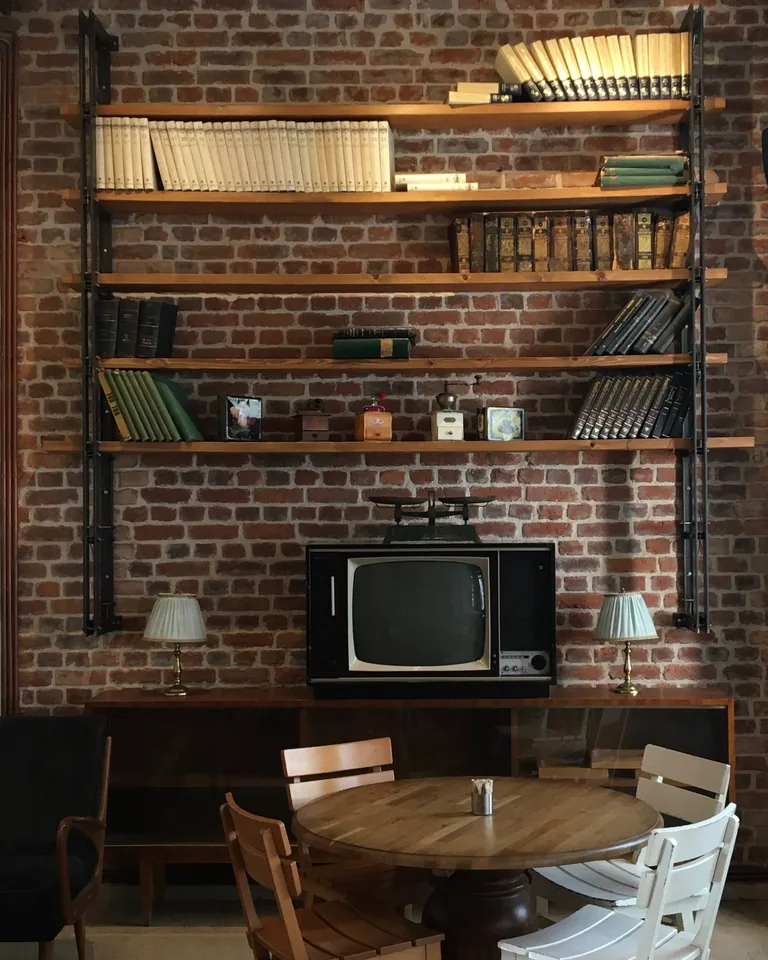
15. Top the Bookcase With a Small Lamp

A small lamp on top of the bookcase — a tiny shaded table lamp or a candle-style sconce — bathes the whole shelf in warm downward light and makes the bookcase feel like furniture rather than storage. It’s the single most transformative addition on this list.
Choose a warm bulb (2700K or lower) and a shade that directs light down across the spines. If there’s no outlet nearby, rechargeable LED picture lights mounted above the top shelf achieve the same glow with no wiring.
16. Show Off Something Handmade

The ultimate cottagecore credential is something made by hand — yours or someone you love. A knitted bookmark draped over a stack, a hand-thrown mug, an embroidered hoop, a child’s drawing in a frame: these are the objects no store can replicate.
Give handmade pieces pride of place at eye level, where they’re seen daily. A shelf that includes something made with love doesn’t just look cottagecore — it is, in the truest sense, a home.
Frequently Asked Questions
How do you style a bookshelf cottagecore?
Layer old and new books with natural textures and personal treasures: trailing plants, vintage teacups, dried flowers, candles, and found objects. Stack some books horizontally, lean small art against the back, and leave breathing room so each piece can be seen.
How do you make a bookshelf look cozy instead of cluttered?
Cozy comes from restraint and warmth: fill only two-thirds of each shelf, group objects in odd numbers, add warm lighting like candles or fairy lights, and use a consistent muted palette. Clutter is many unrelated things competing; coziness is fewer things in harmony.
Should you leave empty space on bookshelves?
Yes — negative space is essential. Empty areas give the eye rest and make the styled objects stand out. A good rule is two-thirds full, one-third open, with the open space distributed rather than isolated on one shelf.
How do you mix books and decor on shelves?
Alternate vertical book runs with horizontal stacks, then use the stacks as pedestals for decor. Tuck small objects into gaps between books, lean art behind them, and keep a rhythm of books–space–object across each shelf so neither dominates.
What colors suit cottagecore bookshelves?
Soft, muted, nature-derived tones: cream, sage green, dusty rose, faded blue, warm wood, and aged brass. Let these dominate and relegate bright modern colors to lower or less visible shelves for a cohesive storybook feel.
A cottagecore bookshelf is never really finished — it grows the way a garden does, one treasure at a time. Start with the bones (books, breathing room, warm light), then let the plants trail and the found objects accumulate. If the rest of your home is catching the cottage bug too, the cottagecore kitchen is the natural next project, a blank wall moment gives your reading corner a backdrop, and built-in bookshelves on a budget take the whole look permanent — while thoughtful wall decor nearby, a coffered ceiling overhead, or even a vintage-inspired bath down the hall keep the storybook feeling flowing through the whole house.