
20 Vintage Pink Bathroom Ideas That Feel Charming, Not Dated
A vintage pink bathroom works when the pink feels intentional rather than leftover. The most successful ones pick one hero feature — original tile, a colored tub, or a blush vanity — and keep everything else calm: white porcelain, simple chrome or brass, and one or two period details. Whether you are restoring a mid-century pink tile bathroom or building the look from scratch, the 20 ideas below cover tile, fixtures, color pairings, textiles, and finishing touches that keep pink charming instead of dated.

1. Let a White Clawfoot Tub Carry the Room

A white clawfoot tub is the fastest way to make pink feel like a design choice. Set it against blush walls or pink tile and the tub becomes the room’s anchor, giving the eye somewhere clean to rest. Keep the surround simple — a plain white shower curtain, chrome fittings, and bare floor around the feet. Practical tip: if the tub sits on wood-look flooring, seal the floor well; standing water near claw feet is what ages these rooms prematurely.
2. Tile the Shower in Blush Subway Tile

Full-height pink tile in the shower reads vintage without needing any other pink in the room. A soft blush subway layout with white grout keeps it airy, while a contrasting grout makes the pattern read more retro. Pair it with a white tub and a frameless or simple curtain surround so the tile is the star. Practical tip: run the same tile onto the ceiling of the shower niche — it looks deliberate and protects a spot people usually forget to waterproof.
3. Give the Floor the Pattern and Keep the Walls Quiet
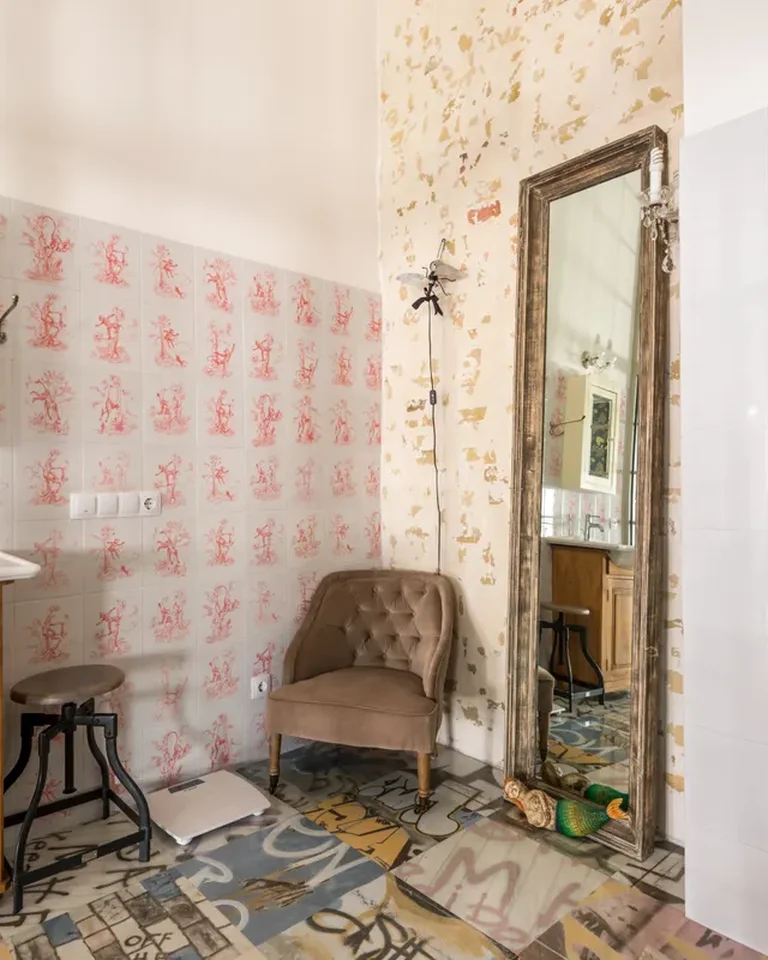
When the floor carries a pink pattern — basketweave, hexagon, or a retro motif — plain walls in white or pale pink keep the room from shouting. This is the best approach if you love pink but worry about resale or visual overload. Practical tip: choose a slip-resistant finish for the floor tile and repeat one pink from the pattern in a towel or bath mat so the floor feels connected to the room.
4. Bring Back the Pink Pedestal Sink
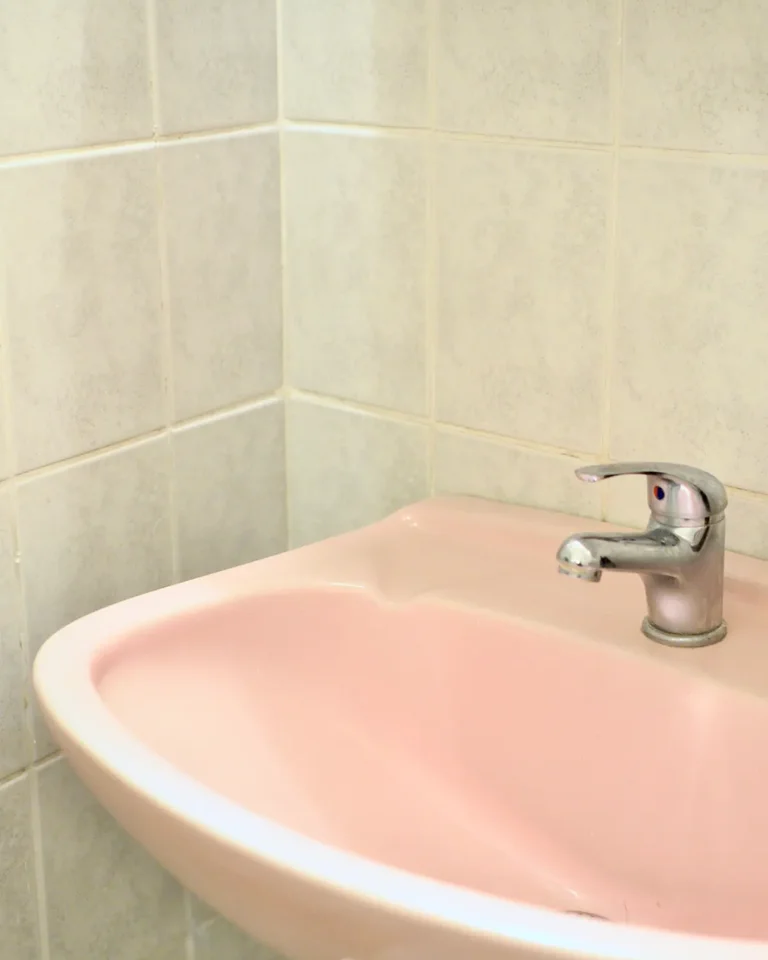
A colored pedestal sink is one of the most authentic mid-century details you can add, and it takes up almost no visual space. It works especially well in small powder rooms where a vanity would crowd the room. Match it to your tile’s pink undertone — cool pink tile with a warm pink sink will clash. Practical tip: salvage yards and architectural reclaim shops are the best sources for genuine period sinks; check the drain placement before buying, since older rough-ins often sit at different heights.
5. Paint the Vanity Blush and Keep the Top Stone

If pink tile feels like too much commitment, put the color on the vanity instead. A blush-painted cabinet with a white marble or quartz top gives you the vintage pink mood with an easy exit — paint can be changed in a weekend. White walls and a simple mirror keep it fresh. Practical tip: use a cabinet paint rated for high-moisture rooms and add a clear topcoat; bathroom steam is what makes painted vanities chip.
6. Run Pink Tile Halfway and Paint Above It

A pink tile wainscot — tile up to chair-rail height, paint above — gives you the vintage color hit while leaving most of the wall light and repaintable. Creamy white or warm ivory above the tile line reads more period-correct than stark white. Practical tip: cap the tile with a proper edge trim or a slim wood chair rail so the transition looks finished rather than abandoned mid-wall.
7. Pair Pink With Mint Green, the Classic Pastel Duo

Pink and mint is the defining pastel pairing of 1950s bathrooms, and it still works because the cool green calms the warm pink. Use one color on the walls or tile and the other in smaller doses — a mint vanity against pink tile, or pink towels in a mint-tiled room. White porcelain between them keeps both colors clean. Practical tip: pick a muted, grayish mint rather than a bright one; saturated mint next to pink can look like a candy shop.
8. Paper the Upper Walls in a Small Floral
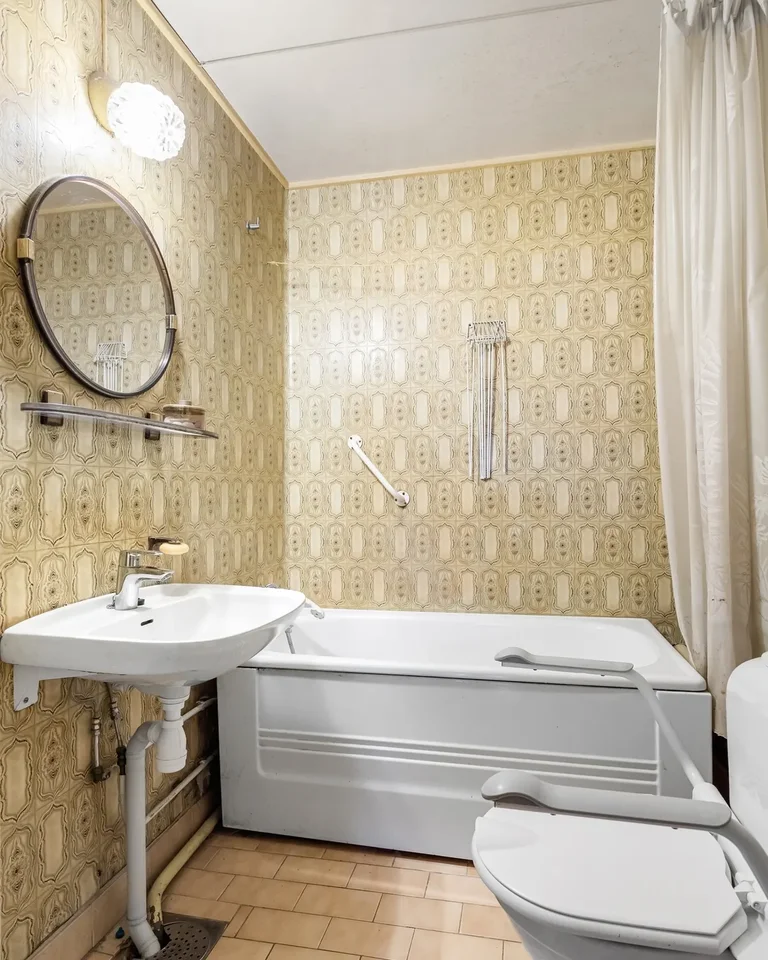
Floral wallpaper above a pink tile line is a period-perfect combination, but scale is everything. Choose a small, dense print with cream and muted green in it so the pattern reads as texture from a distance. Keep it above the tile and away from direct shower spray. Practical tip: use a wallpaper rated for bathrooms or apply a clear matte sealer over standard paper; steam is the enemy, not splashes.
9. Hang a Vintage Mirror Flanked by Simple Sconces
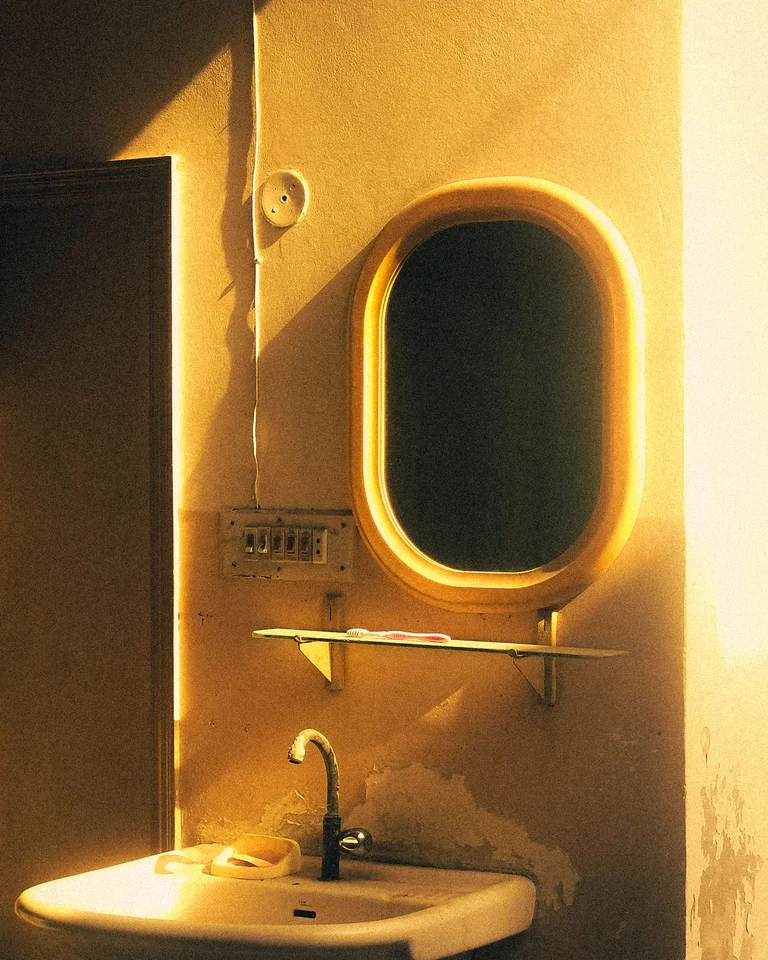
A round or arched mirror with a thin brass or chrome frame does more for a vintage pink bathroom than almost any other accessory. Flank it with two small sconces — ribbed or frosted glass keeps the light soft — and the whole sink wall looks collected rather than decorated. Practical tip: mount sconces at eye level, roughly 65 to 70 inches off the floor, so they light faces evenly instead of casting shadows.
10. Frame Botanical Prints Against the Pink

Botanical prints — ferns, leaves, simple florals — give pink tile a garden-like softness that plain walls can’t. Hang one or two small framed prints where they won’t fight the mirror, such as above a towel bar or beside the medicine cabinet. Cream mats and slim frames keep the look light. Practical tip: choose prints with green and cream tones that echo your towels or plants so the art feels connected to the room.

11. Swap the Shower Curtain for a Retro Print

The shower curtain is the cheapest way to change a pink bathroom’s personality. A bold retro print — geometric, floral, or striped — adds pattern without touching a single tile, and you can swap it seasonally. Keep the rest of the textiles plain so the curtain stays the one pattern in the room. Practical tip: always hang a separate clear liner behind a decorative fabric curtain; it protects the fabric and makes it hang straight.
12. Layer Pink Towels Instead of Renovating

If your bathroom is white and you want the vintage pink feeling, textiles alone can do it. Stack blush and rose towels on an open shelf, add a pink bath mat, and suddenly the room reads pink without a single permanent change. This is also the best fix for a pink bathroom that feels too cold or too stark. Practical tip: buy towels in two close shades of pink rather than one flat color; the slight variation looks richer and hides fading better.
13. Sharpen Soft Pink With Black Hardware

A little black — mirror frame, towel hooks, faucet, or a dark tub exterior — outlines pink tile and stops the room from feeling washed out. The contrast is what makes vintage pink look designed rather than accidental. Use black sparingly and repeat it two or three times so it feels deliberate. Practical tip: matte black shows water spots less than polished black, which matters in a bathroom you actually use every day.
14. Keep an Original Pink Tub and Design Around It
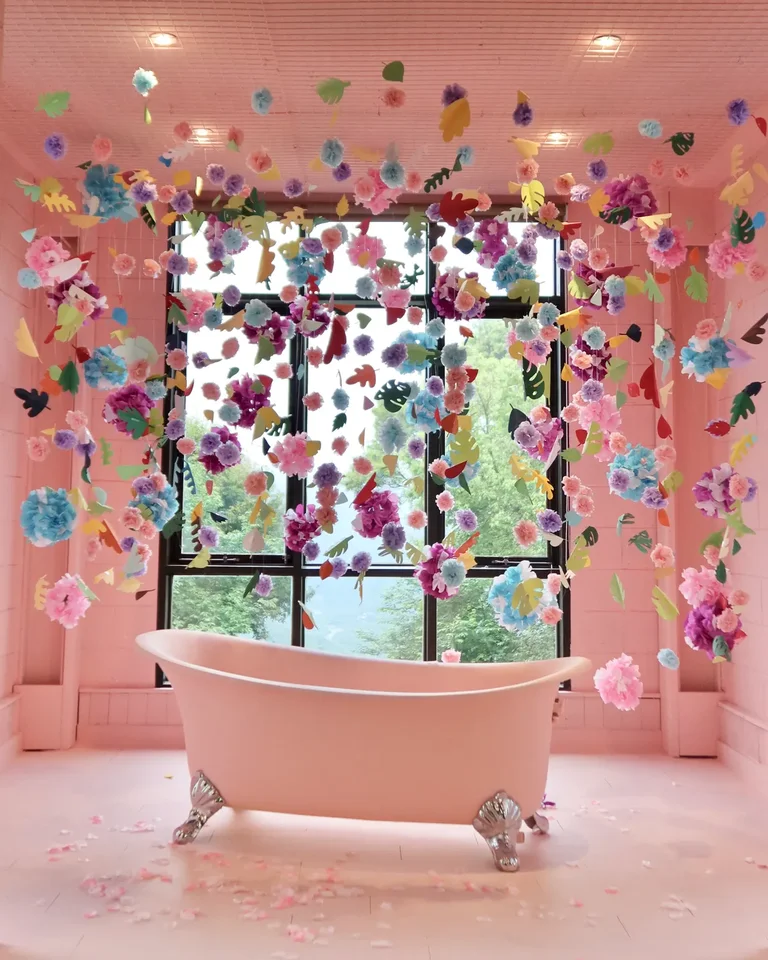
If your home came with a genuine pink tub, keeping it is almost always the right call — reproduction colored fixtures are expensive and rarely match the original glaze. Design the room around the tub’s exact shade: pull the pink into tile, textiles, or a painted vanity, and let white porcelain handle everything else. Practical tip: have the tub professionally reglazed only if the enamel is failing; a sound original finish will outlast most modern coatings.
15. Add Plants to Keep Pink From Feeling Sugary
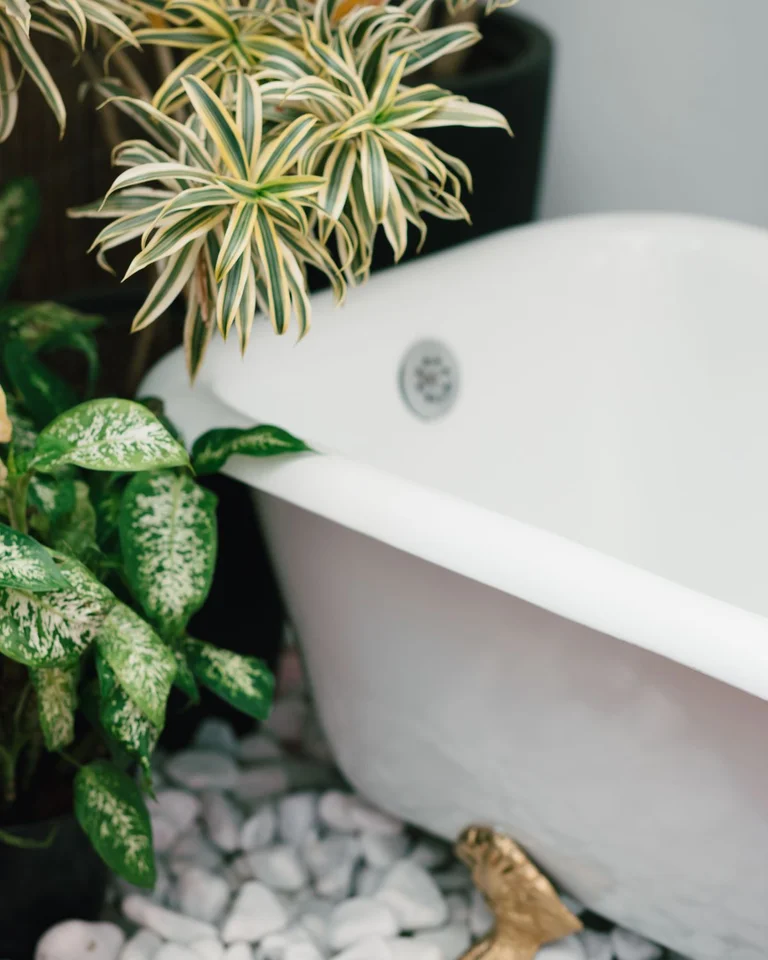
Greenery is the fastest way to balance a pink bathroom. The cool green tones break up large pink surfaces and make the room feel alive rather than decorated. Ferns, pothos, and spider plants all tolerate bathroom humidity and low light. Practical tip: hang one plant from the ceiling or a high shelf and set one on the floor — the two heights together make the greenery feel like part of the design, not an afterthought.
16. Warm the Palette With Aged Brass
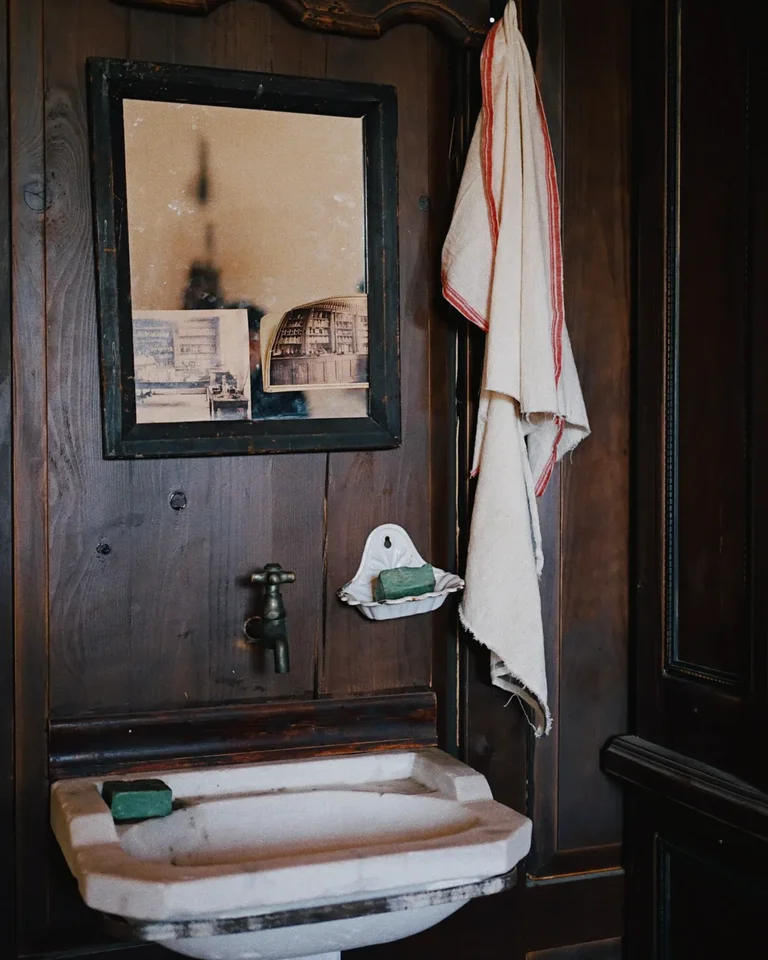
Aged or brushed brass against pink tile creates a warm, collected feeling that chrome can’t quite match. Use it on the faucet, mirror frame, or light fixtures — but repeat it at least twice so it looks intentional rather than random. Practical tip: unlacquered brass will develop a patina over time; if you prefer a consistent finish, choose lacquered brass and clean it with a soft cloth only.
17. Cool Things Down With Powder-Blue Accents
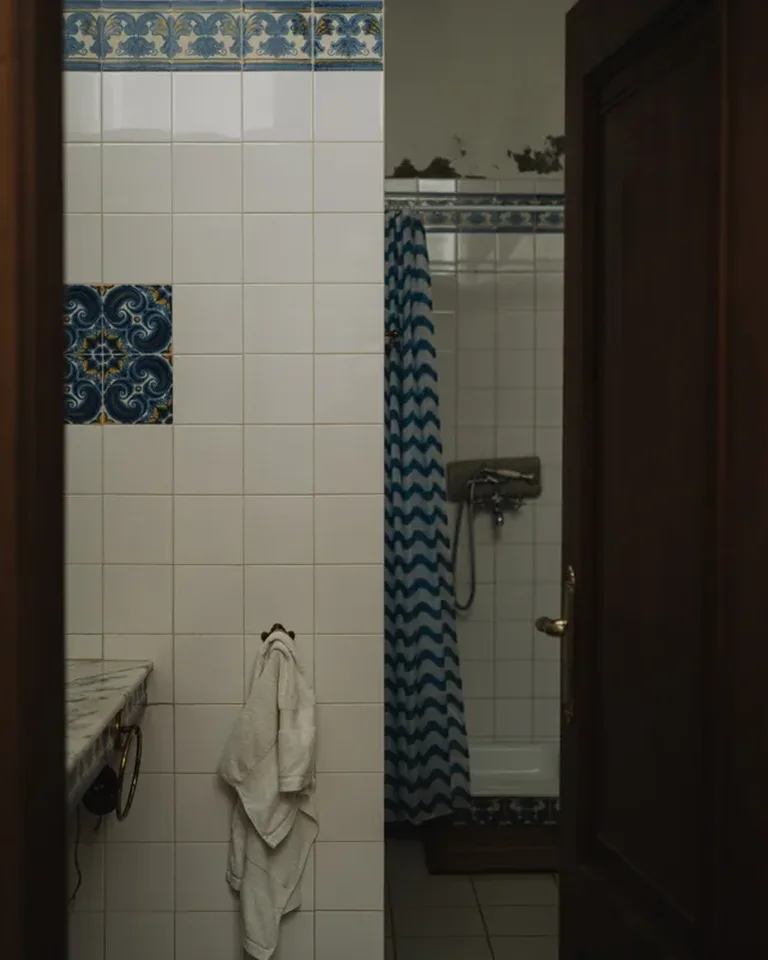
Powder blue is pink’s quiet counterpart — softer than mint, calmer than navy. A few blue towels, a small vase, or a blue-patterned floor tile cools a pink room without introducing a whole second color story. Keep the blue in the same muted register as your pink so neither color shouts. Practical tip: confine the blue to washable textiles first; if you love the combination after a month, then consider committing to it in tile or paint.
18. Style the Counter Like a Vintage Vanity Tray
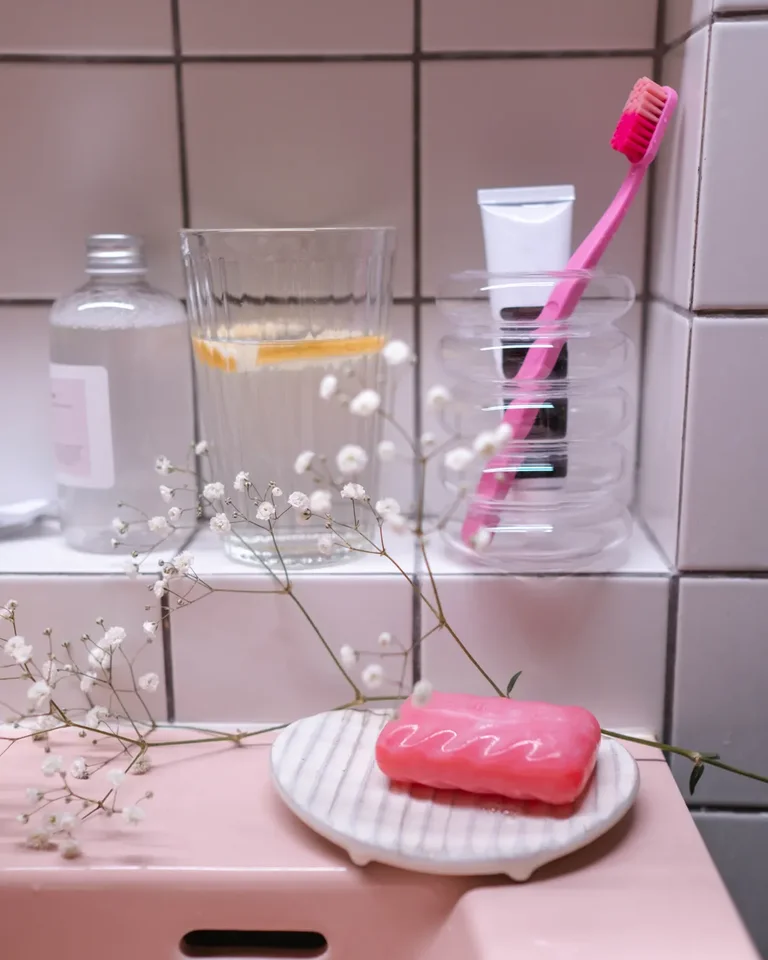
A small tray that corrals your soap, toothbrush holder, and a folded washcloth turns an ordinary counter into a vintage vanity moment. Glass, ceramic, or mirrored trays all suit the pink palette; the tray itself is what makes everyday items look arranged. Practical tip: keep the tray to one side of the sink so the other side stays clear for actual use — a styled counter that can’t be used will be dismantled within a week.
19. Sweat the Small Pink Details
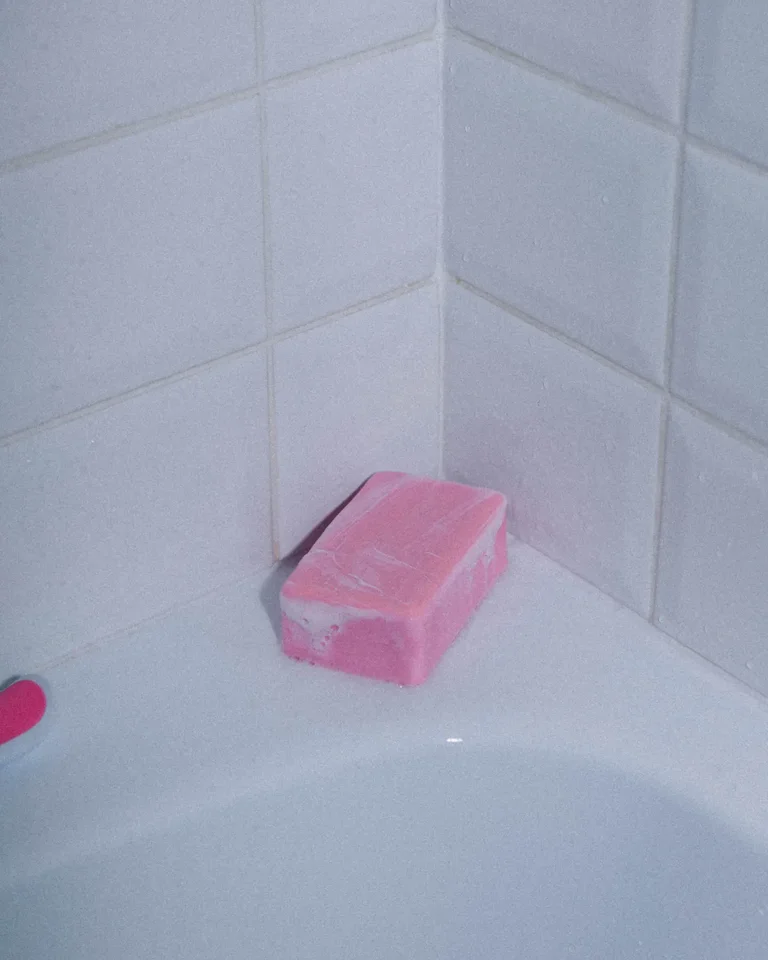
A pink bar of soap, a rose-tinted hand towel, a small ceramic dish for rings — these tiny pink notes are what make a vintage bathroom feel considered. They cost almost nothing and they tie the bigger pink features to the everyday details. Practical tip: choose one small pink accent per surface (counter, tub edge, shelf) so the details feel scattered naturally rather than staged.
20. Let a Statement Ceiling Light Finish the Room

In a small pink bathroom, the ceiling is free real estate. A compact crystal flush mount or a small chandelier draws the eye up and adds the jewelry the room needs — especially if your walls and fixtures are simple. Scale it to the room; a modest fixture in a small bath looks intentional, while an oversized one crowds it. Practical tip: put the ceiling light on a dimmer. Vintage pink tile looks dramatically better in warm, low light than under harsh overhead brightness.
How to Keep a Pink Bathroom From Looking Dated
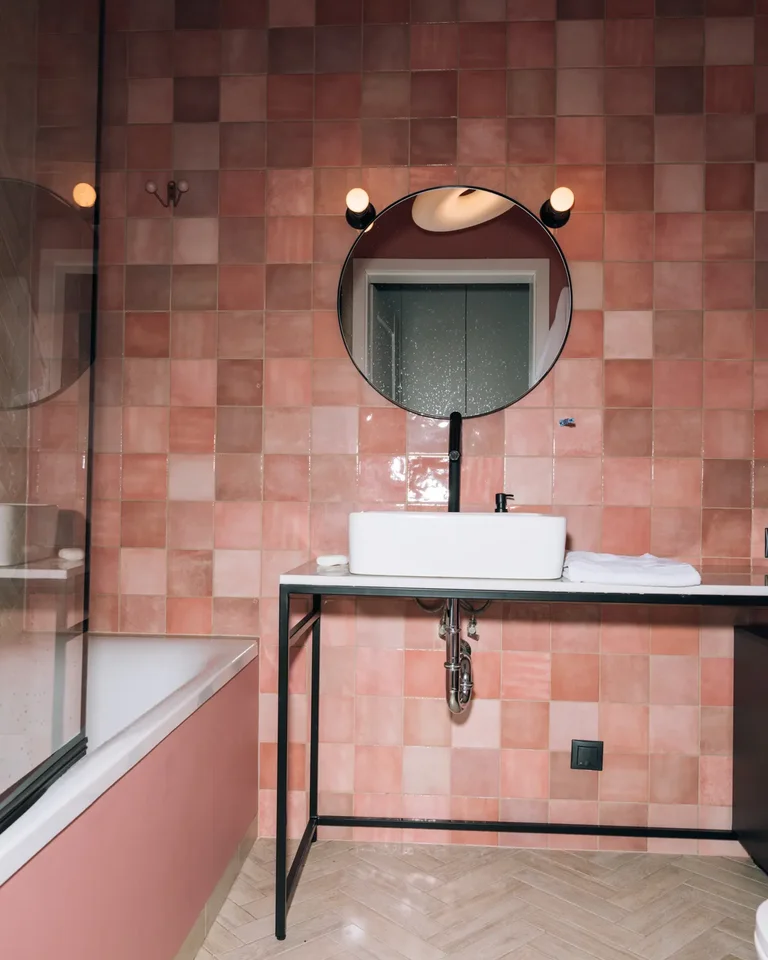
Pink bathrooms tip into dated territory for three reasons: too many competing pinks, shiny plastic-looking fixtures, and harsh lighting. Fix those and the room reads vintage-chic. Stick to one or two pink tones and repeat them deliberately. Choose matte or soft-finish surfaces over glossy ones where you can. And light the room warmly — pink tile under warm light glows; under cool fluorescents it looks flat and tired.
Frequently Asked Questions
Are pink bathrooms coming back in style?
Yes. Original mid-century pink tile bathrooms are now widely preserved rather than ripped out, and blush tones have become a mainstream bathroom color. The current approach favors softer, muted pinks paired with warm metals and natural textures over the glossy bubblegum pinks of the past.
What colors go well with pink bathroom tile?
White and cream are the safest partners, keeping pink the clear star. Mint green and powder blue give a classic retro pastel pairing, while black hardware adds sharp contrast. Warm wood and aged brass soften pink and keep it from feeling sugary.
How can I update a pink bathroom without replacing the tile?
Work with the tile instead of against it: swap the shower curtain, layer pink and neutral textiles, update the mirror and lighting, change the hardware finish, and add plants or art. These surface-level changes cost little and most are reversible.
Should I keep an original pink toilet and sink?
If they are in good condition, yes — original colored fixtures in working order are increasingly hard to replace, and reproductions rarely match the original glaze. Keep them clean and well-maintained, and design the rest of the room around their exact shade.
Start with the one change that bothers you most — the lighting, the curtain, the mirror — and let the rest of the room follow. A vintage pink bathroom doesn’t need a renovation to feel intentional; it needs a few decisions made on purpose.