15 Pumpkin Porch Decor Ideas That Look Styled, Not Random
Every autumn the same thing happens: you buy a cheerful pile of pumpkins, plonk them on the porch steps, step back — and something’s just off. They don’t look festive and welcoming. They look like they rolled off a truck and stopped wherever gravity left them.
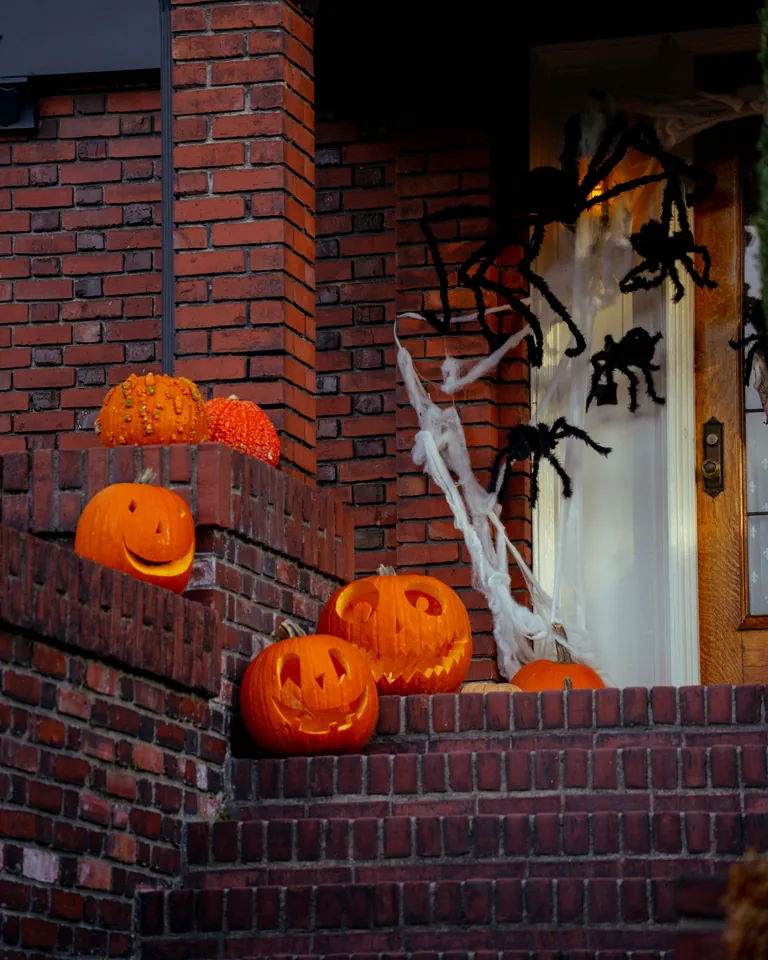
The problem is almost never the pumpkins. It’s that they’ve been scattered with no plan: no repetition, no anchor piece, no color logic. The fix is a handful of simple styling rules — start with your biggest pumpkin, work in odd-numbered clusters, commit to a palette — that turn a random heap into a display that looks intentional. Here are fifteen ideas that do exactly that.
Why Pumpkin Displays Look Random
A pile of pumpkins reads as random when there’s no pattern for the eye to follow: no repetition, no variation in size, no color logic, no focal point. Styled displays feel calm because they have rhythm — a clear biggest piece anchoring everything and a limited palette holding it together. Once you know that “random” really means “no anchor and no pattern,” every idea below is just a way to add one of those two things.
1. Start With One Giant Anchor Pumpkin
This is the single most useful trick: place your largest pumpkin first and build everything around it. Grab at least one monster pumpkin, set it down as the anchor, and work outward and downward with progressively smaller ones. Starting big gives you an instant focal point and a sense of scale to arrange against. Start small — or all the same size — and there’s nothing for the eye to land on, which is exactly what makes a display feel scattered.
2. Cascade Them Down the Front Steps
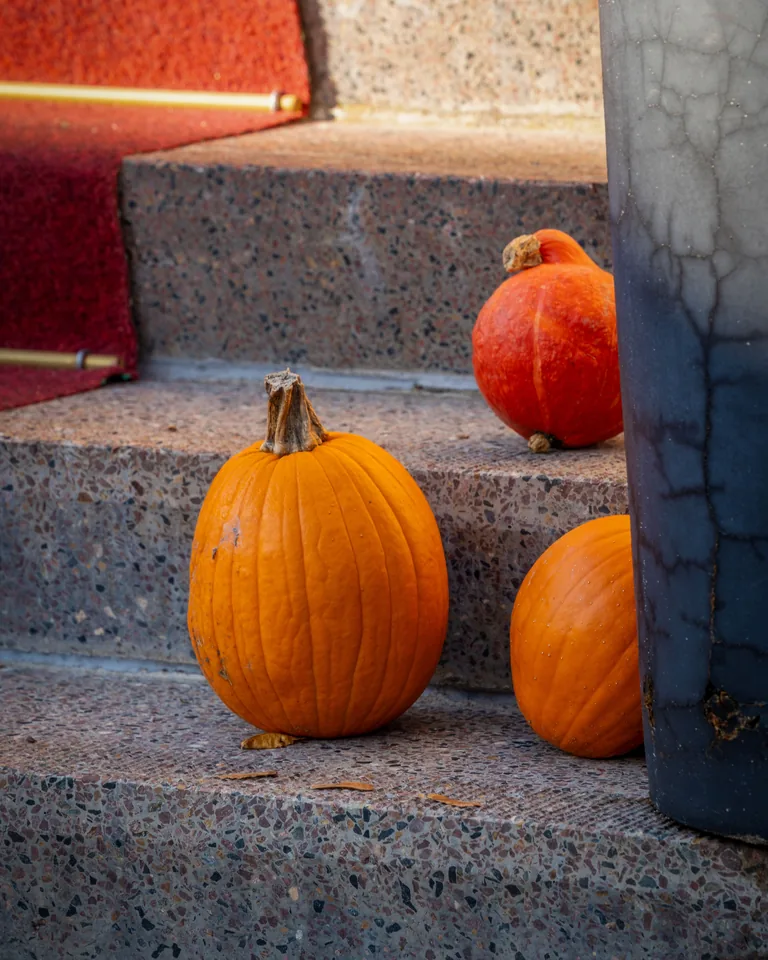
Here’s the placement method that makes step displays look effortless: put your largest pumpkins, plus lanterns and mums, along the outside edges of the steps first, framing each stair. Then fill inward and downward with smaller pumpkins and gourds. Building the frame first and filling toward the middle is what creates that lush, professional cascading look instead of a random smattering across each tread.
3. Commit to a Color Palette
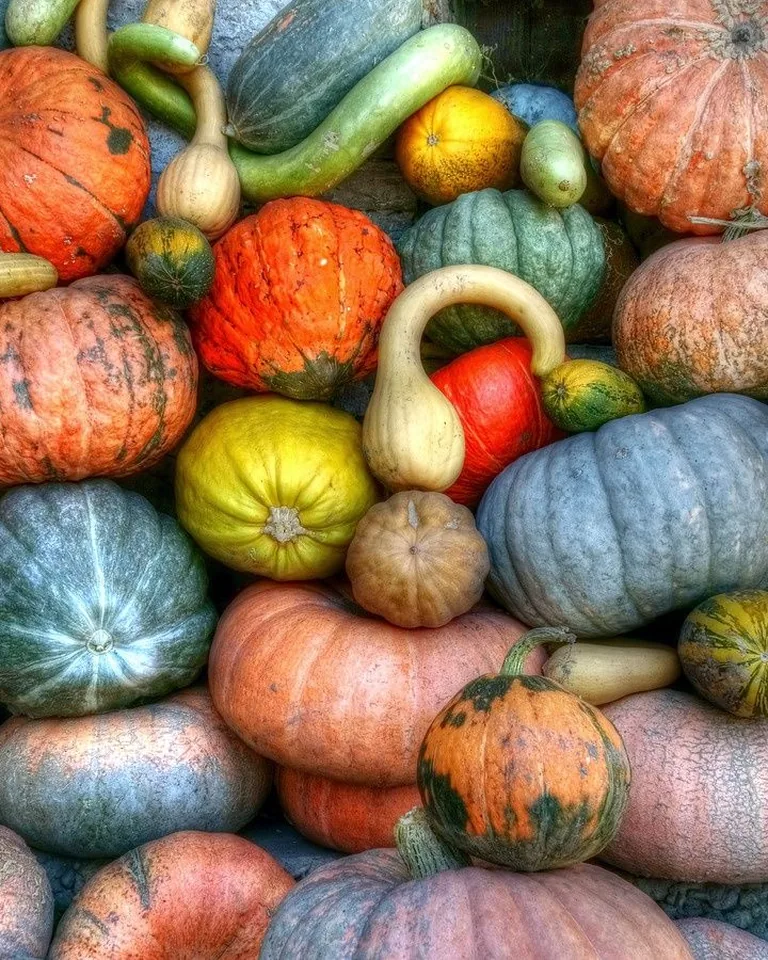
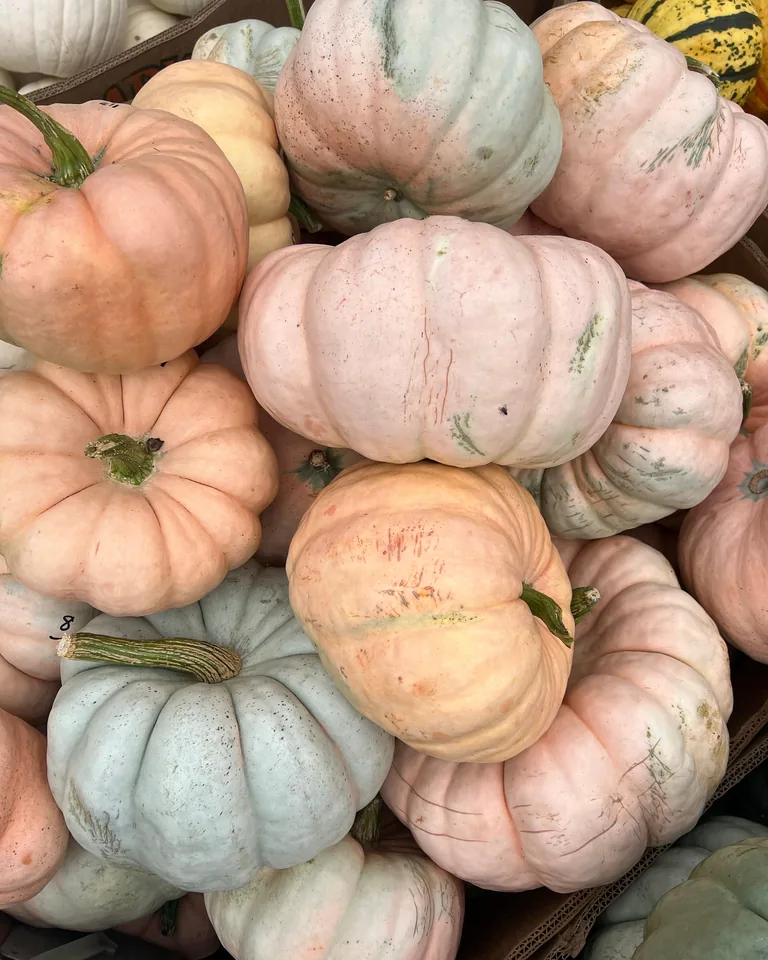
Nothing looks more random than one of every color. Choose a defined palette before you buy and stick to it: an all-neutral scheme of white, cream, green, and pale gray for a calm elegant look; a classic muted-orange-and-white mix; or a rich harvest blend. Coordinate with the colors already on your house and front door. A limited, deliberate palette is one of the biggest differences between “styled” and “whatever the store had.” If you want help thinking in palettes, the color thinking in these vintage pink bathroom ideas shows how a restrained scheme pulls a whole space together.
4. Mix Heirloom Shapes and Textures
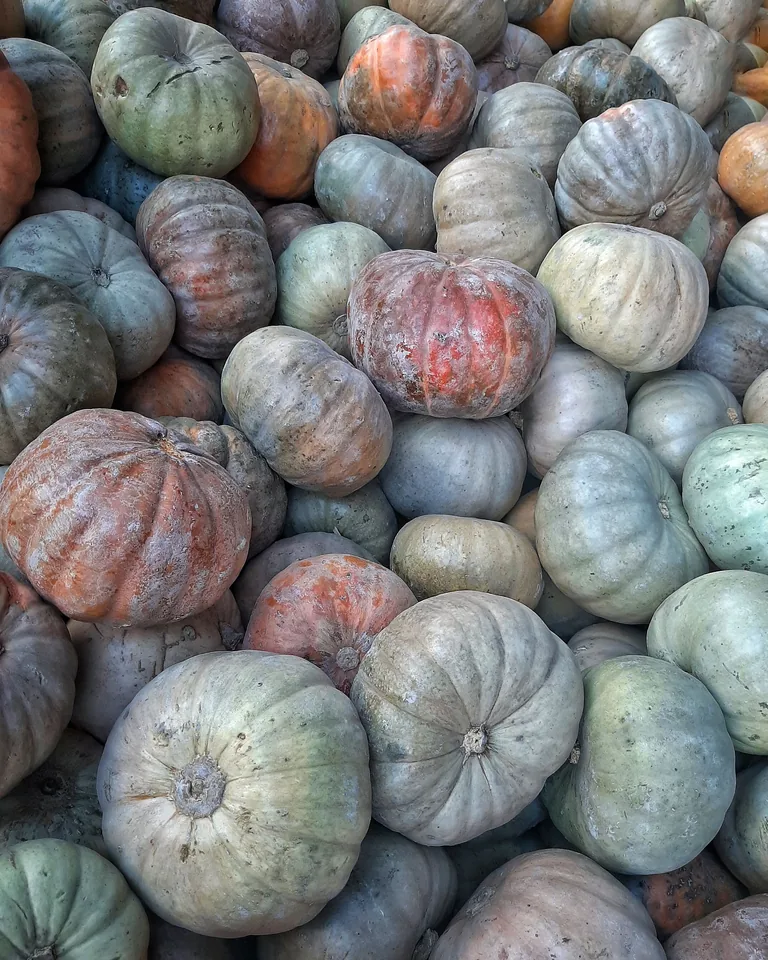
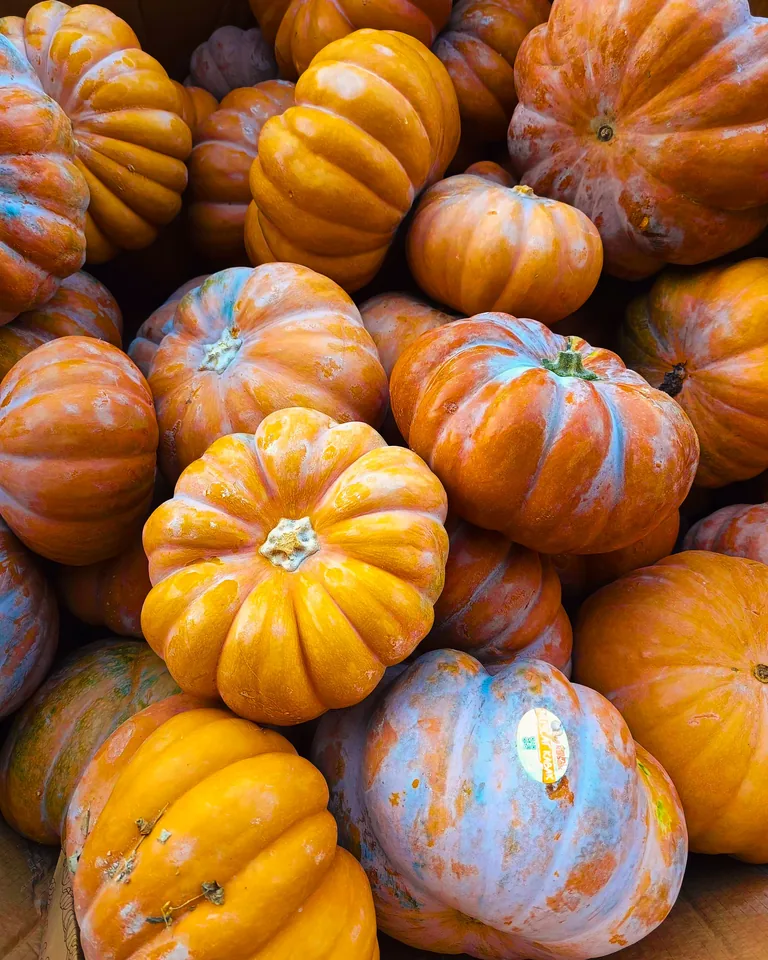
Beyond size, vary the shapes and surfaces. Throw a few lumpy, warty heirloom pumpkins and knobbly gourds in among the smooth classics — the contrast between bumpy and smooth instantly makes a display look more designed and less like a uniform store haul. Tall skinny varieties, squat round ones, and flat cheese pumpkins all add interest. That mix of silhouettes is what gives high-end fall porches their depth.
5. Stack a Pumpkin Totem
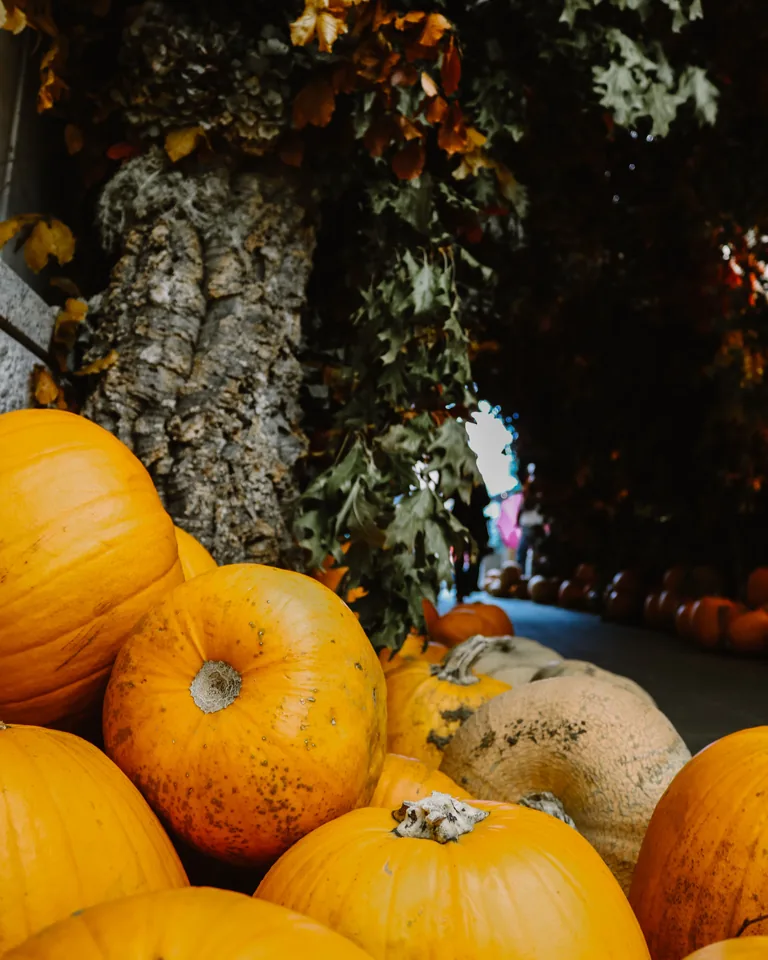
Stack three to five pumpkins from largest to smallest for a bold totem beside the front door — use a wooden dowel or skewer through the centers for stability. A stacked totem makes a strong vertical statement that draws the eye up and anchors the whole entry. It works especially well flanking both sides of the door for a formal, symmetrical look, or as a single statement piece on a smaller stoop.
6. Fill a Basket or Crate
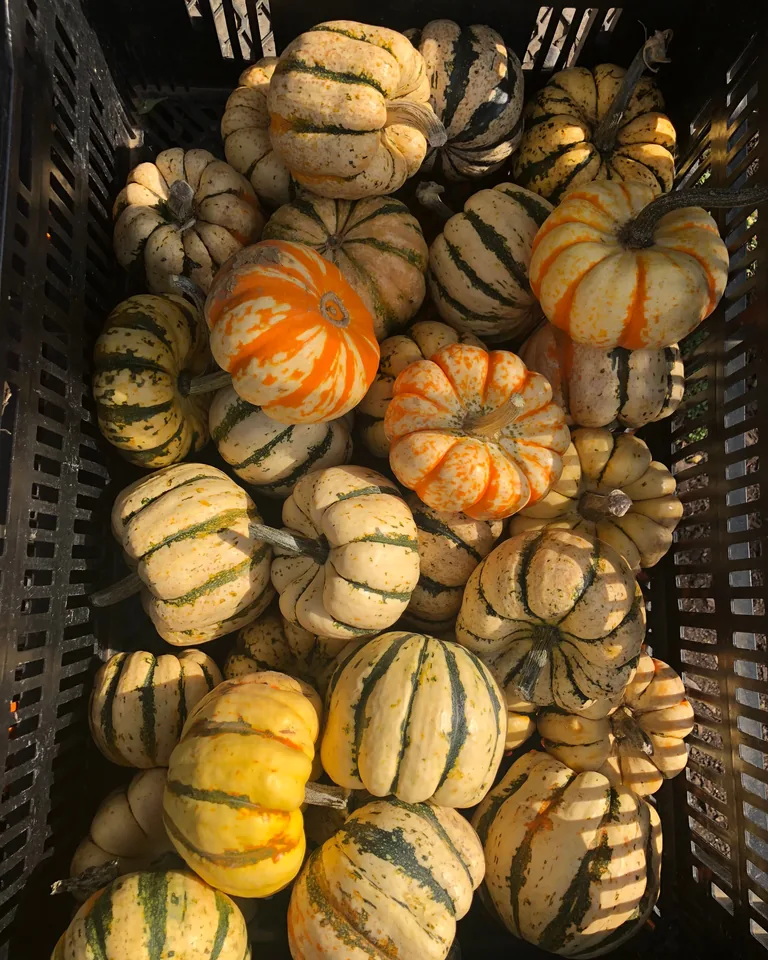
If loose pumpkins feel too hard to control, corral them. A large basket, wooden crate, galvanized bucket, or wheelbarrow filled with a mix of pumpkins and gourds instantly looks intentional — the container does the arranging for you. A tipped basket with pumpkins spilling out is a classic, foolproof look. Containers are especially useful on small porches, where one well-filled vessel reads as far more styled than the same pumpkins loose on the ground.
7. Pair Pumpkins With Mums
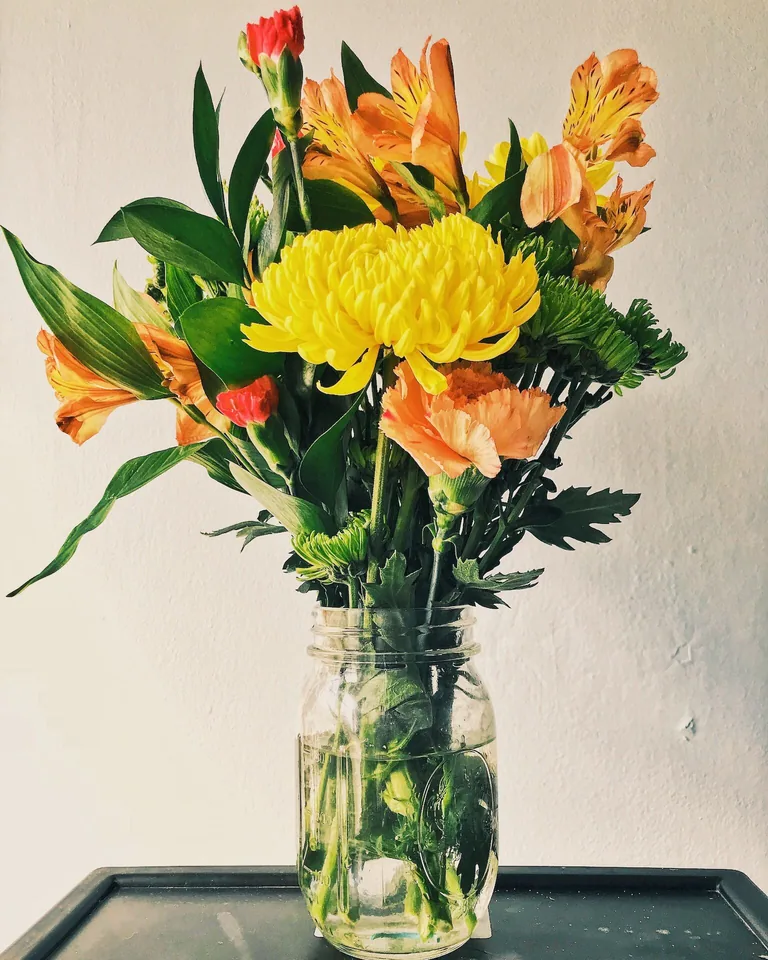
Pumpkins alone can look sparse, so pair them with fall plants. Mums are the classic partner — group pots in gold, rust, burgundy, and deep purple — and ornamental kale or cabbage adds gorgeous ruffled texture. Tuck pumpkins among and beside the plants and everything instantly looks lusher. The plants give pumpkins something to sit against and fill the gaps that otherwise read as empty and awkward.
8. Layer In Lanterns for Evening Glow
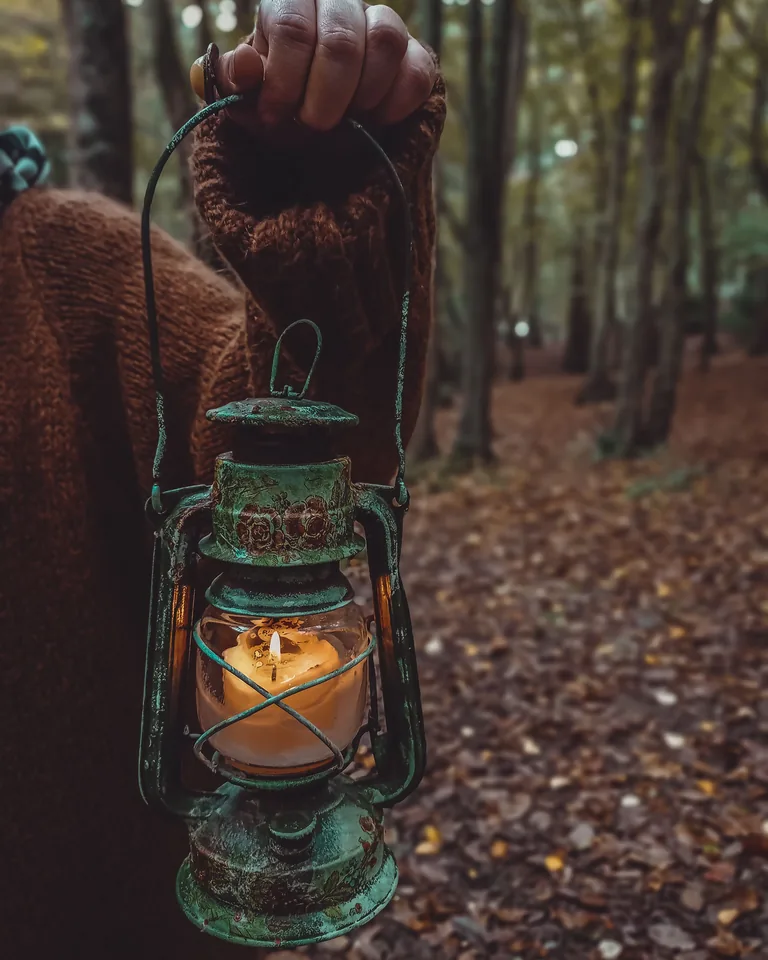
As the days get shorter, lighting makes the porch feel warm and welcoming after dark. Lanterns with candles (battery-powered is safest) add height, structure, and a soft glow that makes the whole display come alive in the evening. Flank the door with a pair for symmetry, or tuck one into a pumpkin cluster. String lights wrapped around the railing add a little magic for almost no effort.
9. Hang a Fall Wreath on the Door
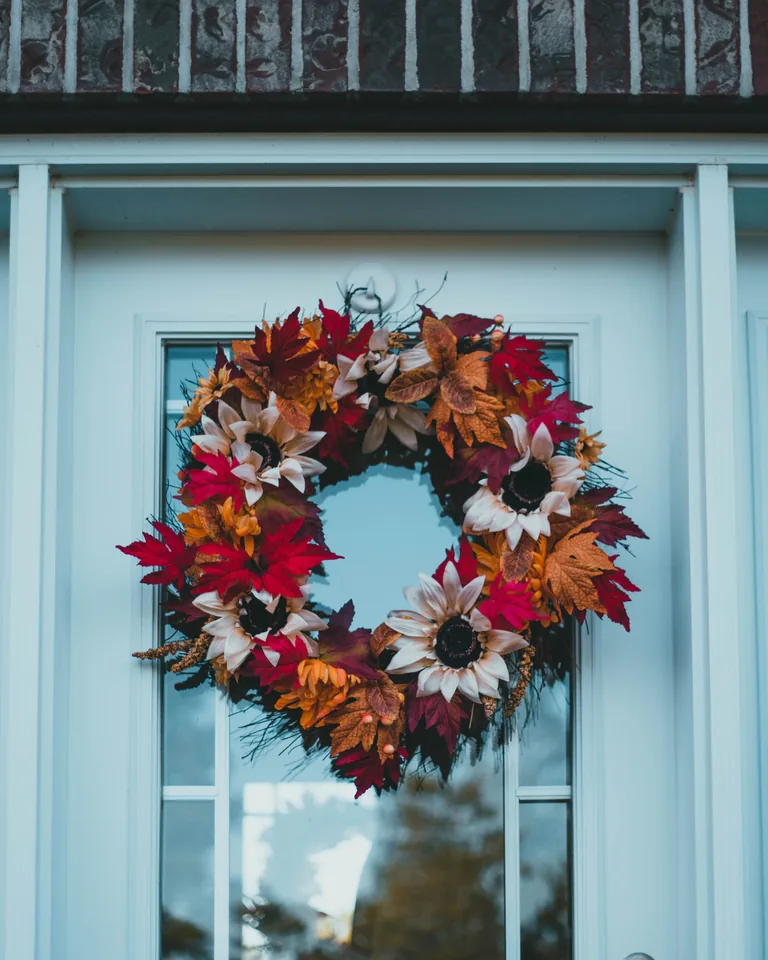
Your front door is the focal point of the porch, so give it the crown. A wreath of dried leaves, wheat, berries, or mini pumpkins sets a welcoming tone and ties the whole display together — it’s the exclamation point at the center of the arrangement. A grapevine base with rust-colored leaves and a long velvet ribbon feels seasonal without being busy. The same “one strong focal piece” principle runs through these ways to style a blank wall — every arrangement needs a heart.
10. Go All-White for Elegance
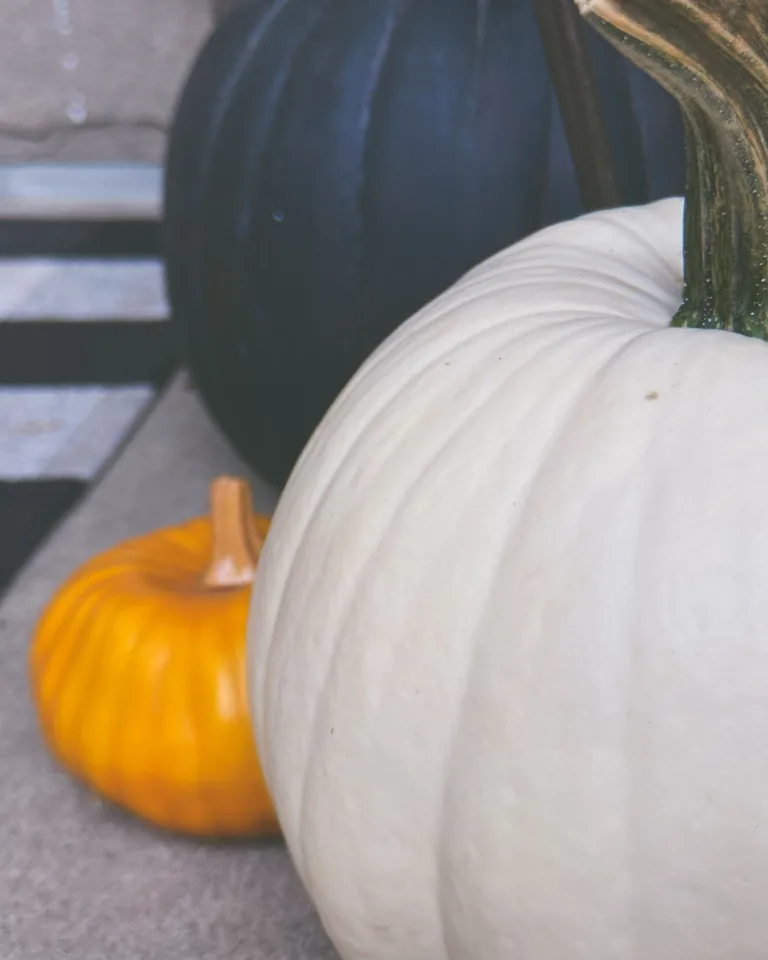
White and cream pumpkins — Lumina, Baby Boo, Casper varieties — create a calm, sophisticated display that stands out precisely because it isn’t orange. An all-white scheme with green gourds and eucalyptus reads modern-farmhouse and photographs beautifully. It’s also the easiest palette to keep cohesive: when everything is white, nothing clashes. Add texture with warty white heirlooms so it doesn’t go flat.
11. Mix Orange and White
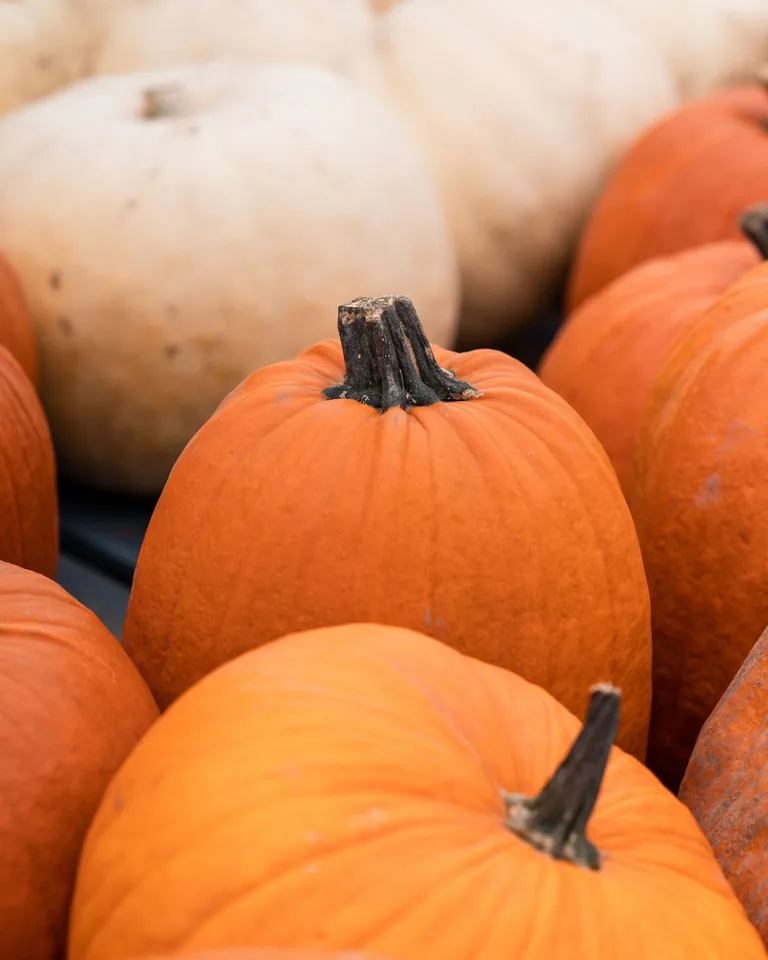
If all-white feels too restrained, the classic orange-and-white mix is the sweet spot: cheerful and traditional, but the white tempers the orange so it doesn’t read as loud. Use orange as the accent rather than the whole show — roughly a third orange to two-thirds white and green keeps it intentional. This is the palette most likely to please everyone from traditionalists to minimalists.
12. Style the Walkway, Not Just the Steps
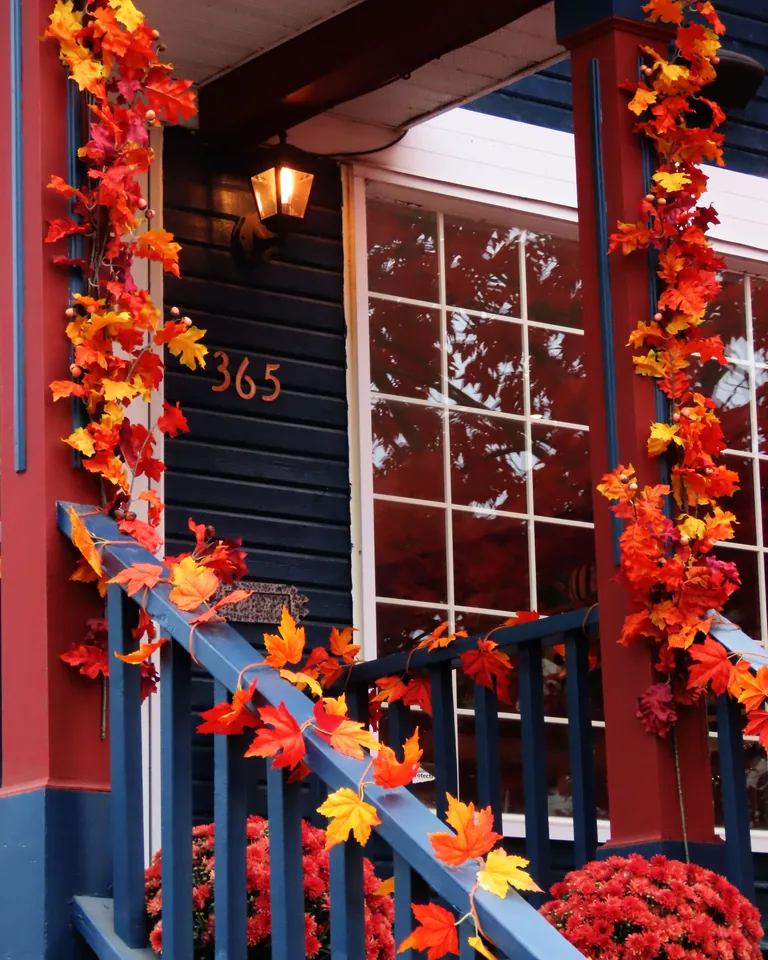
Don’t stop at the steps. Line the walkway with small pumpkin clusters, or place a couple of statement groupings where the path meets the driveway — that’s where visitors (and the street) actually see the display first. A few well-placed pumpkins along the path create a sense of arrival that steps alone can’t. Just keep them clear of foot traffic and the mower.
13. Build a Vintage Lantern Vignette
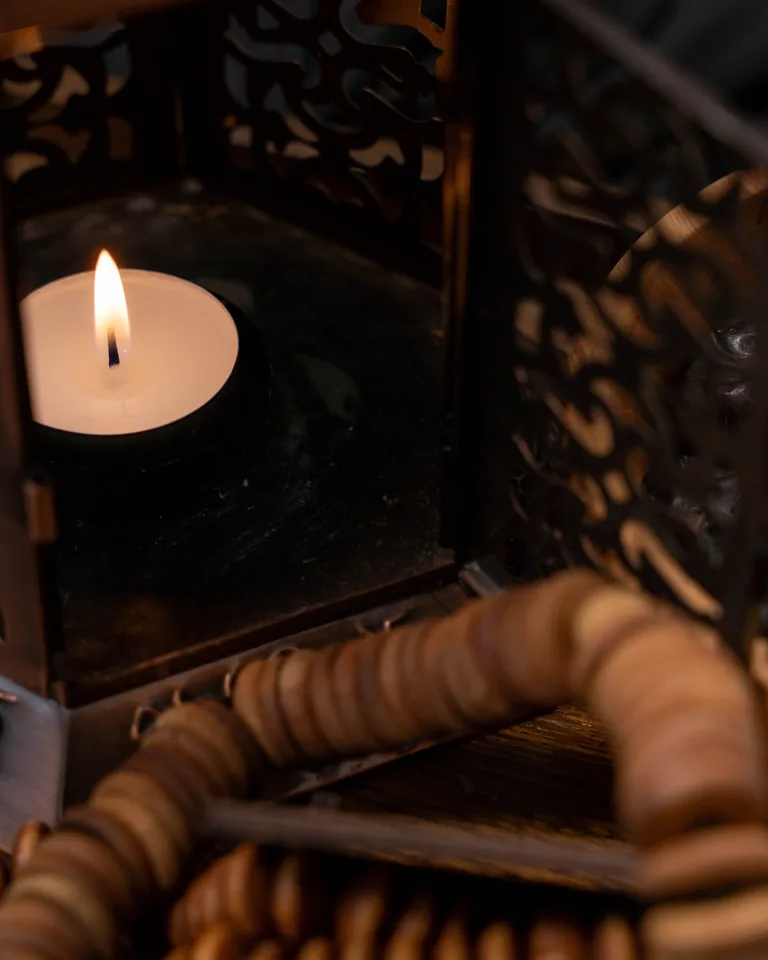
Cluster a vintage-style lantern with two or three pumpkins and a bundle of wheat or dried corn for a self-contained vignette on a porch table or bench. These small composed scenes are what make a porch feel styled rather than decorated — they’re the difference between “pumpkins on a porch” and “a fall porch.” One or two vignettes, plus the main step display, is plenty; more than that tips into clutter.
14. Try a Multicolor Harvest Mix
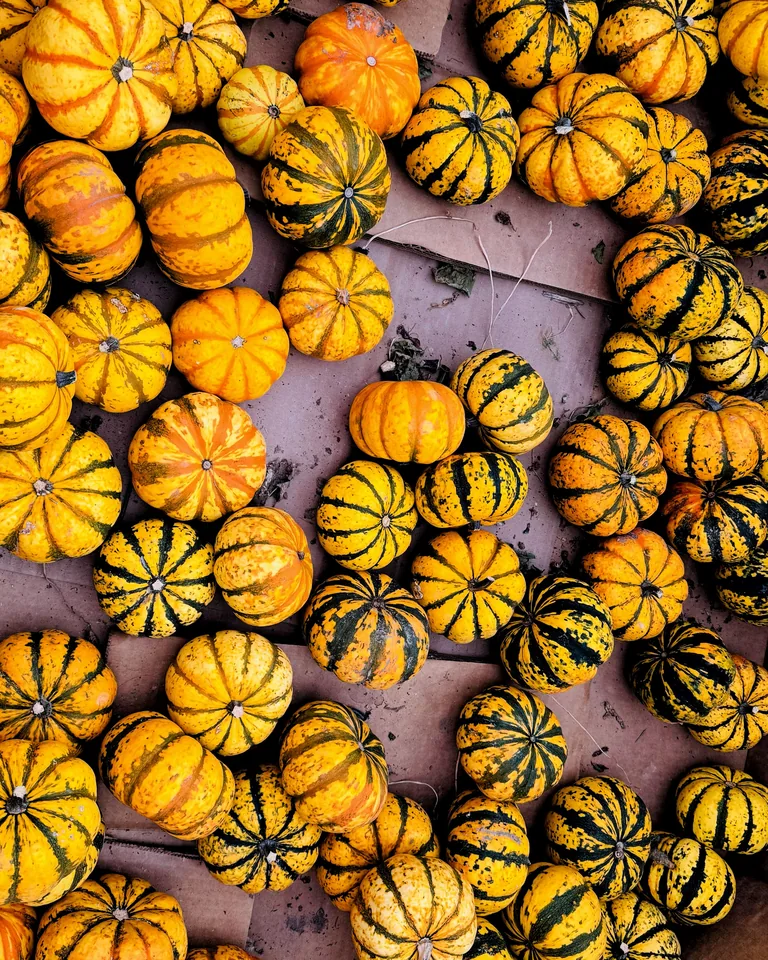
For a maximalist harvest look, go full abundance: orange, white, green, striped, and speckled pumpkins and gourds piled generously with corn stalks and hay bales. The key to keeping abundance from reading as chaos is density — pack things tightly so they read as one lush arrangement rather than scattered singles. Think cornucopia, not yard sale. The abundant harvest look sits naturally beside a cottagecore kitchen aesthetic — same love of natural textures, warm color, and plenty. This is where the “more is more” approach genuinely works, as long as the palette stays in the harvest family.
15. Keep Real Pumpkins Fresh Longer
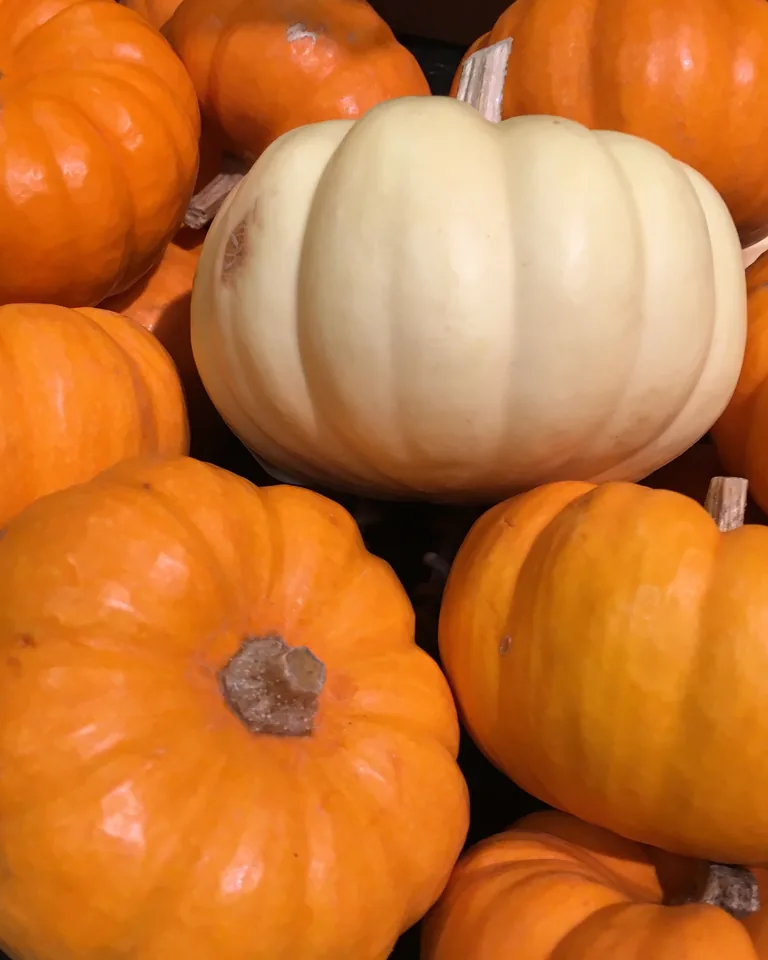
A styled porch only stays styled if the pumpkins hold up. Wipe them with a diluted bleach solution or vinegar spray to slow mold, keep them out of all-day direct sun and off soggy ground — lift them onto a crate or mat so they’re not sitting in moisture — and check weekly, quietly removing any going soft before they collapse. Uncarved pumpkins last eight to twelve weeks with basic care; carved jack-o’-lanterns last days, so wait until close to Halloween to carve.
Work in Odd Numbers and Tight Groups
The rule that makes any decor look intentional applies here too: cluster in odd numbers — threes and fives nestled together so they touch or overlap slightly — rather than lining singles up evenly apart. Even spacing looks stiff and, paradoxically, random; tight groups read as styled. Vary the heights within each cluster and let the groupings carry the display. The same grouping instinct behind a good gallery wall above a couch works on the porch floor.
Use Height to Build the Display
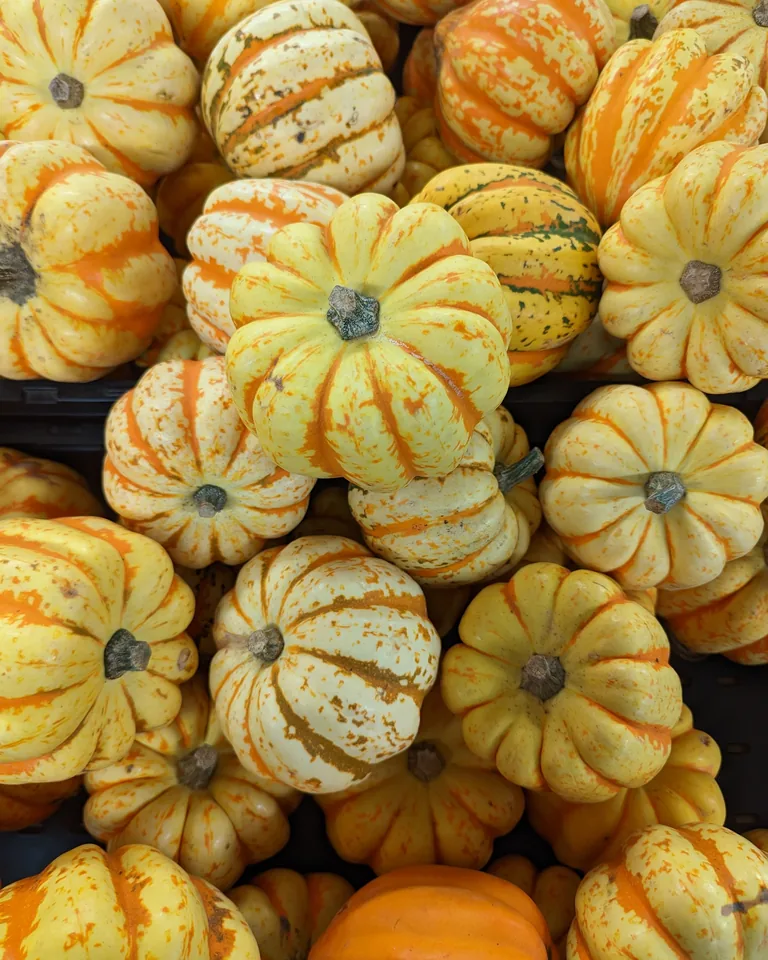
Flat displays where everything sits at the same level look monotonous. Raise some pumpkins on an overturned crate, a stool, or in a tall urn; lean cornstalks against the wall for verticality; pile pumpkins on a porch bench with more tucked underneath. Drawing the eye up and down across different levels is exactly what makes an arrangement feel designed rather than dumped. Height is free — use crates, steps, and furniture you already own.
Check It From the Street
Style for where people actually see it: the sidewalk or driveway, not standing right on top of it. Put your biggest, boldest pieces where they’ll read from a distance, and walk to the curb partway through to check. What looks balanced up close can look lopsided from the street. And match the display to your porch’s scale — a few small pumpkins get lost on a grand staircase, while a huge pile overwhelms a tiny stoop. When the season ends, give your faux pumpkins and decor a proper home with the same care as these garage organization ideas.
Frequently Asked Questions
How do you arrange pumpkins on a porch so they look styled?
Place the biggest pumpkin first as an anchor, frame the outside edges of the steps, then fill inward with smaller ones. Work in tight odd-numbered clusters, repeat a simple size-and-color pattern down each step, and commit to a limited palette instead of a rainbow.
How do you keep pumpkins from rotting on the porch?
Wipe them with a diluted bleach solution or vinegar spray to kill mold spores, keep them in a cool shaded spot out of direct all-day sun, and lift them off damp ground onto a crate or mat. Check weekly and remove any going soft before they collapse.
How long do pumpkins last outside?
Healthy uncarved pumpkins last eight to twelve weeks outdoors in cool, dry conditions — some heirloom varieties last even longer. Carved jack-o’-lanterns deteriorate much faster, typically within five to ten days, so wait until close to Halloween to carve.
When should you put pumpkins out for fall decor?
Late September is ideal in most of the US — early enough to enjoy the whole season, late enough that the worst heat has passed. If you carve jack-o’-lanterns, wait until a few days before Halloween so they’re still fresh for the night itself.
Should you use real or fake pumpkins on the porch?
Real pumpkins look and feel authentic but need care and eventually rot. Good faux pumpkins last the whole season and for years after — swap the obvious plastic stem for a real dried one to sell the illusion. Many people mix: real for the big anchors, faux for the small accents.
The bottom line: pumpkins look random when there’s no anchor and no pattern, so give them both. Start big, frame the edges, repeat a pattern, commit to a palette, cluster in odd numbers, and check it from the street. Do a final edit — usually by taking one or two things away — and the same pile that used to look dumped will look like you meant it.