15 Small Basement Gym Ideas That Make Every Square Foot Count
A friend of mine bought a 92-inch squat rack for his basement gym. His basement ceiling was 87 inches. He discovered this after carrying the thing down the stairs. That sums up most of the basement gym journey: a series of small, mostly avoidable revelations about what actually fits.
Here’s the only number that matters before you read another word: measure your ceiling height. Write it down. Compare it against every piece of equipment you’re considering. A small basement gym lives or dies on those few inches — and once you’ve got that constraint clear, almost everything else is solvable with foldable gear, wall storage, and smart flooring.

Why Small Basements Make Great Gyms
Basements are naturally cool, they’re separated from the living areas (so nobody hears the 6 a.m. deadlifts), and the concrete floor is the best possible subfloor for heavy equipment. The constraints — low ceilings, no natural light, damp air — are all fixable. What follows are fifteen ideas that work specifically in tight, low, below-grade spaces, not in the 12-foot warehouse gyms you see online.
1. Measure Your Ceiling Before You Buy Anything
If your ceiling is at least 8 feet, you can run a fairly normal gym: squat rack, full barbell movements, overhead pressing. Between 7 and 8 feet, you’re looking at low-profile racks, dumbbells, kettlebells, and a foldable bench. Below 7 feet, standing overhead presses are mostly off the table and it’s dumbbells, bodyweight, and seated machines. Don’t fight the ceiling — adapt to it. Ceilings shape how a whole room feels, as these coffered living room ceiling ideas show — even a low one can feel intentional with the right treatment. Every idea below assumes you’ve done this homework first, because the right equipment for an 8-foot basement is the wrong equipment for a 7-foot one.
2. Pick One Centerpiece and Build Around It

Most small basement gyms fail by trying to fit too many headliners. Pick one: a squat rack with a pull-up bar for lifters, a rower for all-round cardio and strength, a spin bike for the smallest footprint, or a compact functional trainer that replaces most of a commercial gym in one footprint. Build everything else around that single piece. Three to five things you use constantly beats fifteen things you use occasionally.
3. Use a Wall-Mounted Folding Squat Rack

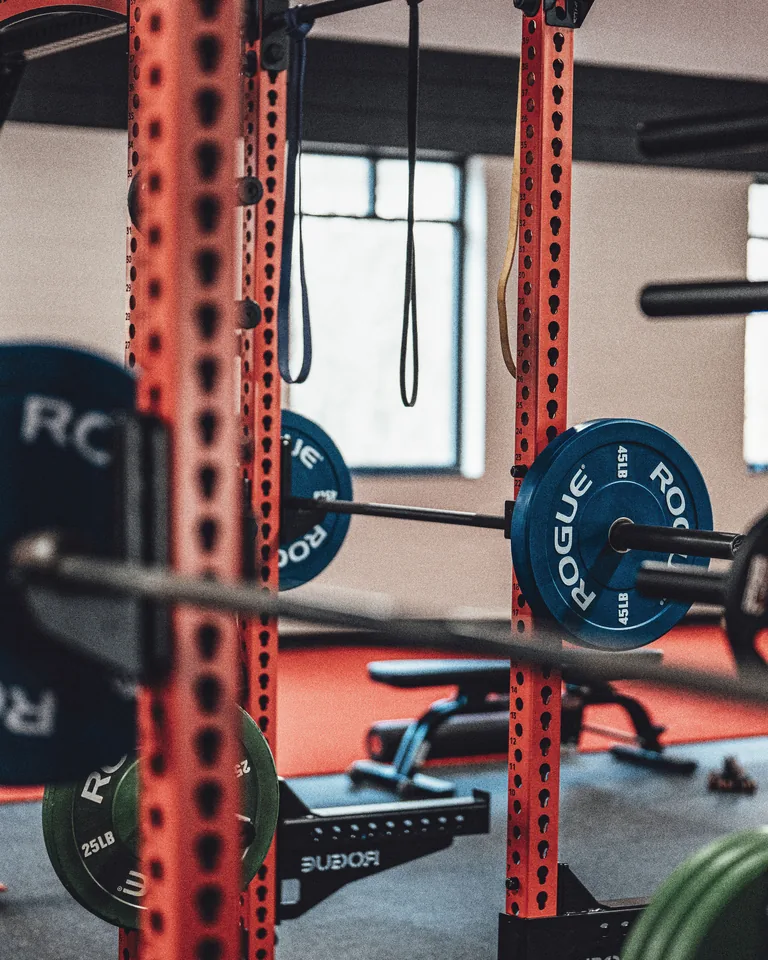
A folding wall-mounted rack is the single highest-impact purchase for a tight basement. It bolts to the wall, handles real barbell work, and folds flat when you’re done — reclaiming the floor space underneath for stretching, yoga, or just walking through. Pair it with a foldable bench that stores upright in a corner, and your “gym” can nearly disappear between sessions. This is the same vertical thinking that makes small walk-in pantry layouts work: the walls do the heavy lifting so the floor stays clear.
4. Build Around Barbell Basics
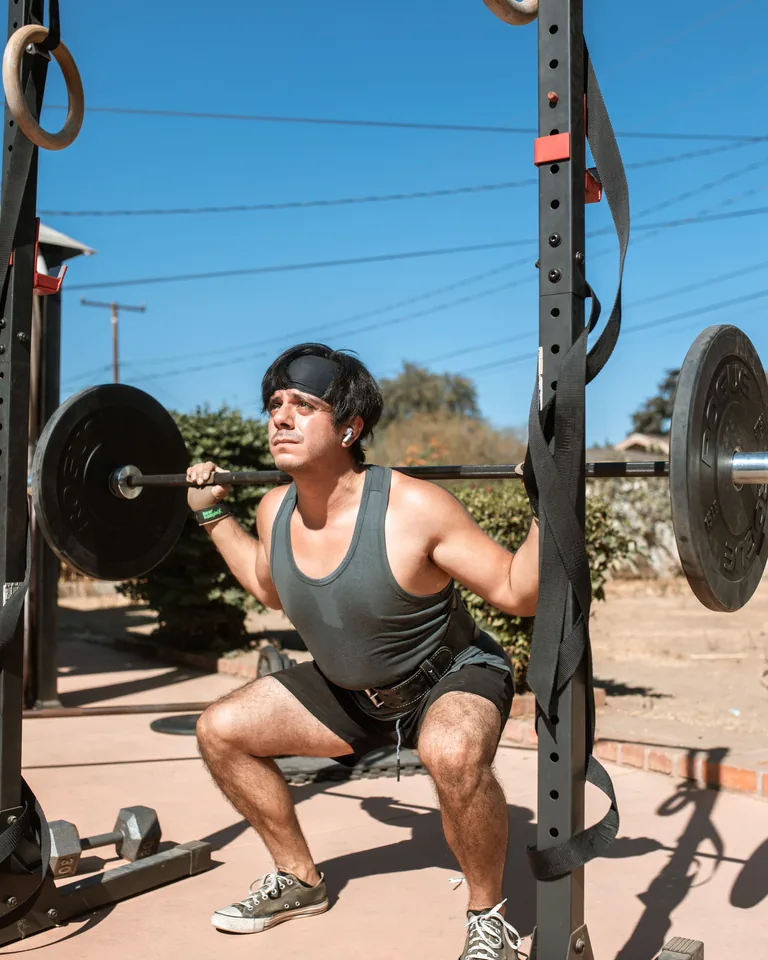
You don’t need a leg press, a cable crossover, and three cardio machines. Squats, deadlifts, presses, and rows with a single barbell cover nearly everything those machines do, in a fraction of the footprint. A barbell plus plates stored on a tree-style post takes up about as much room as one bulky machine — and gets used ten times more. Skip the single-purpose machines; they’re how small gyms become expensive storage rooms.
5. Choose Adjustable Dumbbells Over Fifteen Pairs
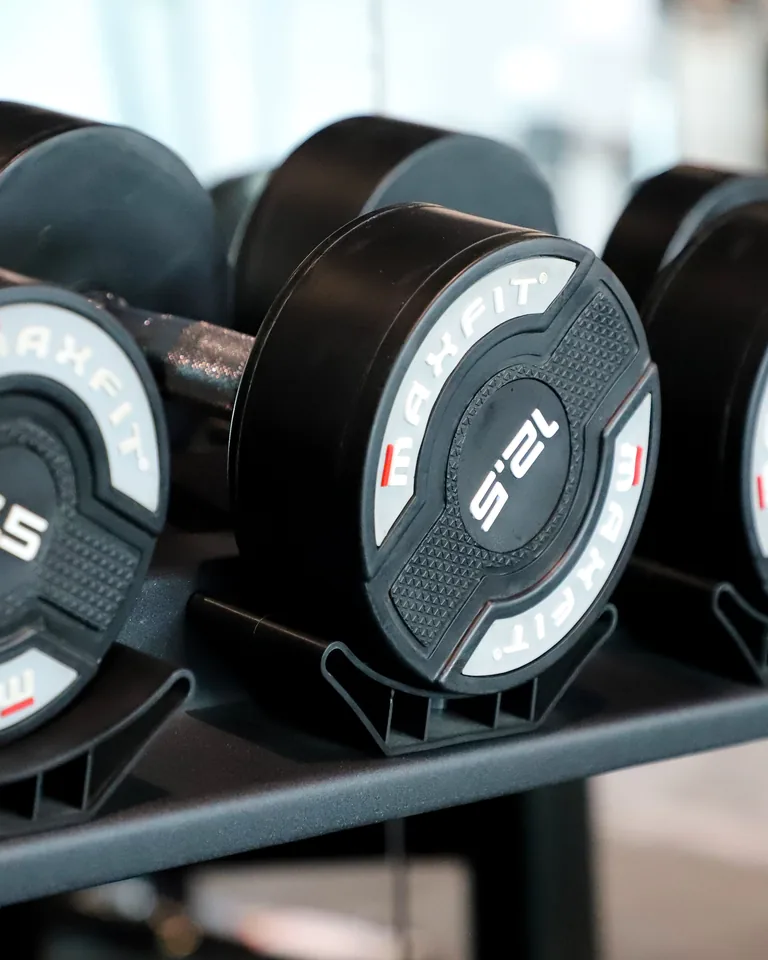
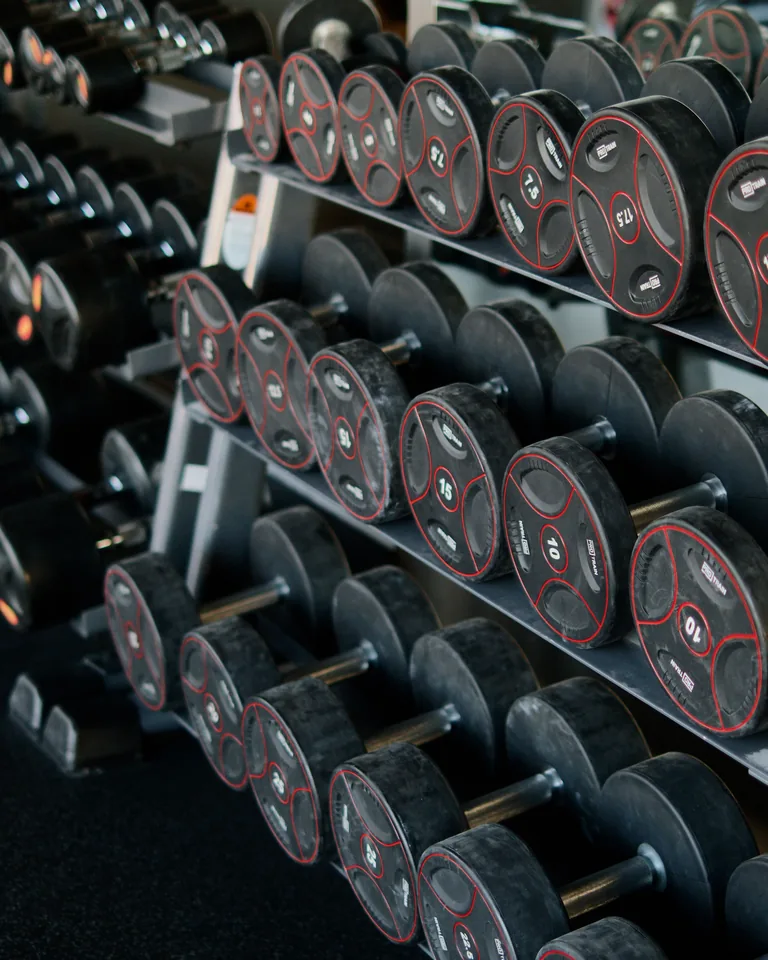
A full run of fixed dumbbells from 5 to 50 pounds eats an entire wall. Adjustable dumbbells replace fifteen pairs in the footprint of one, and they live happily on a small vertical stand or even under a bench. For a basement gym, they’re close to mandatory — the space savings are enormous and you never outgrow them, you just dial up. Store them on a vertical rack rather than the floor and you’ve reclaimed another couple of square feet.
6. Keep Kettlebells in the Corners

Kettlebells are the most space-efficient strength tool there is: three bells in a corner cover swings, goblet squats, presses, carries, and rows. They need no rack, no bench, and about four square feet of floor. If your ceiling is too low for a rack, a kettlebell set plus a mat can genuinely be the whole gym — and it’s a gym you’ll actually use because there’s nothing to set up.
7. Get a Rower That Stores Vertically
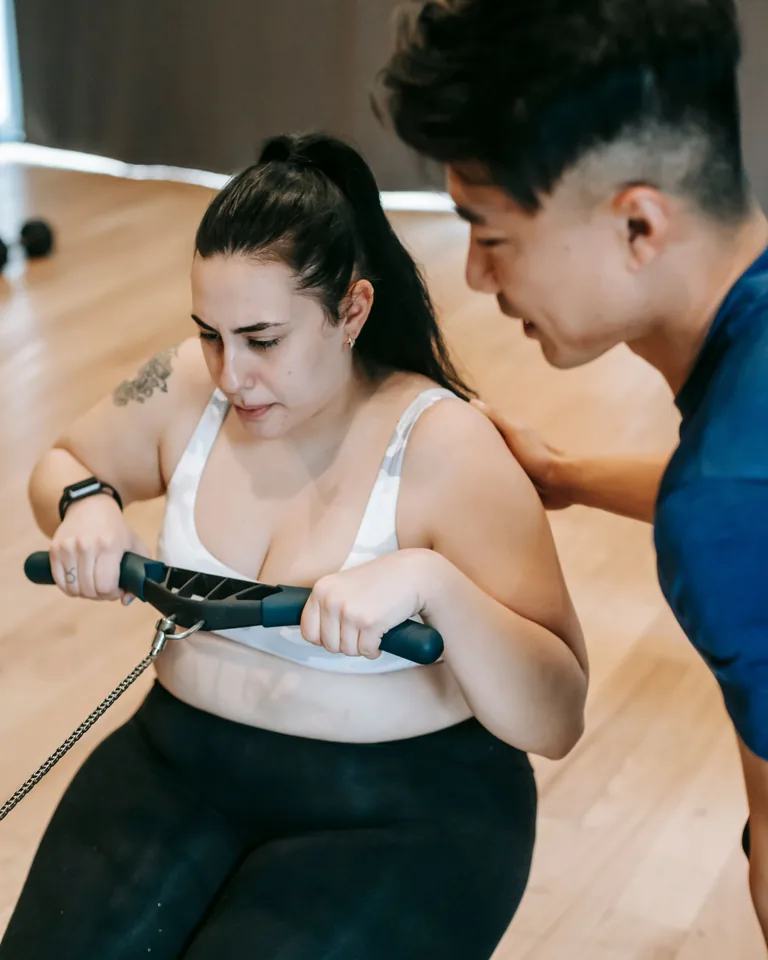
A rowing machine is the best cardio pick for low ceilings: it needs no headroom, works legs, back, and lungs in one motion, and stores upright against a wall when you’re done. Eight feet of floor in use, two feet against the wall in storage. It’s also nearly silent, which matters when the gym sits directly under the bedrooms. If you buy one piece of cardio equipment, make it this one.
8. One Cardio Machine, Not Three
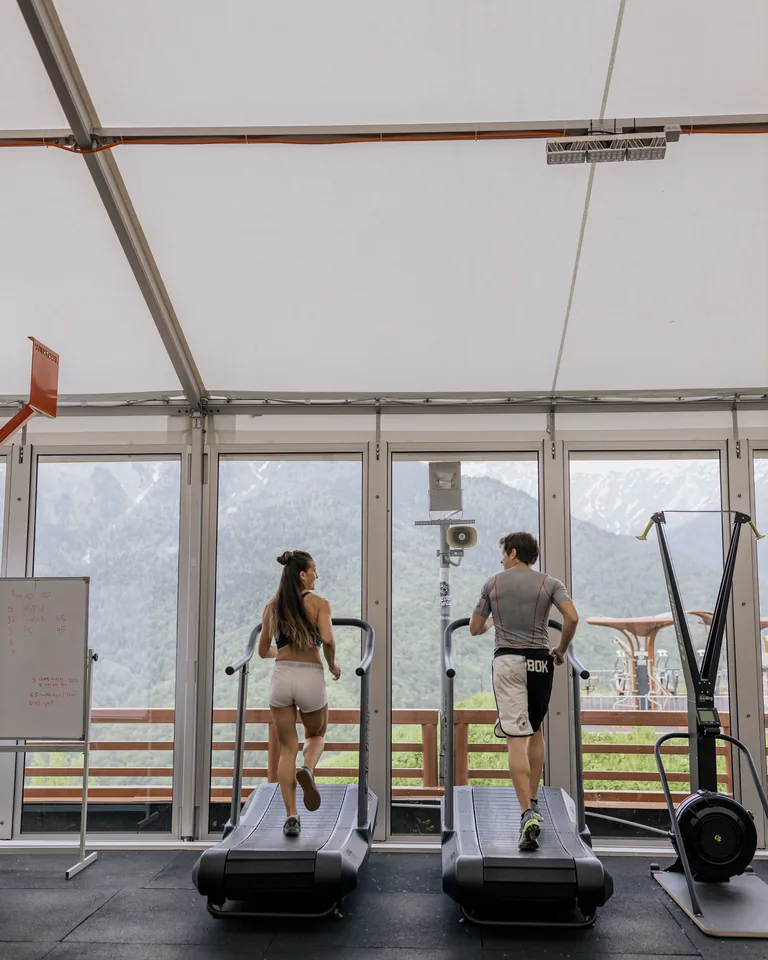
Treadmill plus bike plus elliptical is a commercial gym, not a basement gym. Pick the one you’ll actually use — the rower, a foldable treadmill, or a spin bike with its tiny 4-by-2 footprint — and commit. Cardio variety is nice in theory; in a 150-square-foot basement it’s just clutter. The space you save becomes your stretching zone, which you’ll use far more than a second cardio machine.
9. Hang Resistance Bands on Wall Hooks
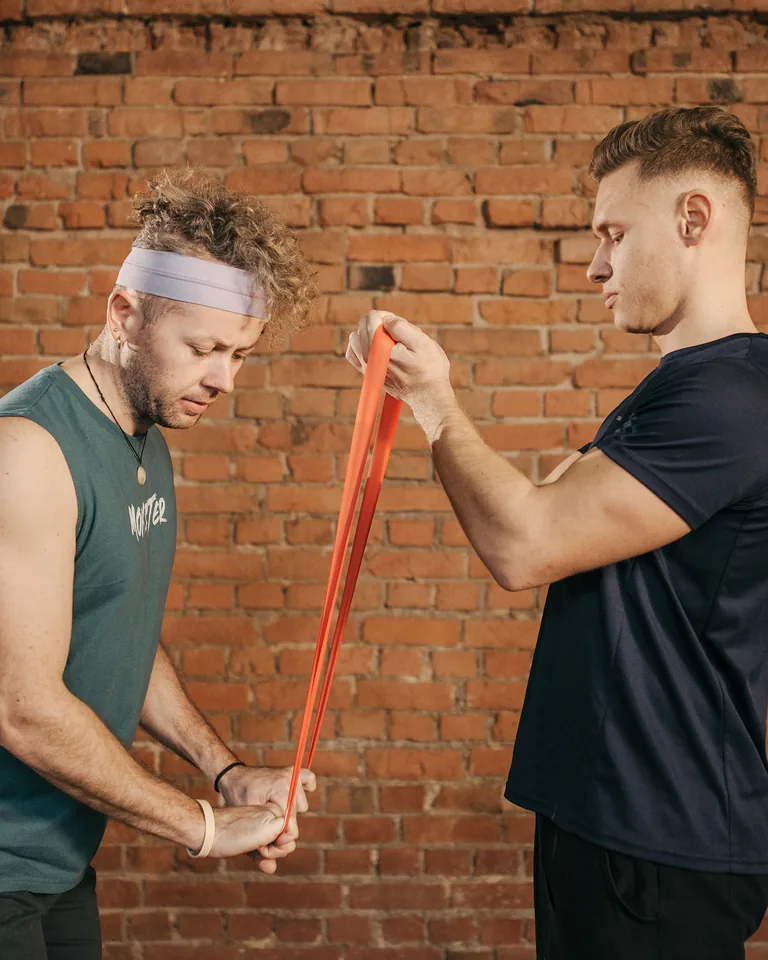
Bands, jump ropes, and suspension trainers weigh almost nothing and store on a five-dollar row of wall hooks or a small pegboard. They’re also the perfect low-ceiling tools: rows, presses, and pull-aparts all happen below shoulder height with zero headroom needed. Two hours installing wall hooks and brackets can reclaim a quarter of the floor in a small gym — genuinely the cheapest high-impact upgrade on this list.
10. Lay Rubber Flooring That Protects the Concrete
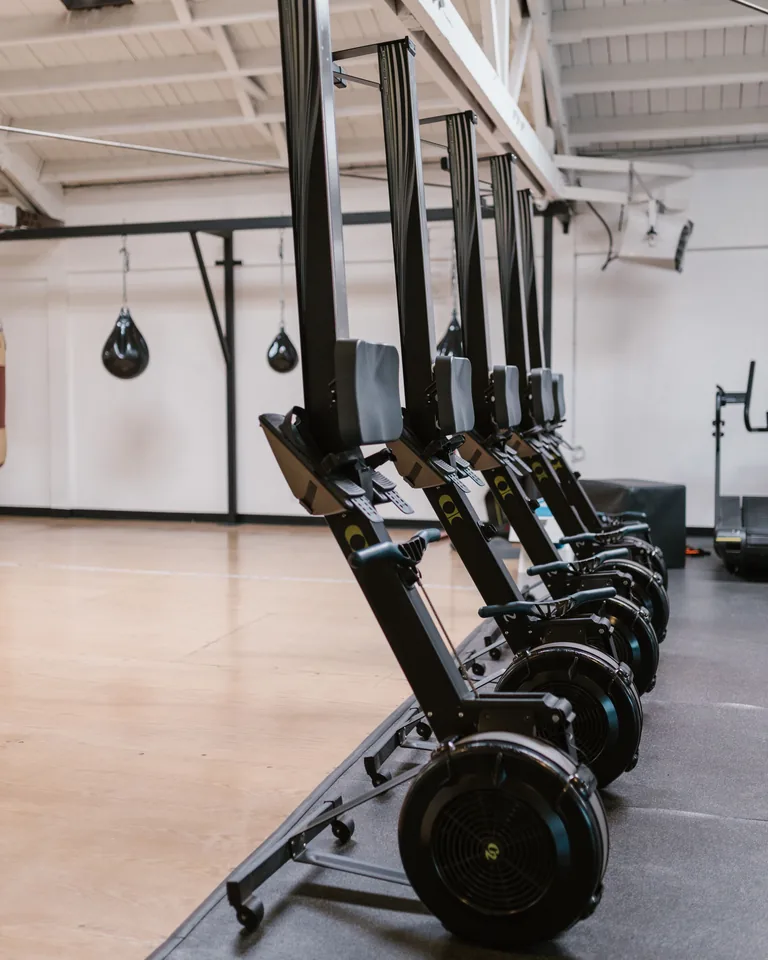
Concrete is the ideal subfloor — flat, heavy, doesn’t transmit vibration — but it’s brutal on joints and equipment. The standard fix is 3/4-inch rubber horse stall mats over the lifting zone: cheap, indestructible, and they deaden sound. For the rest of the floor, interlocking rubber tiles are lighter to carry down the stairs and easier to fit. Always lay a vapor barrier over the concrete first, and skip carpet entirely — it traps moisture against the slab and turns into a mold sandwich within a year.
11. Mount One Big Mirror

You don’t need a wall of mirrors — one large mirror, mounted where you can check your form, does nearly all the work. It also bounces what little light exists around the room; position it opposite a small basement window and the space feels noticeably brighter. Beyond the vanity argument, mirrors make a small room feel bigger, which matters when you’re spending an hour a day in a windowless box. Secure it properly — a falling mirror in a gym is a disaster.
12. Light It Like Daylight
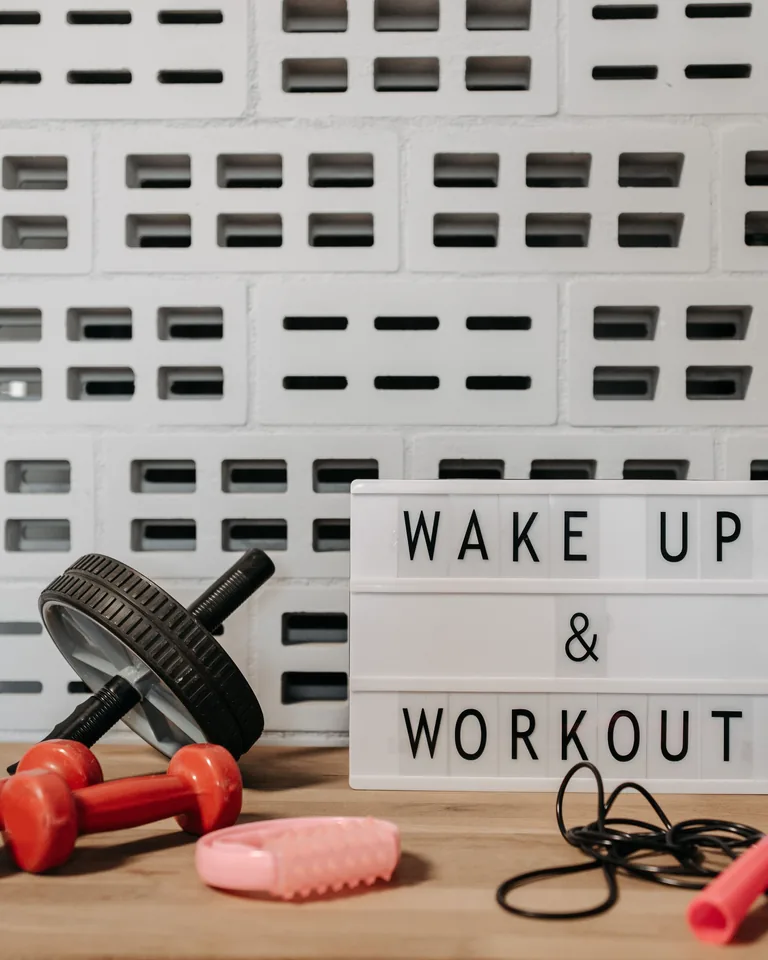
A basement lit by one dim ceiling fixture feels like a punishment, and you won’t use a gym that feels like a punishment. Replace old fixtures with bright LED panels at 4000K–5000K — the cooler temperatures that read as daylight — and add LED strips along the perimeter for an even, shadow-free wash. Add a motivational sign or lightbox if that’s your thing — a styled wall makes the gym feel intentional rather than improvised, the same principle behind these ways to fill a blank wall without buying art; the point is a space that feels energizing at 6 a.m. in February. Around a hundred to two-fifty in fixtures transforms the whole room.
13. Carve Out a Stretching and Mobility Zone

Reserve one corner — even just a 6-by-4 patch — for a mat, a foam roller, and nothing else. No equipment creeping in, no plates stored “temporarily.” A dedicated mobility zone gets used because it’s always ready; a mat buried under dumbbells doesn’t. Foam tiles work fine here since nothing heavy lands on them, and the softer surface makes the whole gym feel less industrial.
14. Build a Recovery Corner

Next to the stretching zone, keep the unglamorous stuff: foam roller, lacrosse ball, resistance bands for mobility, maybe a small stool. Recovery tools scattered across the gym become tripping hazards and never get used; corralled in one visible corner, they become part of the routine. Ten minutes of mobility work after lifting does more for consistency than any supplement, and consistency is the whole game in a home gym.
15. Add a Yoga and Bodyweight Area

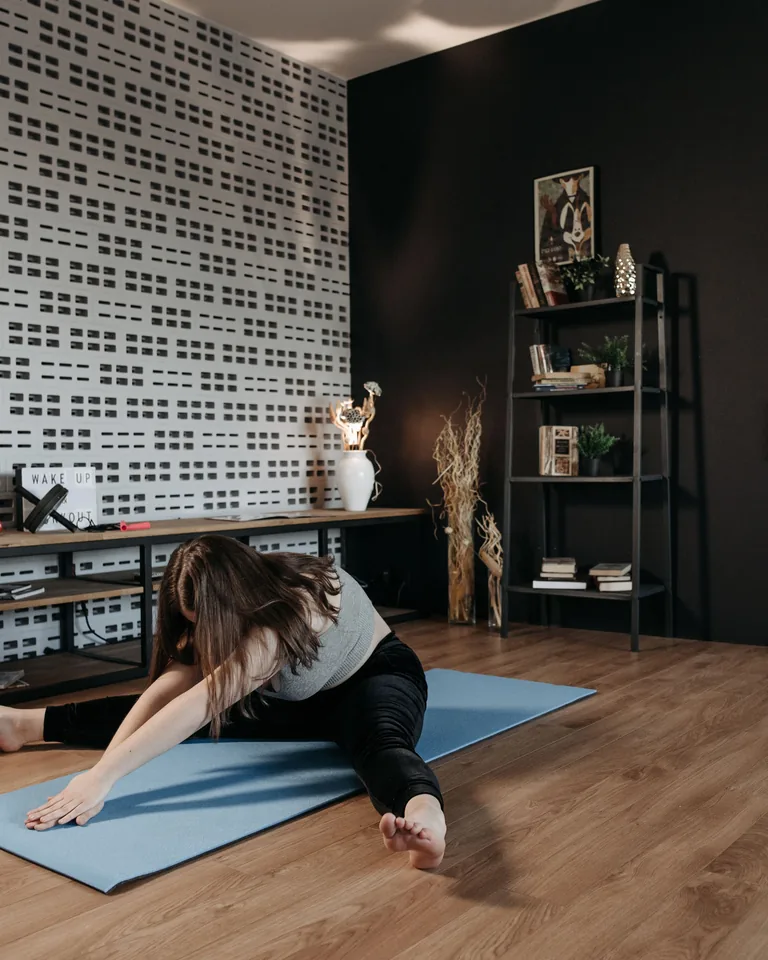
The cheapest square footage in your gym is the open floor in the middle. Keep it genuinely open — equipment along the walls, nothing in the center — and it doubles as a yoga, bodyweight, and HIIT space. A single good mat lives rolled in the corner. This is also your future-proofing: when the kids want to work out with you or you switch programs, the open floor adapts to anything. Protect it fiercely from equipment creep.
Ventilation: The Thing Nobody Mentions
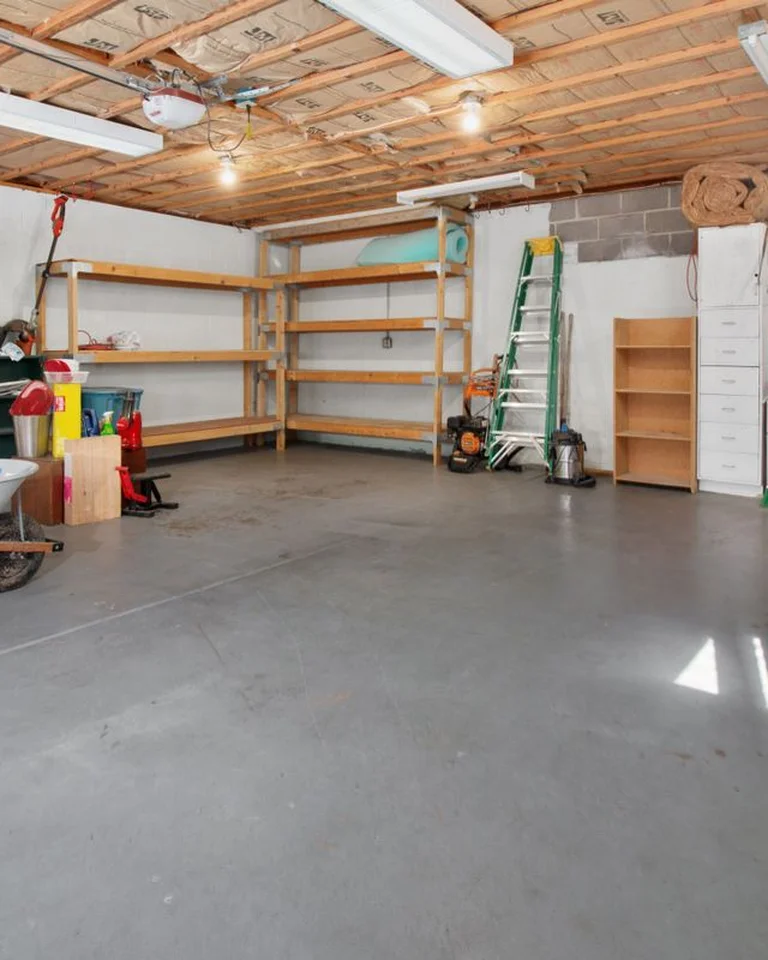
Basements have almost no natural airflow. Add a sweaty workout to a sealed below-grade room and you’ve got a humidity and odor problem within weeks. Run a dehumidifier on a humidistat, keep a strong fan going during workouts, and if you can manage it, duct an exhaust fan outside — transformative for serious setups. Skip this and the gym will smell, and no amount of rubber flooring fixes that. The same moisture logic applies anywhere below grade, which is why garage organization systems built for damp spaces translate so well down here.
What to Skip
The contrarian take that saves most people a thousand dollars: skip the leg press (squats cover it), the cable crossover (a functional trainer does it in a quarter of the footprint), multiple cardio machines (pick one), a full set of fixed dumbbells (adjustables win), and the heavy bag (unless you actually box — they smell and eat square footage). Every piece you skip is floor space you keep, and floor space is the scarcest resource in a basement gym.
Frequently Asked Questions
What is the best flooring for a basement gym?
Three-quarter-inch rubber horse stall mats over the lifting zone — cheap, indestructible, and great at deadening sound. Use interlocking rubber tiles elsewhere for an easier install, always over a vapor barrier on the concrete. Skip carpet (it traps moisture and molds) and skip foam tiles under heavy weights (they compress and deform).
How much space do you need for a home gym in a basement?
A 10-by-10-foot area works well for a complete setup: rack or rower, dumbbells, bench, and a stretching corner. A 6-by-6-foot zone is enough for a rack-based strength setup alone. More important than floor area is ceiling height — measure it first, since it determines which equipment is even possible.
How do you work out in a basement with low ceilings?
Choose low-profile equipment: a folding wall-mounted rack instead of a full cage, adjustable dumbbells, kettlebells, resistance bands, and a rower. Do overhead pressing seated or swap it for landmine presses. Skip anything that needs headroom — box jumps, kipping pull-ups — and you’ll barely notice the ceiling.
How do you ventilate a basement gym?
Run a dehumidifier on a humidistat to keep humidity under 50%, use a strong oscillating or ceiling fan during workouts, and add an exhaust fan ducted outside if you can. Good ventilation prevents the damp, musty smell that makes basement gyms unpleasant — and protects your equipment from moisture damage.
What equipment should a small home gym have?
Five things cover nearly everything: one centerpiece (rack, rower, or bike), adjustable dumbbells, a foldable bench, resistance bands, and a mat with a foam roller. Add rubber flooring, a mirror, and bright lighting. That’s a complete gym in about 100 square feet for roughly $1,500 to $3,500.
The basement gyms that work long-term aren’t the impressive ones — they’re the ones that fit the space, stay dry and bright, and get used four times a week. Measure the ceiling, pick one centerpiece, get everything else off the floor, and the rest takes care of itself. For more on making tight spaces pull double duty, these budget built-in bookshelf ideas and small-space dorm layouts run on exactly the same principles.