15 Beach Towel Rail Ideas That Actually Keep Towels Dry and Off the Floor
Beach towels are the problem guests of the towel world. They’re enormous, they always arrive home soaked and full of sand, and there’s never just one of them. A standard bathroom towel bar built for a single bath sheet doesn’t stand a chance against a family’s worth of soggy beach towels — everything ends up in a damp pile on the floor, and by August the whole corner smells like low tide.
The fix is simpler than most people think: give beach towels their own dedicated rail, space the towels far enough apart that air moves between them, and pick a material that won’t rust in the damp. Get those three things right and the towels dry in hours instead of days. Here are fifteen setups that actually work, from five-minute hook rails to full poolside stations.
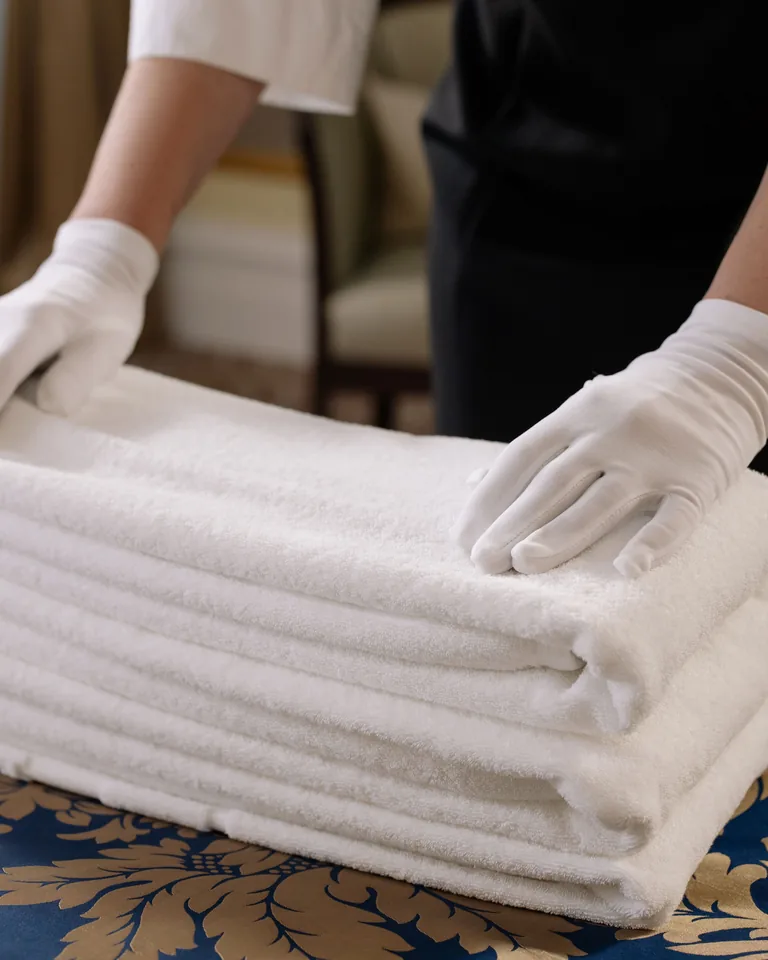
Why Beach Towels Need Their Own Rail
A beach towel is roughly twice the size of a bath towel and holds far more water. Cram several of them onto the same rail as your hand towels and nothing dries — moisture gets trapped between the layers and mildew moves in. A dedicated spot solves three problems at once: the towels actually dry, they stay off the floor, and the sand lands in one sweepable place instead of being tracked through the house.
1. Wall-Mounted Hook Rail
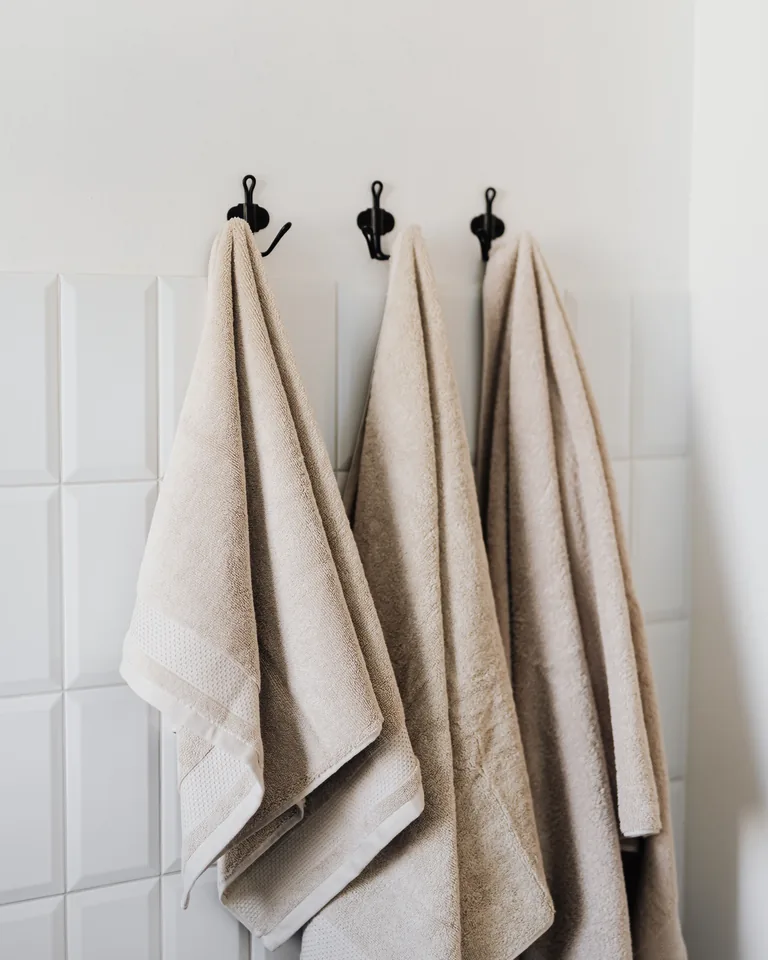
The simplest, cheapest option that genuinely works: a row of sturdy hooks screwed into wall studs. Each towel gets its own hook and hangs full-length, so air reaches the whole surface and the kids can grab their own without help. Space the hooks at least six inches apart so the towels don’t overlap, and mount the rail high enough — around five feet — that a big beach towel doesn’t puddle on the floor. A row of five or six hooks by the back door handles an entire family for very little money, and it doubles as a coat and bag rail in the off-season. If you’re kitting out a hallway at the same time, a wall treatment like the ones in these ways to fill a blank wall without buying art can make a plain hook rail look intentional rather than improvised.
2. Swing-Arm Fold-Out Rail

When wall space is tight, a swing-arm or fold-out rail is brilliant. The arms fan out when you need them and fold flat against the wall when you don’t, so a narrow strip of wall holds several towels with genuine air gaps between each arm. These are ideal for small bathrooms, hallways, or the side of a shed by the pool. When the towels are dry and put away, the whole thing tucks back almost flush — perfect if you want drying capacity without a permanent bulky fixture.
3. Freestanding Multi-Bar Rack

Can’t or don’t want to drill? A freestanding rack — ladder-style or multi-bar — holds several towels and moves wherever the sun is. Drag it out onto the deck on laundry day and the towels dry twice as fast; wheel it into the garage when guests come over. The tradeoff is floor space, and a top-heavy rack can tip if you load one side, so look for a wide, stable base and don’t hang every towel on the same side.
4. Leaning Wooden Ladder Rail

The leaning ladder rail is the stylish cousin of the freestanding rack. Propped against a wall, its rungs hold several towels and it suits a coastal or relaxed look without trying too hard — wooden ones feel warm and beachy, metal ones handle damp better. One tip: towels on adjacent rungs can overlap and trap moisture, so use every other rung if fast drying is the priority. It’s as much a decor piece as a drying solution, and it looks right at home in a bathroom or pool house.
5. Poolside Deck Rack
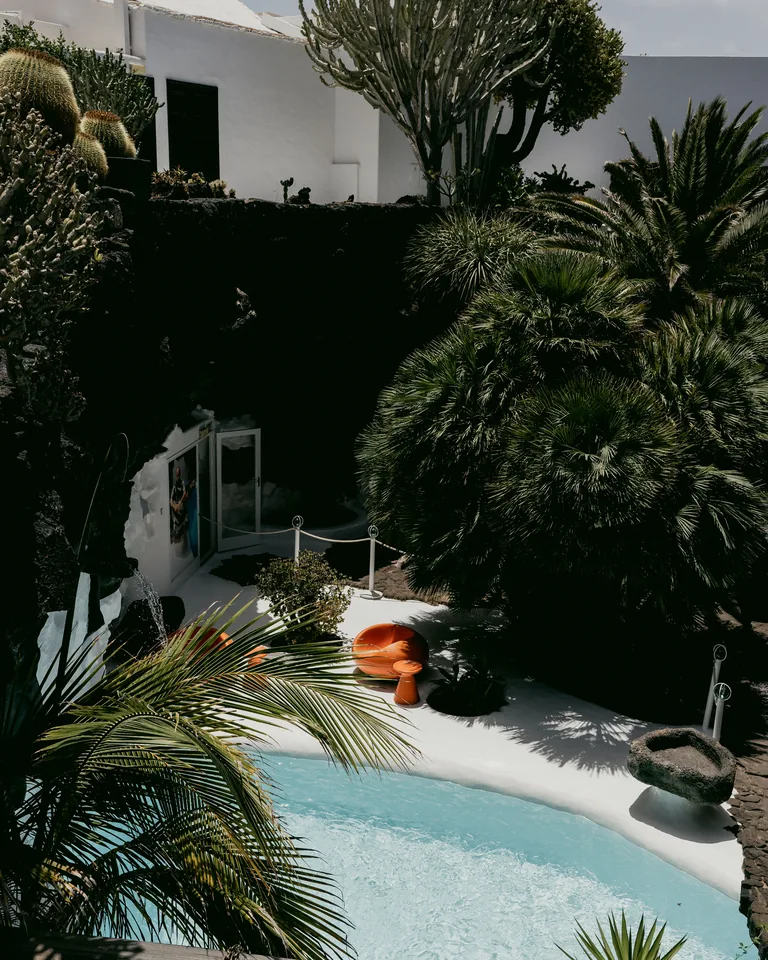
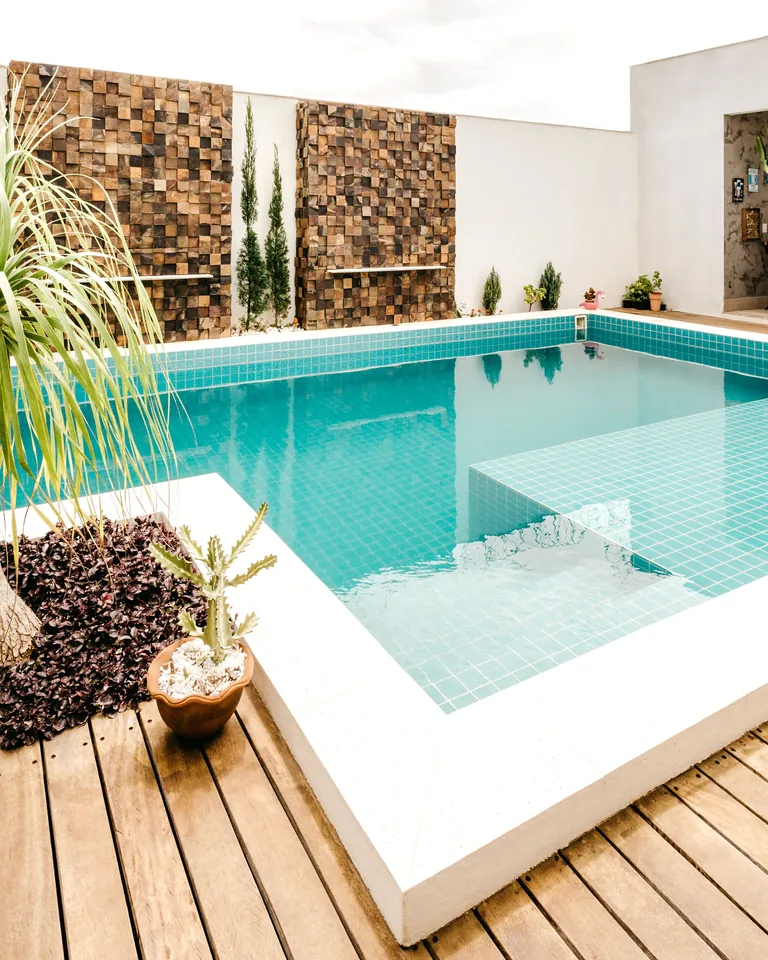
If your towels live by the pool, keep them there. A dedicated rack on the deck means wet towels never come inside at all — they dry in the sun and breeze, which is the fastest drying setup there is. Choose something heavy enough not to blow over and weatherproof enough to live outside: stainless steel, powder-coated aluminum, or sealed teak. Position it within a few steps of the pool ladder so dripping swimmers reach it before they reach your patio furniture.
6. Fence-Mounted Outdoor Rail

A fence is wasted vertical space. Mount a simple rail or a row of heavy-duty hooks along the fence nearest the pool or back door, and you’ve got an outdoor drying station for the cost of a few brackets. Because it’s outside, air circulation is excellent and towels dry fast — just make sure every fixing is rust-proof, since a standard indoor rail will streak rust down your fence within a season.
7. Over-the-Door Rail
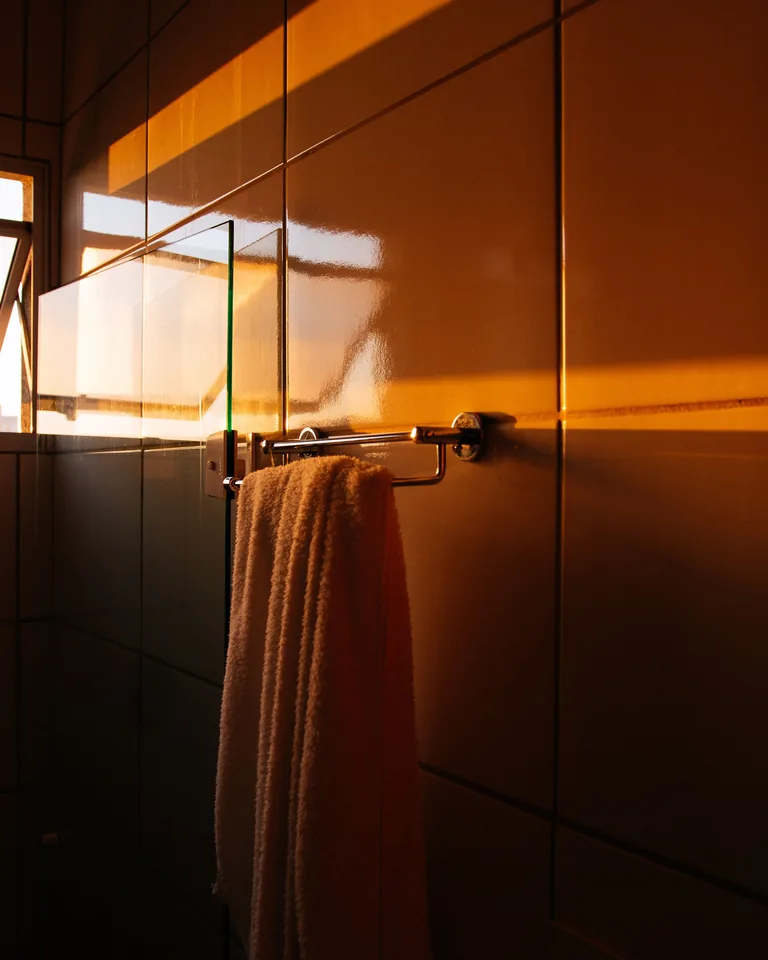
For renters, dorms, or anywhere drilling is off the table, an over-the-door rail hooks over the top of any standard door and gives you several bars instantly — no tools, no holes, no lost deposit. It holds a surprising number of towels, though a door full of heavy wet beach towels swings hard, so don’t overload one on a flimsy hollow door. For a damage-free, move-out-friendly option, it’s hard to beat.
8. Two-Height Kids’ Row

Mounting height is a quiet detail that makes a big difference. Hang the main rail around five feet so adult towels clear the floor, then add a second lower row of hooks just for the kids. The two-height setup keeps everyone independent — little ones can hang up their own towels instead of dropping them — and it stops small towels from being buried behind big ones. If the low row goes in a bathroom, match the finish to your existing hardware so it looks planned.
9. Beach Gear Station with Hooks and Shelf

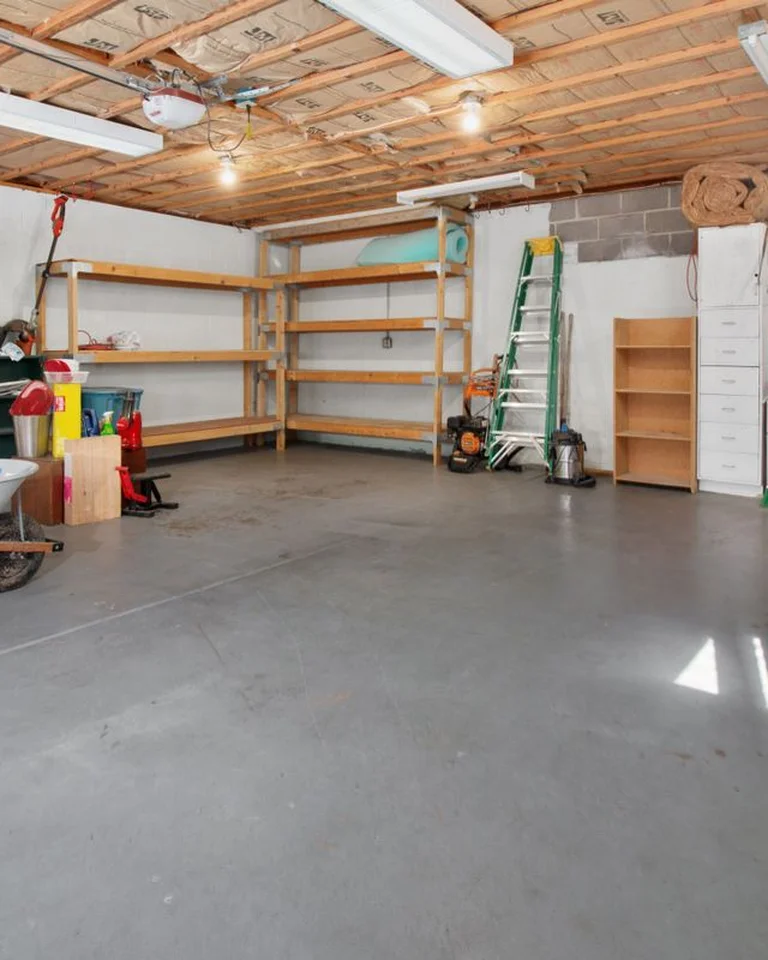
While you’re sorting the towels, think about everything else that comes back from the beach. A rail with a shelf above — or a basket below — catches sun hats, goggles, sunscreen, and sandy flip-flops, so the whole lot lands in one place. A small shelf or a couple of baskets turns a plain towel rail into a proper beach-gear station, and it’s the difference between a tidy entry and a trail of sandy clutter across the house. This is the same zone-thinking that makes cheap garage organization work: one landing spot per category, right where you walk in.
10. Retractable Outdoor Line
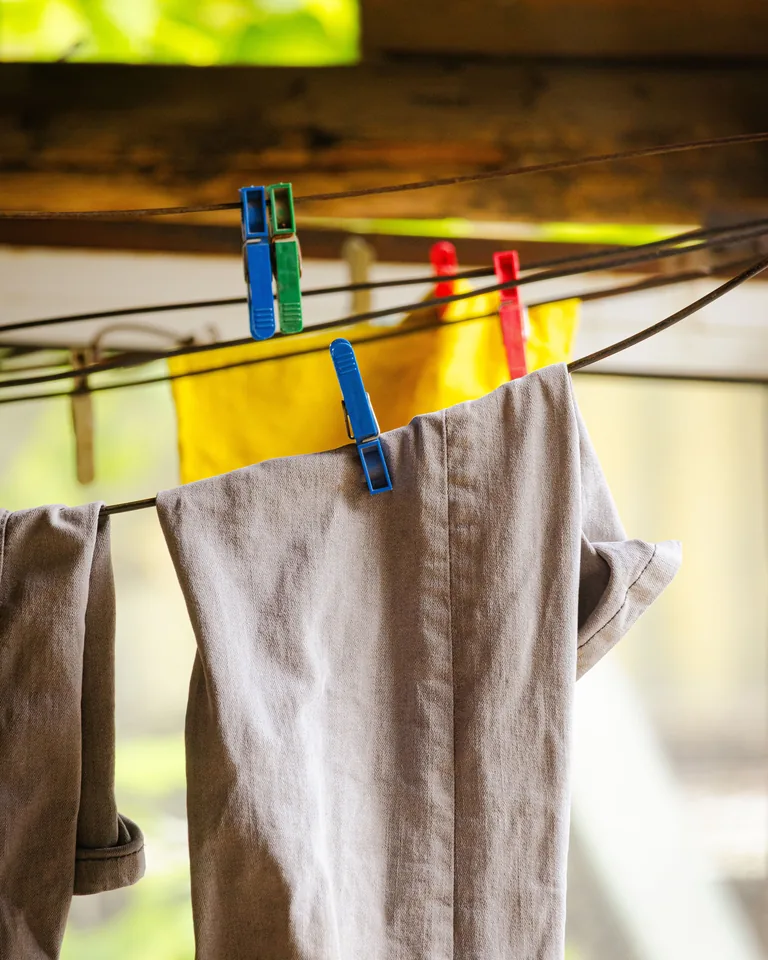
A retractable line gives you outdoor drying capacity that disappears when you don’t need it. Mount the housing on the house wall or a sturdy post, pull the line out to a second anchor when the towels come home wet, and reel it back in afterward. It’s the lowest-visual-impact option on this list — no permanent rack cluttering the yard — and nothing dries a towel faster than open air and sun.
11. Heated Rail for Damp Climates
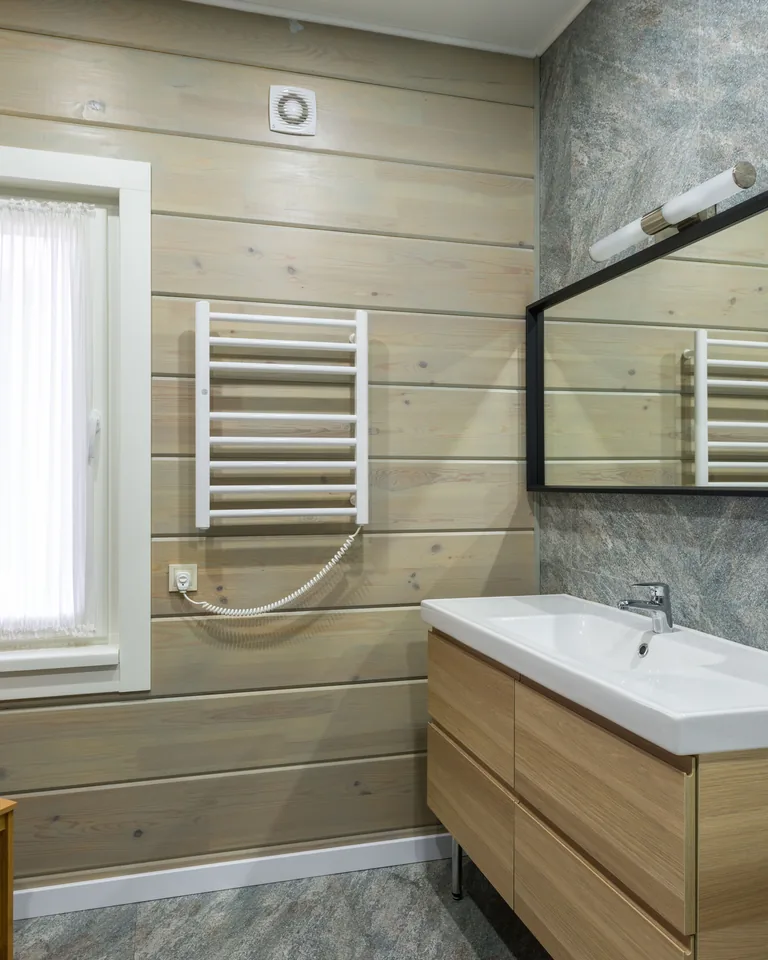
If you live somewhere humid or your towels need to dry overnight indoors, a heated rail is worth considering. The gentle warmth drives moisture out far faster than room-temperature air, and it keeps the rail itself dry so there’s no musty smell. It’s overkill for a sunny poolside setup, but in a damp utility room or a basement laundry corner it turns an all-day drying job into a couple of hours.
12. Entryway Hook Rail for Towels and Coats

A chunky rustic hook rail in the entryway or mudroom handles beach towels in summer and coats in winter — one fixture, year-round work. Look for solid wood with cast-iron or stainless hooks that can take real weight; flimsy decorative rails will pull out of the wall under four wet towels. Mount it into studs, not just drywall, and it’ll outlast the towels themselves.
13. Spa-Style Shelf and Rail Combo
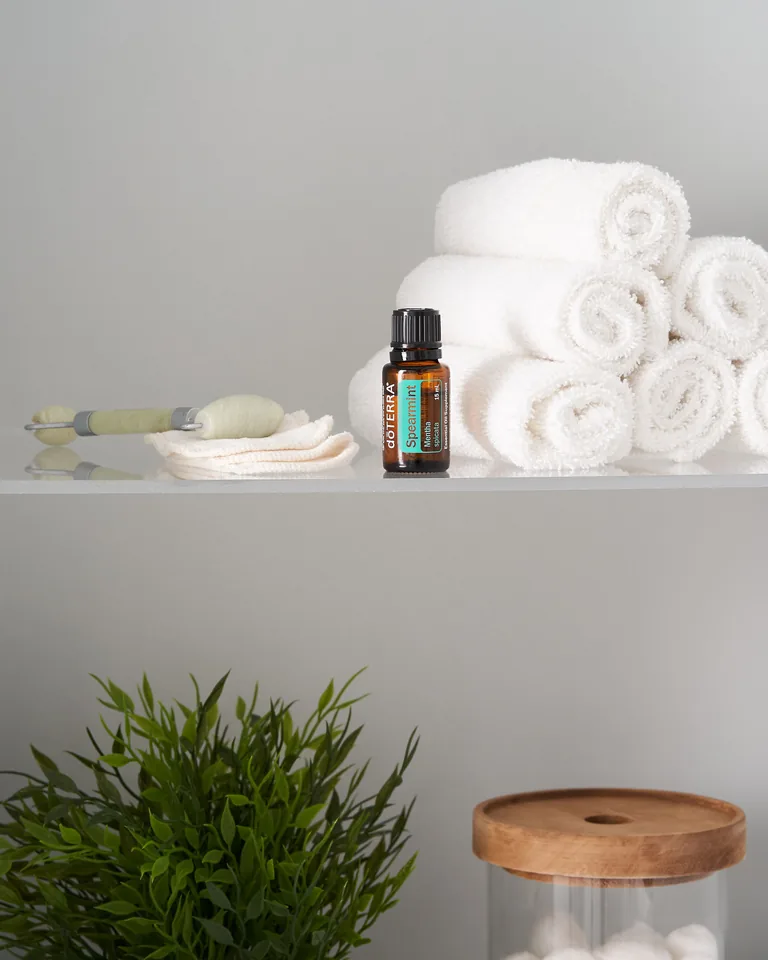
For the bathroom itself, pair a rail with open shelving and roll the spare towels spa-style. Rolled towels take up less shelf depth than folded stacks, they look tidy, and the rail below handles the in-use towels. Keep the everyday beach towels on the rail and the good ones on the shelf — a small system that makes a shared family bathroom feel far more organized.
14. Rolled-Towel Basket Station
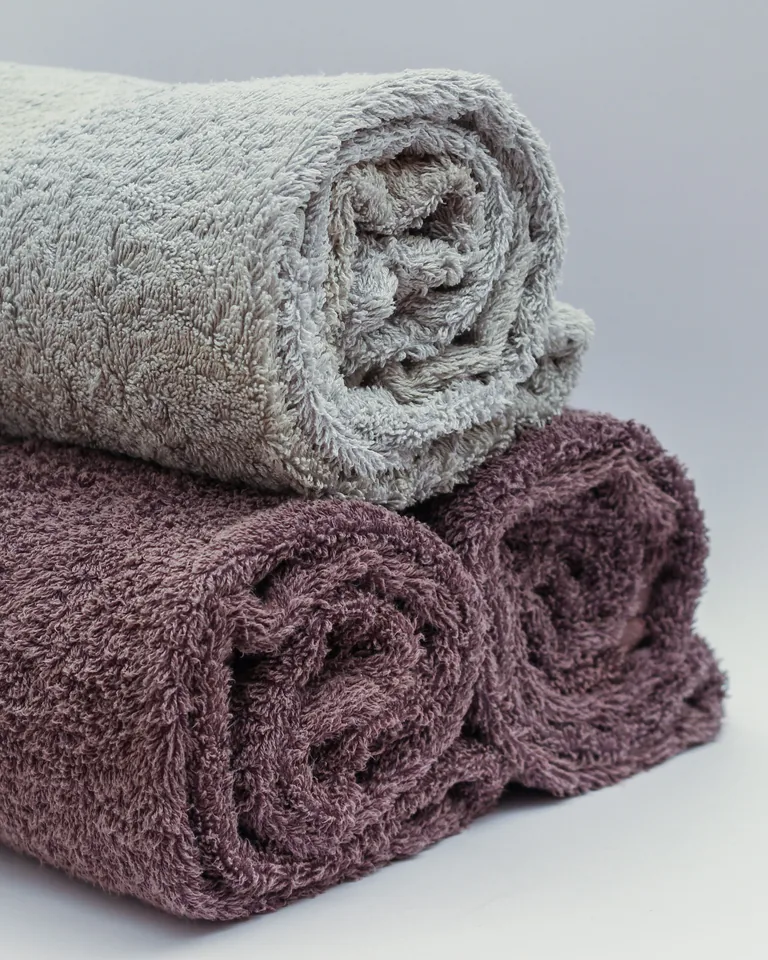
Not every towel needs to hang. A big woven basket beside the rail holds rolled clean towels ready to grab on the way out, while the rail handles the wet returns. It’s a simple in-out loop: grab a dry one from the basket, hang the wet one on the rail. Woven baskets also hide a multitude of sins, which matters when the “system” is really just trying to keep sandy towels off the sofa.
15. Tropical Resort-Style Rail
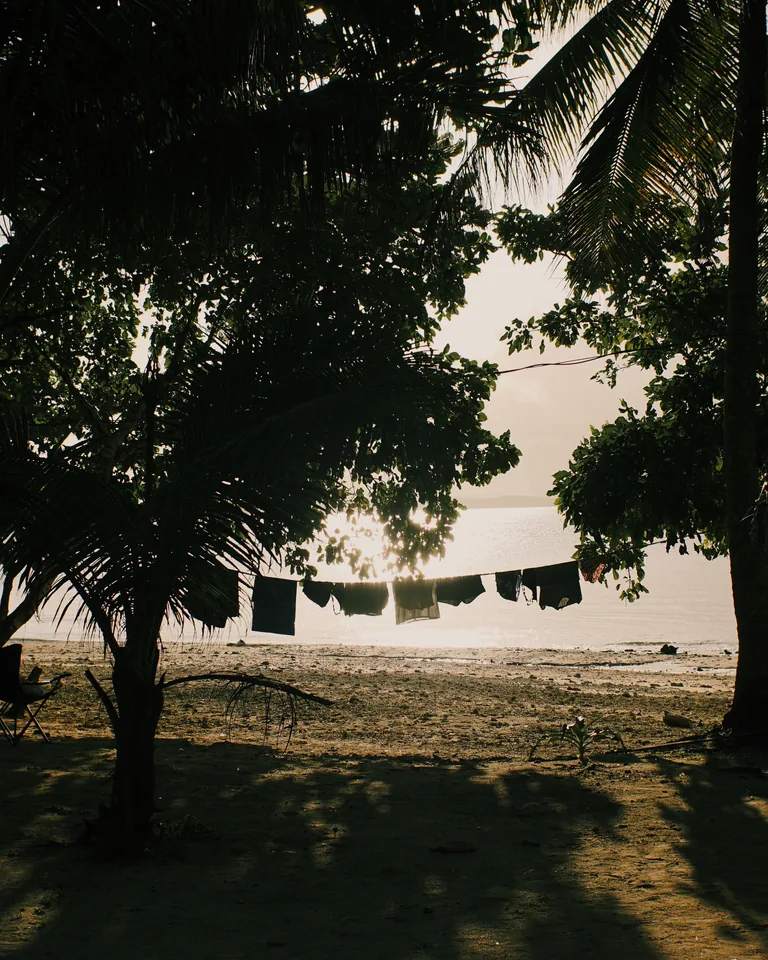
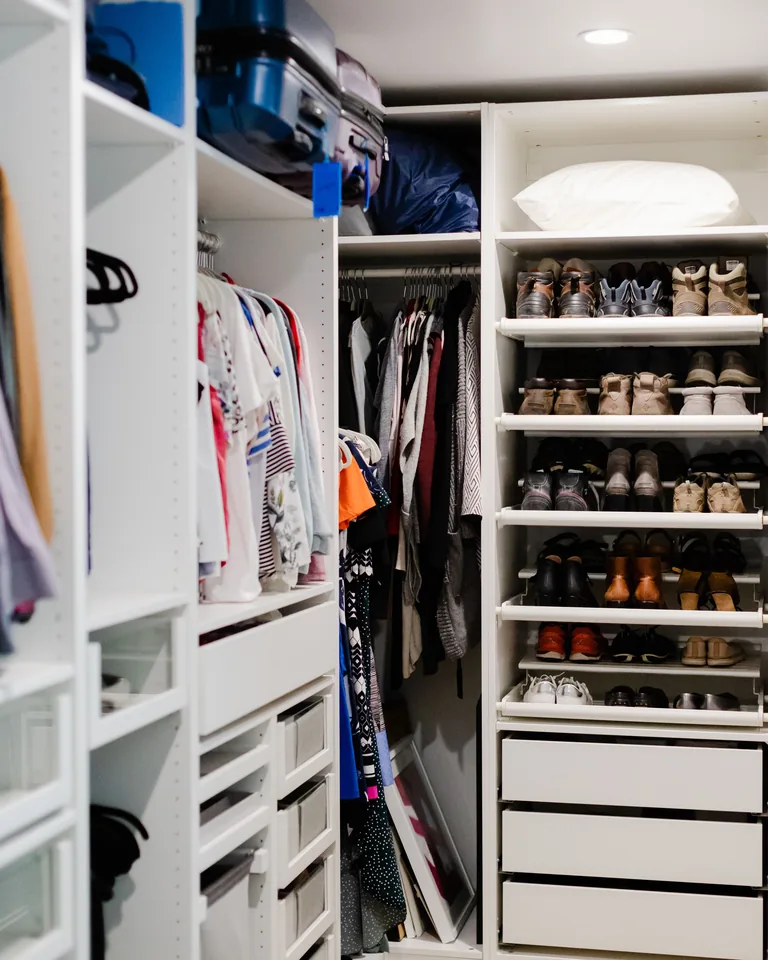
If your pool area leans resort-style, match the rail to the vibe: dark metal or bamboo-look framing, towels in a coordinated palette, maybe a planter alongside. A rail that looks like it belongs at a boutique hotel makes the whole backyard feel more pulled together — and guests are far more likely to actually hang their towels up when the spot looks inviting. This is the same principle behind styling any outdoor room: give everything a home that looks good enough to use. For more on pulling small spaces together, these small walk-in pantry ideas show how far a coordinated system goes in tight quarters.
Spacing Is the Whole Game
If you take one thing from this list, make it this: towels only dry if air can move around them. A rail that bunches towels together traps moisture and they stay damp for days; spread them out with real gaps and they dry in hours. That means choosing multiple separate hooks or bars rather than one long bar everyone piles onto. A cheap rack with well-spaced arms outperforms a beautiful one that crowds the towels together, every single time.

Pick a Material That Survives Damp
Damp is the enemy of any towel rail, so the material decides how long it lasts. Stainless steel and powder-coated metal resist rust best and are worth the money anywhere near water. Solid or sealed wood looks great and handles humidity well if it’s finished properly. Avoid cheap chrome-plated steel in wet areas — the plating chips and rusts underneath within a season, leaving streaks down your wall. Spend a little more once and the rail outlasts several cheaper ones.
Match the Rail to the Room
Where the rail lives should shape what you choose. A utility room or garage can take a no-nonsense row of heavy hooks; a bathroom wants something that looks the part — see these vintage pink bathroom ideas for how hardware finishes pull a room together; a poolside spot needs full weatherproofing; a rental needs no-drill. Be honest about the location before you buy. And if the rail is going in a bedroom-adjacent space, the storage thinking in these small bedroom storage ideas applies just as well: vertical, visible, and easy to maintain.
Frequently Asked Questions
How should you dry beach towels so they don’t smell?
Hang each towel full-length with air flowing around it — on separate hooks or well-spaced bars — ideally in sun and breeze. Shake the sand off first, never ball a wet towel up in a bag, and skip fabric softener in the wash since it coats the fibers and traps odor-causing residue.
How far apart should towel hooks be spaced?
At least six inches (about 15 cm) apart, center to center. Any closer and the towels overlap, trapping moisture between them — which is exactly what keeps them damp and musty.
What is the best material for an outdoor towel rail?
Stainless steel or powder-coated aluminum, with rust-proof fixings. Both shrug off rain, pool chemicals, and sun. Avoid cheap chrome-plated steel outdoors: the plating chips, the steel underneath rusts, and you’ll get rust streaks within a season.
How high should a beach towel rail be mounted?
Around five feet (1.5 m) to the hooks or bar, so a full-length beach towel hangs clear of the floor. If kids need to reach their own towels, add a second lower row at about three feet rather than mounting the whole rail low.
Can you leave a towel rack outside all year?
Yes, if it’s made from weatherproof materials and mounted with rust-proof hardware — stainless steel and powder-coated aluminum handle year-round exposure fine. Bring any fabric straps or covers indoors for winter, and give the fixings a yearly check for corrosion.
The bottom line: give beach towels their own dedicated spot, space them far enough apart that air moves, and choose a material that won’t rust where it’s damp. Everything else — hooks or bars, wall or freestanding, indoor or out — follows from your space.