18 Coffered Living Room Ceiling Ideas for Instant Architectural Character
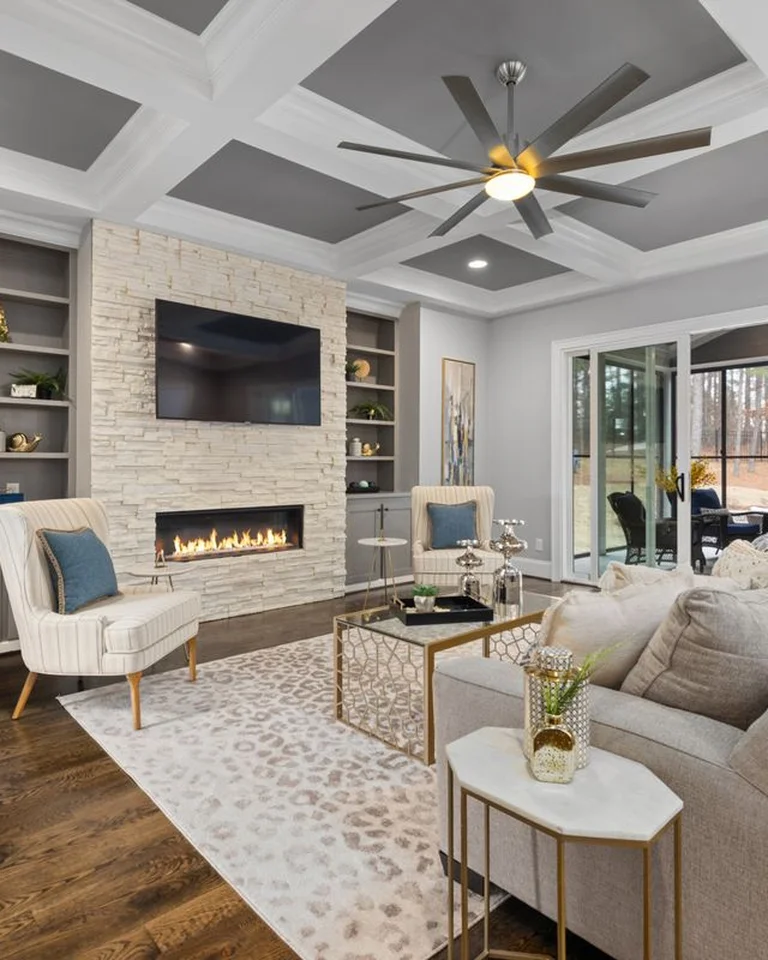
A coffered living room ceiling is a grid of recessed panels framed by beams, and it is one of the fastest ways to give a flat room real architecture. The recessed boxes catch shadow, pull the eye upward, and make even a standard-height living room feel taller and more deliberate. The design has been used since Roman public buildings, but today’s versions range from crisp white grids and rustic wood beams to slim minimalist layouts with hidden LED lighting. Below are 18 coffered living room ceiling ideas, each with a distinct look, the rooms it suits best, and what it costs in effort and budget to pull off.
What to know before you choose a coffered ceiling
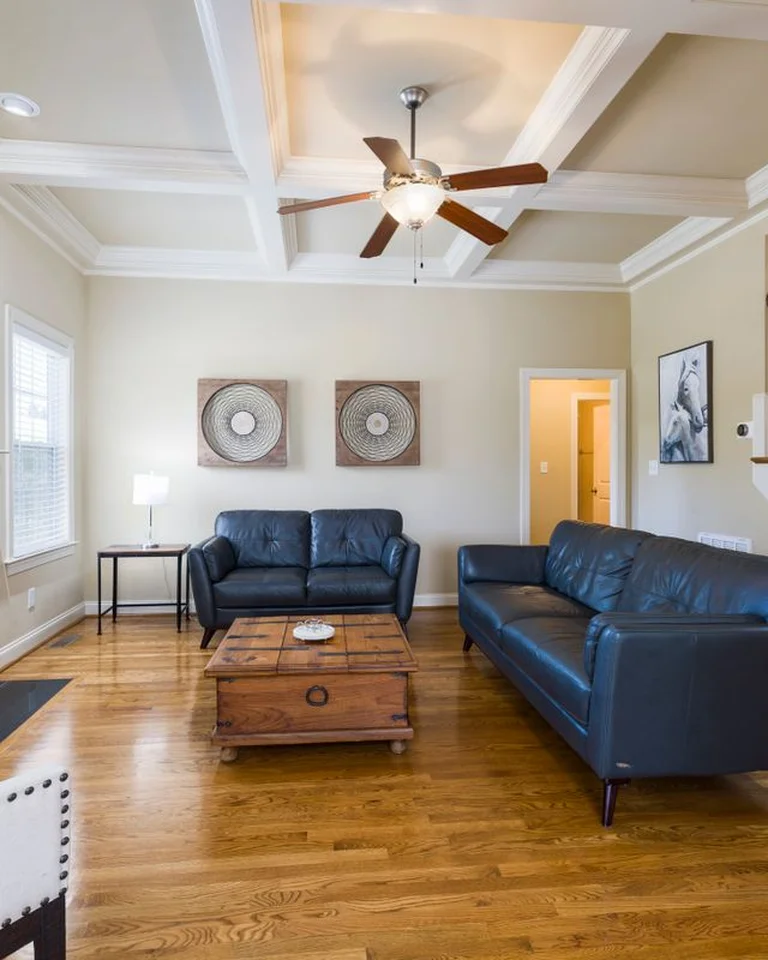
A few practical facts will save you from picking a design your room can’t support. Most contractors recommend ceilings of at least 8 to 9 feet before adding coffers; anything lower calls for a shallow, low-profile grid so the beams don’t press the room down. Professionally installed coffered ceilings typically run around $25 per square foot, which works out to roughly $3,750 for a 150-square-foot living room, though simple DIY grids built from lumber and molding cost far less. Lighting, crown molding, and medallions add to the total, so decide on those before the beams go up. With that settled, here are the designs worth considering.
1. The All-White Coffered Grid
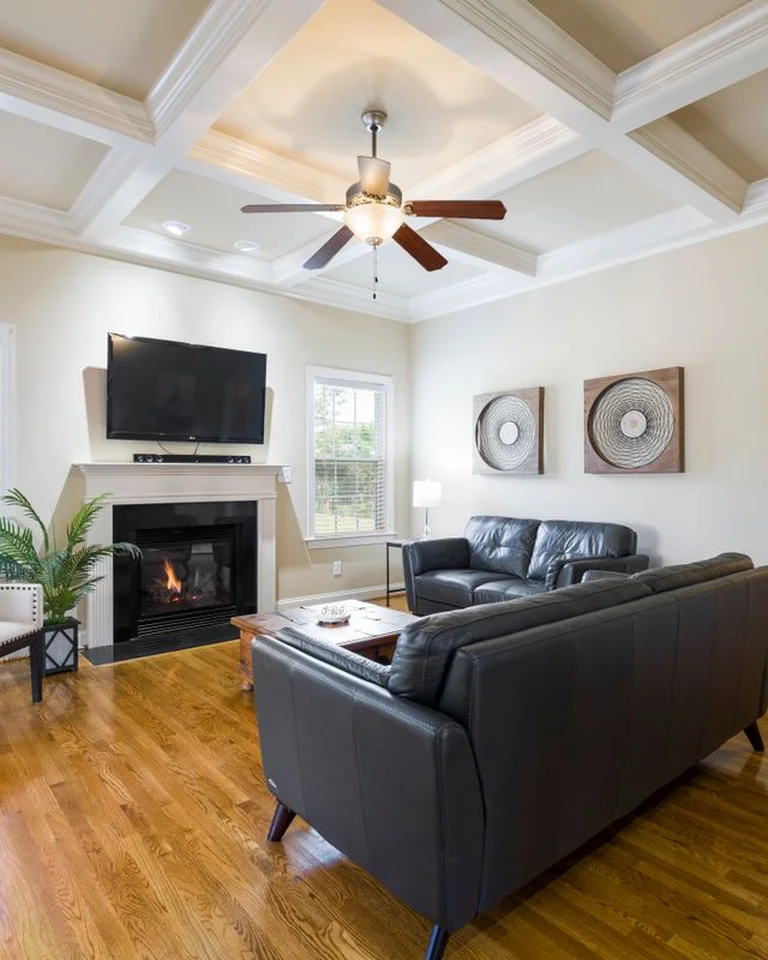
The classic for a reason: beams and recessed panels all painted one bright white. It suits almost any home style, from colonial to coastal to contemporary, because the single color reflects light instead of absorbing it, so the room reads brighter and larger while the grid’s shadows still add depth. It is also the most resale-friendly option, since it never dates and doesn’t lock future buyers into a palette. Keep the furniture palette simple underneath so the ceiling, not a busy rug, does the talking. For paint, use a durable satin or semi-gloss on the beams; the slight sheen bounces light into the recessed panels and makes the whole grid glow.
2. Rustic Reclaimed-Wood Beam Coffers
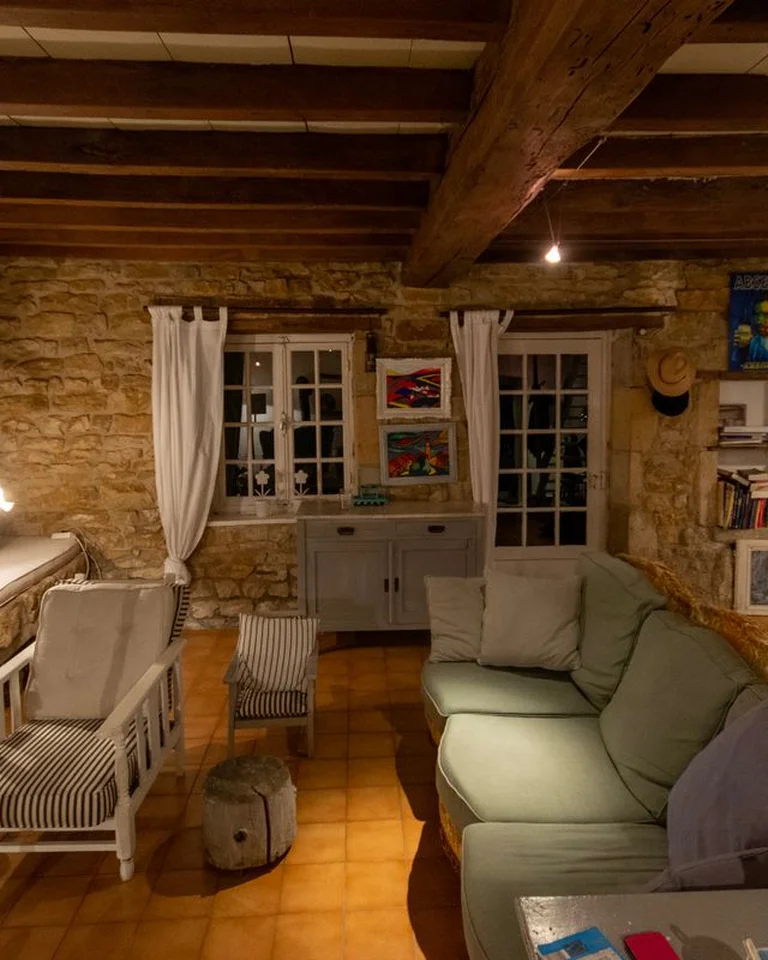
Thick, rough-hewn beams with visible grain and knots give a coffered ceiling instant farmhouse or cabin character. The weathered texture carries a sense of history that smooth new lumber can’t fake, and it works best when the recessed panels stay crisp white so the contrast makes the wood pop. Seal the beams with a matte finish rather than a glossy one to keep the timber looking natural instead of polished. This style pairs beautifully with slipcovered sofas, woven baskets, and wood floors. One caveat: reclaimed lumber varies in size, so a good carpenter will mill or shim the pieces so the grid stays square.
3. Dark Beams Over Bright White Panels
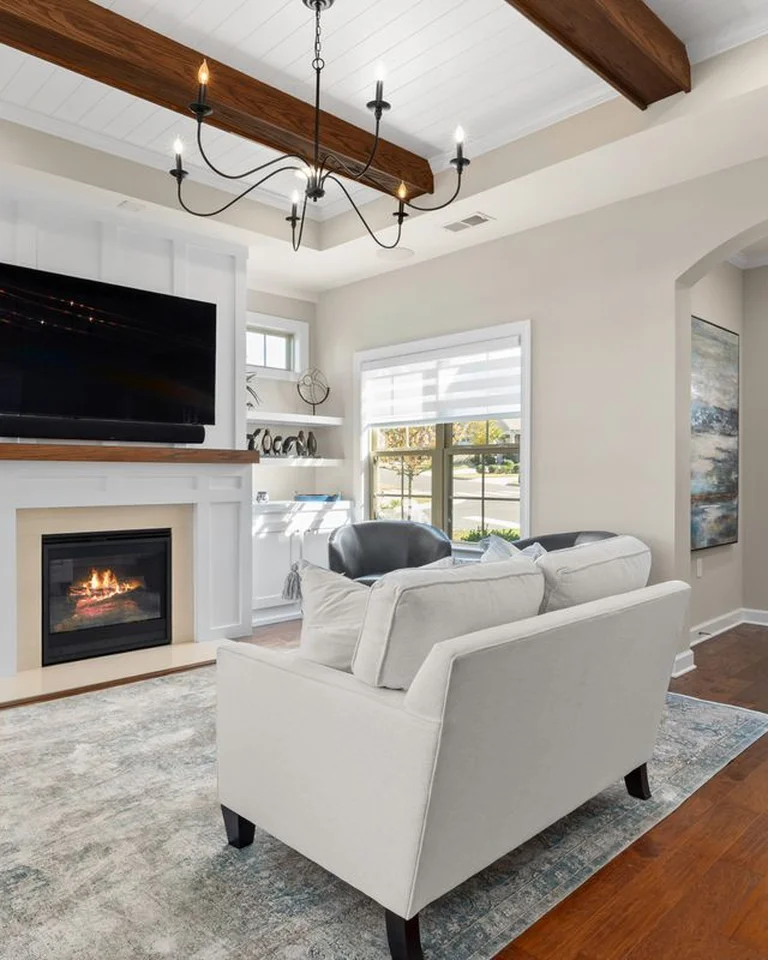
Stain the beams a rich brown or near-black and keep the recessed panels crisp white for a high-contrast ceiling that shows off the architecture. You get the warmth of real wood without the heaviness of an all-dark ceiling, and the contrast makes the grid pattern read clearly from across the room. Lined beadboard panels, like the ones shown here, add an extra layer of texture between the dark beams. It photographs beautifully and bridges traditional and modern rooms. Because dark beams absorb light, give the room strong lighting, recessed cans or a bright central fixture, so the ceiling doesn’t flatten the room after dark. This is also a forgiving choice for older homes: the dark beams hide minor imperfections that white paint would show.
4. Warm Natural Wood Coffers for a Traditional Feel
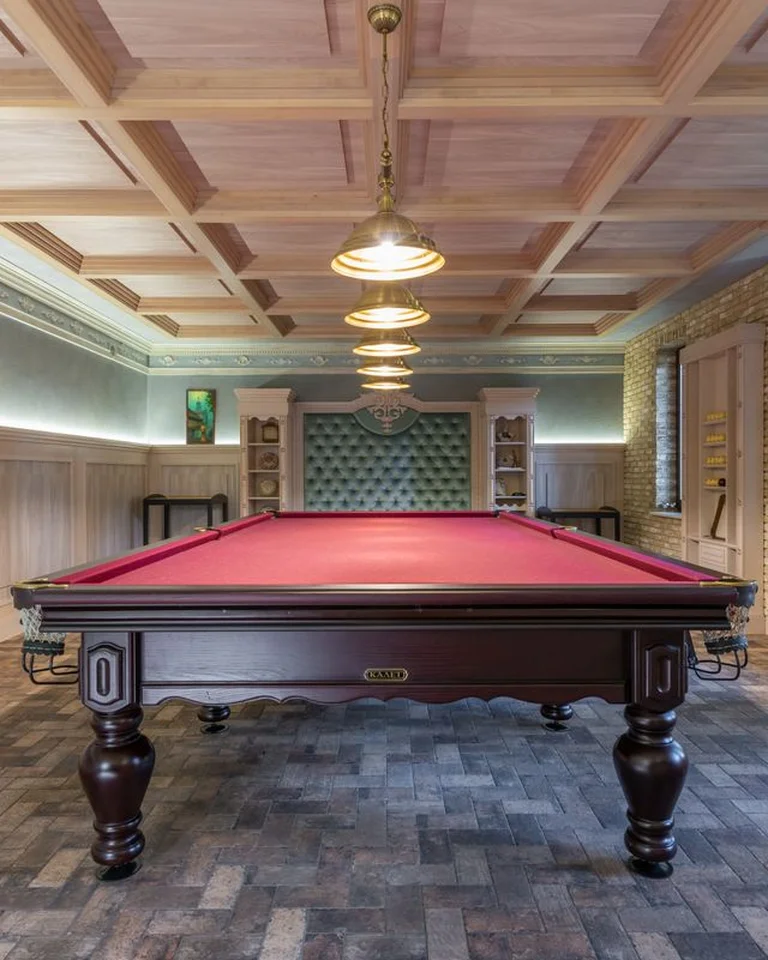
Beams in warm natural oak or pine tones give a living room the richness of real wood without the heaviness of a dark stain. The honey-toned grid feels traditional and established, like the woodwork in a classic library or billiard room, and it reflects more light than walnut or mahogany, so the room stays welcoming. It pairs beautifully with leather seating, bookshelves, and brass or bronze fixtures. Because the finish is the star, keep the joinery crisp and the stain even; blotchy stain on a ceiling grid draws the eye for all the wrong reasons. A clear matte topcoat protects the wood while keeping the grain looking natural.
5. Whitewashed Coastal Coffers
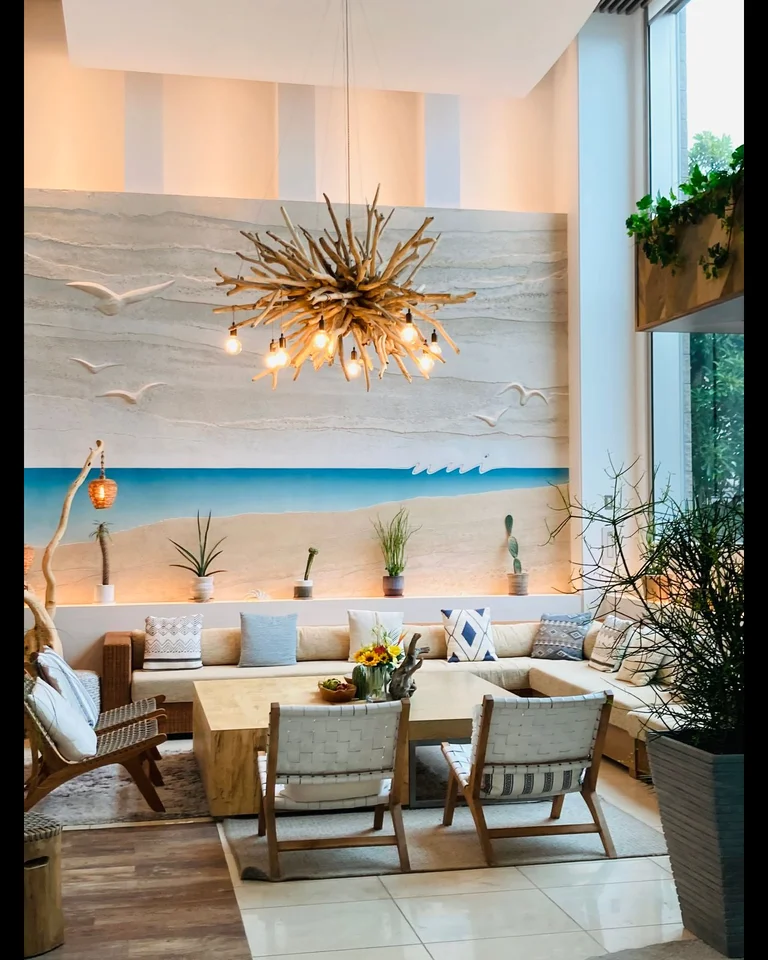
A limewash or whitewash finish lets the wood grain show softly through a pale coating, landing between stark white and dark timber. It reads breezy and relaxed, making it a natural match for coastal, beach-house, or Scandinavian-leaning living rooms with linen slipcovers and sea-inspired hues, like the palette in the room above. The finish keeps the ceiling light enough for lower-ceiling rooms while still adding the texture and warmth that flat white paint lacks. Apply the wash thinly and seal it so it doesn’t yellow over time. Pair it with light oak floors and keep window treatments sheer so daylight keeps the pale finish luminous.
6. Farmhouse Cream and Distressed Wood
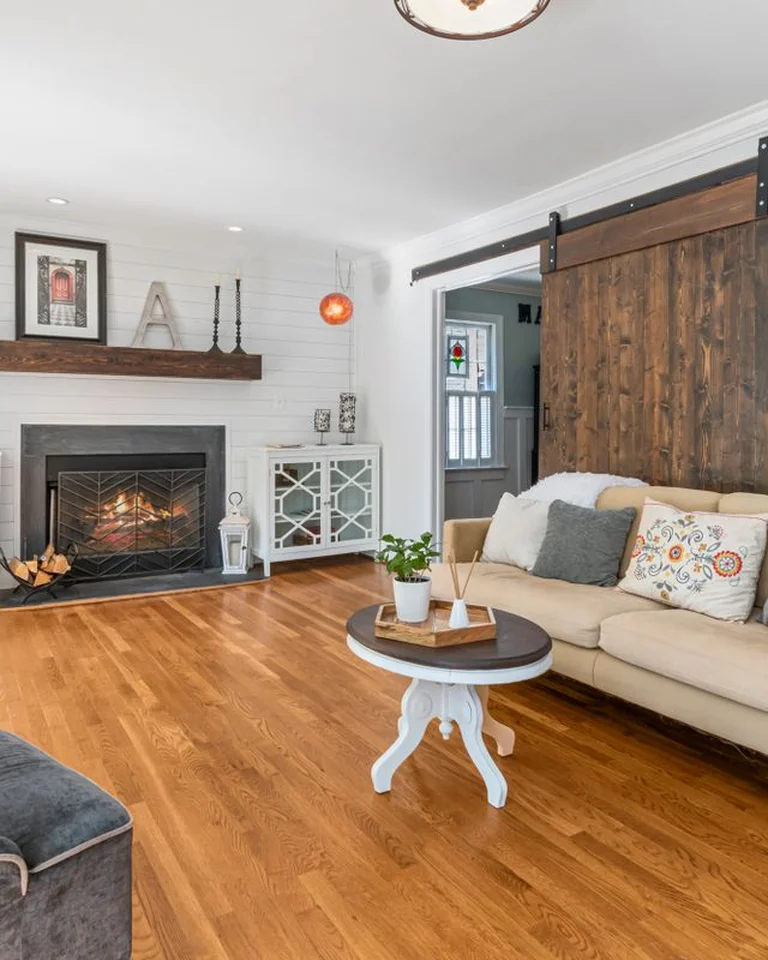
A gentler cousin of the rustic look: lightly distressed beams with panels painted a soft cream or off-white. The palette keeps the room bright and welcoming while the worn wood adds character and a handmade feel, matching the relaxed farmhouse style of the room above. It works in both genuine farmhouses and suburban homes that want warmth without going full cabin. Distress the beams before installation with chains, wire brushes, or a weathered stain, then finish with a matte sealer. Cream panels hide dust and drywall seams better than pure white, which is a practical bonus in a ceiling you’ll rarely look at up close.
7. The Minimalist Large-Panel Grid

Instead of many small squares, use a large grid with big panels and fewer beams. The result is calm and contemporary rather than busy and traditional, with less visual noise and a quietly architectural feel. It suits modern and open-concept rooms that want ceiling interest without fuss. Slim, unadorned beams painted the same soft white or neutral as the panels keep everything understated. Because there are fewer boxes, each one needs to be perfectly square and level; large panels expose sloppy layout more than small ones do, so measure twice and snap chalk lines before a single board goes up.
8. A Moody All-Dark Coffered Ceiling
Take beams and panels alike in deep charcoal, black, or dark green for a ceiling that reads intimate and luxurious. The grid’s shadows deepen in a dark shade, adding drama you can’t get from flat dark paint. It works best in rooms with generous natural light and at least 9-foot ceilings, since dark overhead surfaces visually lower the room. Keep walls mid-toned rather than white so the transition doesn’t jar, and add warm lighting so the room feels enveloping rather than gloomy. Done well, it makes a living room feel like a high-end hotel lounge after dark.
9. Soft Grey Two-Tone Coffers
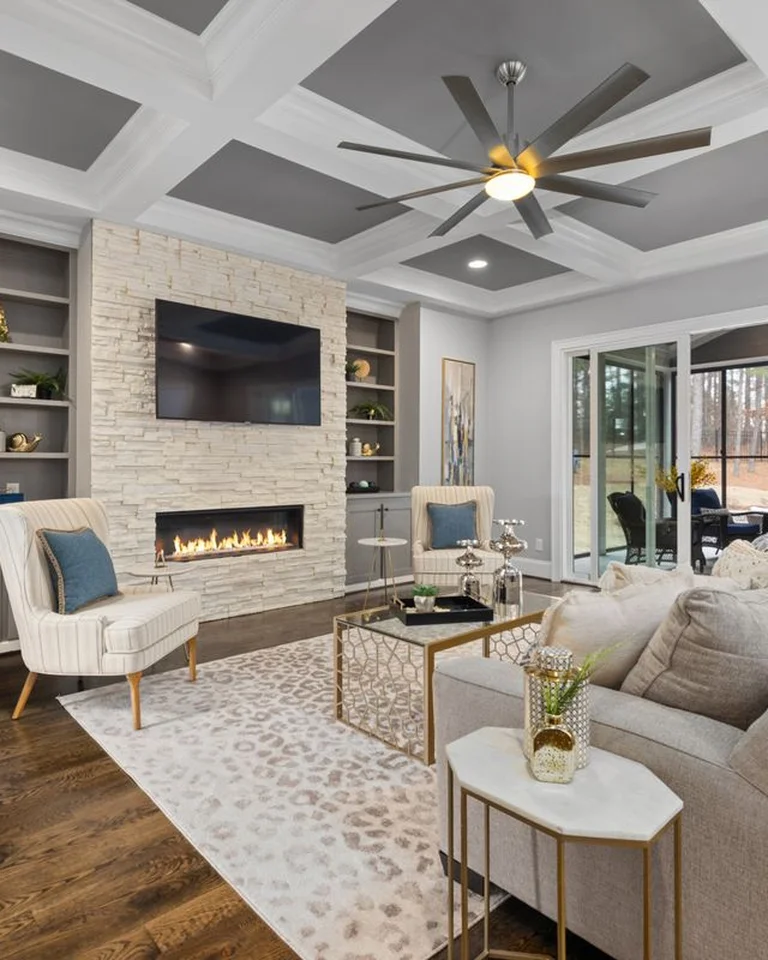
White beams set against soft grey recessed panels give a transitional ceiling that’s more interesting than all-white but calmer than dark wood. The subtle contrast makes the grid pop gently, adding sophistication without drama, and it bridges grey sofas, white trim, and wood floors that many living rooms already have. Use a warm-leaning grey rather than a cold blue-grey so the ceiling doesn’t feel chilly under artificial light. It’s a smart middle ground for resale too: distinctive enough to feel designed, neutral enough to offend no one.
10. Recessed Downlights Set Into Every Panel
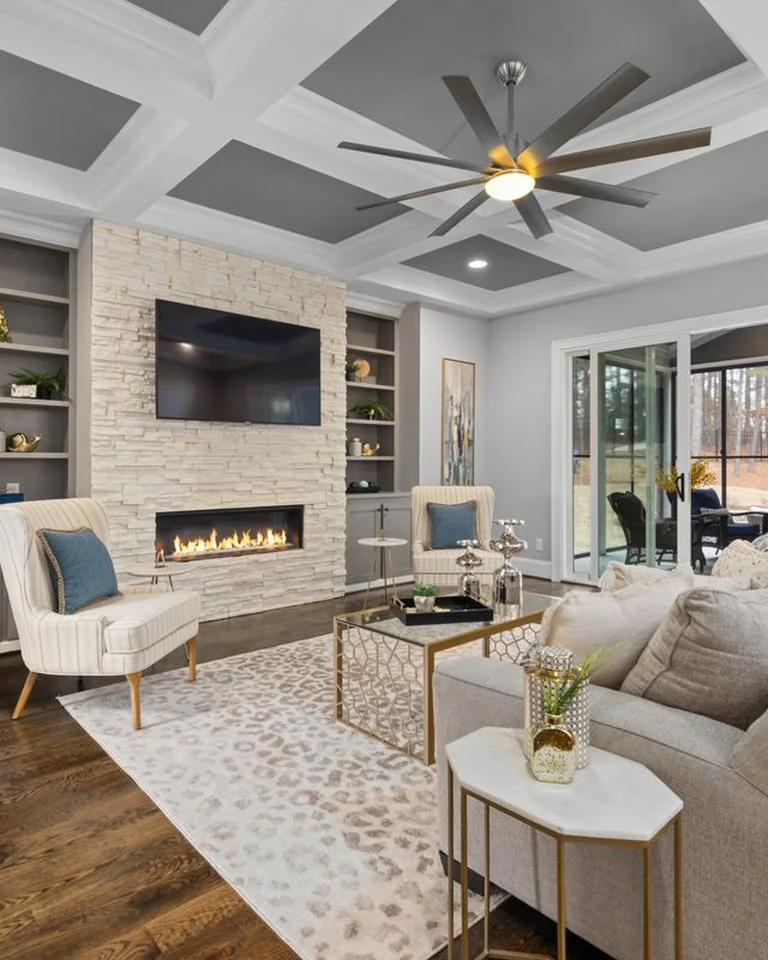
Place one small recessed downlight in the center of each coffered panel for even, layered light across the whole room. Each box becomes its own lit compartment, which emphasizes the geometry of the grid while giving you genuinely useful general lighting. Use warm-white bulbs and a dimmer so the grid can shift from bright task lighting to a soft evening glow. Plan the electrical work before the beams go up, since running wire afterward means opening finished panels. This is the most practical lighting upgrade you can build into a coffered ceiling, and it keeps the ceiling plane clean with no visible fixtures.
11. LED Cove Glow Hidden Along the Beams
Tuck LED strips along the inside edges of the beams so each recessed panel washes with a soft, indirect glow. The effect is thoroughly modern: by day the ceiling looks like a clean painted grid, and after dark it becomes a light feature with real drama. Warm white (2700K) suits living rooms; cool white can feel clinical overhead. Build a small channel or lip into the beam design to hide the strip itself so you see only the glow, and put the strips on a dimmer or smart switch for movie nights. LED tape is inexpensive relative to the carpentry, so this is one of the highest-impact upgrades per dollar.
12. Glass or Skylight Panels Set Into the Coffers
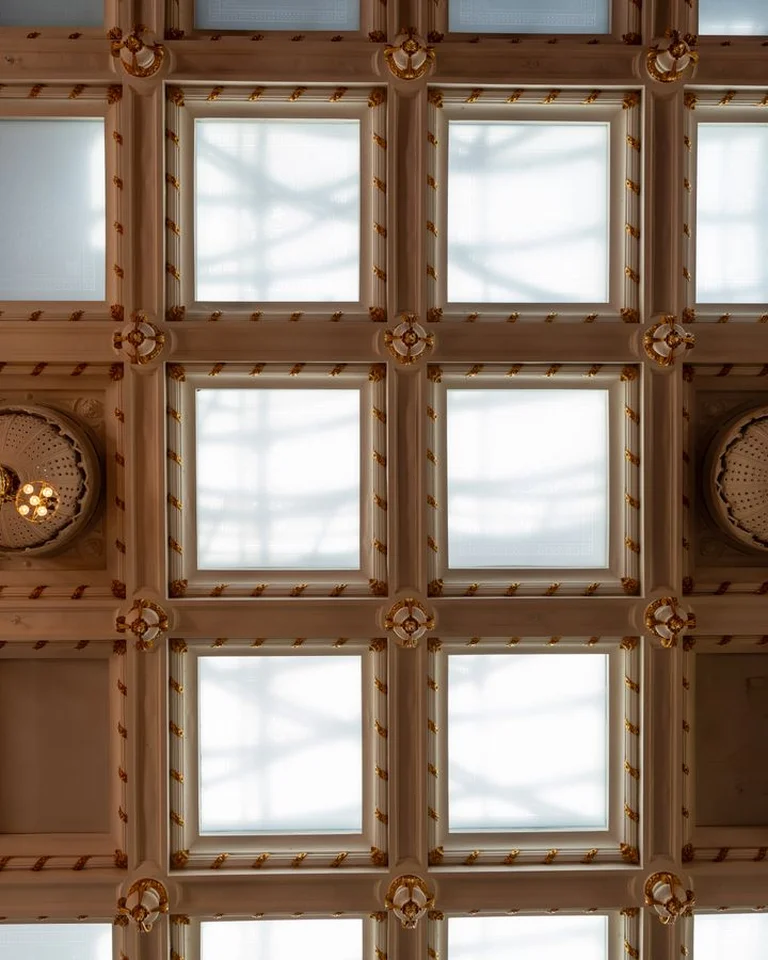
Instead of drywall inside the grid, set translucent glass or skylight panels into some or all of the coffers. By day they flood the room with soft, diffused daylight and make the ceiling feel lighter; after dark they can be backlit for a gentle glow. It is an unexpected twist that suits modern and transitional living rooms, and it works especially well over a seating area where you want brightness without a visible fixture. Use frosted or reeded glass for privacy and diffusion, and make sure the panels are properly sealed and rated for ceiling installation so condensation and heat buildup never become issues.
13. Coffers That Zone an Open-Plan Living Room

In an open floor plan, run the coffered grid over just the living area and stop it where the kitchen or dining zone begins. The ceiling becomes an architectural divider that visually defines the space with no walls needed, much like the wood ceiling marks the gathering zone in the open-plan great room above. Align the grid’s edge with a natural break in the floor plan, a change in flooring, a peninsula, or a furniture grouping, so the boundary reads as intentional rather than arbitrary. This is one of the smartest uses of the treatment: it adds beauty and solves the “where does the living room end?” problem that plagues open layouts.
14. Shiplap-Lined Coffered Panels

Line the inside of each recessed panel with shiplap or narrow planked wood instead of flat drywall. The lined texture, like the plank wall shown here, adds farmhouse warmth and visual interest inside every box, and it pairs naturally with both wood and painted beams. Run the boards in one consistent direction across all panels so the ceiling reads as orderly, and keep the boards tight; gaps will show as dark lines from below. Primed shiplap painted to match the beams gives a subtle cottage texture, while leaving it in natural wood makes the panels the warmest part of the room.
15. Painted or Patterned Interiors Inside the Coffers

Treat each recessed panel as a small canvas: paint the interiors a color while keeping the beams white, or line them with wallpaper, grasscloth, or even tin-look tiles. A soft sage, moody navy, or warm greige inside the boxes adds subtle color overhead without overwhelming the room, while a patterned paper reads as genuinely custom and designer. The historic ceiling above shows how far the idea can go, with painted octagonal coffers and gilded rosettes. Because the pattern sits overhead in small doses, you can go bolder than you would on a wall. Keep the rest of the room’s palette quiet so the ceiling stays the star, and use removable wallpaper if you rent or like to change things often.
16. Grand Classical Coffers with Inlaid Panel Details

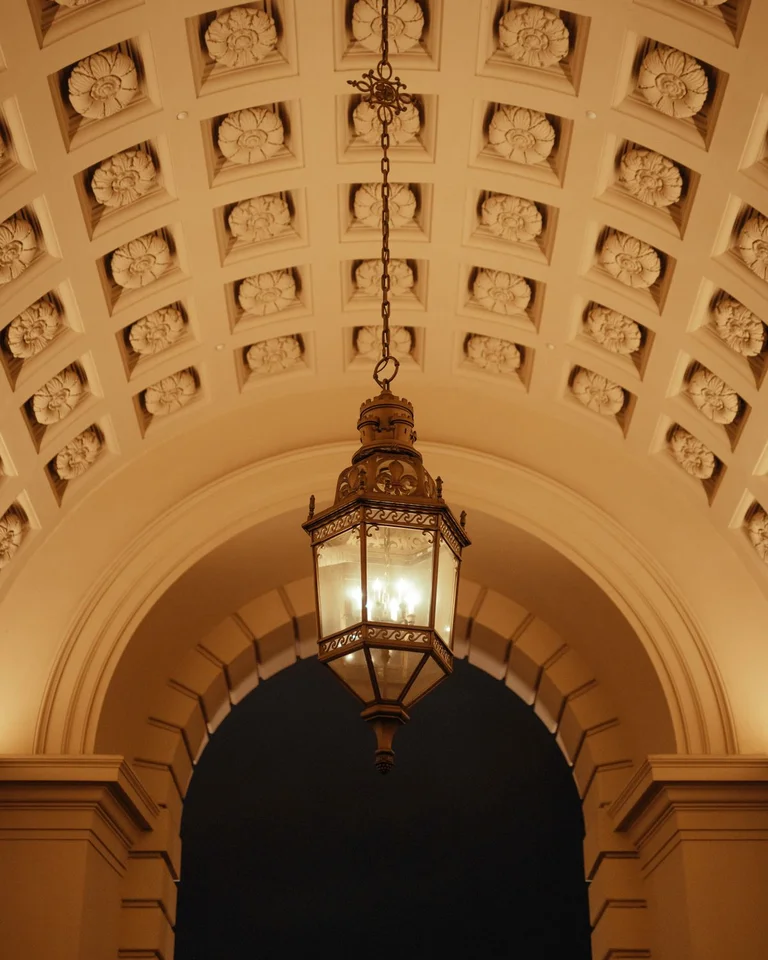
At the formal end of the spectrum, go deep and ornate: thick coffers layered with stacked moldings and decorative inlays, carved wood, patterned tile, or plaster relief, set inside each panel. The example above is a historic neoclassical ceiling, but the same ingredients, deep boxes, layered trim, and an inlaid motif, scale down to a grand living room in a traditional or period home. This is the most labor-intensive and expensive version of a coffered ceiling, and it demands a highly skilled finish carpenter, but the craftsmanship is unmistakable. Reserve it for rooms with the height and formality to carry it; in a casual space it will feel out of place.
17. Coffers on a Vaulted or Curved Ceiling

If your living room has a vaulted, barrel, or otherwise curved ceiling, running the coffered grid up the slope turns all that empty height into a showpiece. The coffers follow the curve, drawing the eye dramatically upward and giving the volume a sense of order and richness it would otherwise lack. It is a statement reserved for rooms with serious volume, and the layout is genuinely complex, since every box must stay true while the surface curves, so this one belongs firmly in professional-carpenter territory. In the right room, though, nothing else overhead makes quite the same impression.
18. A Faux-Beam Coffered Ceiling on a Budget
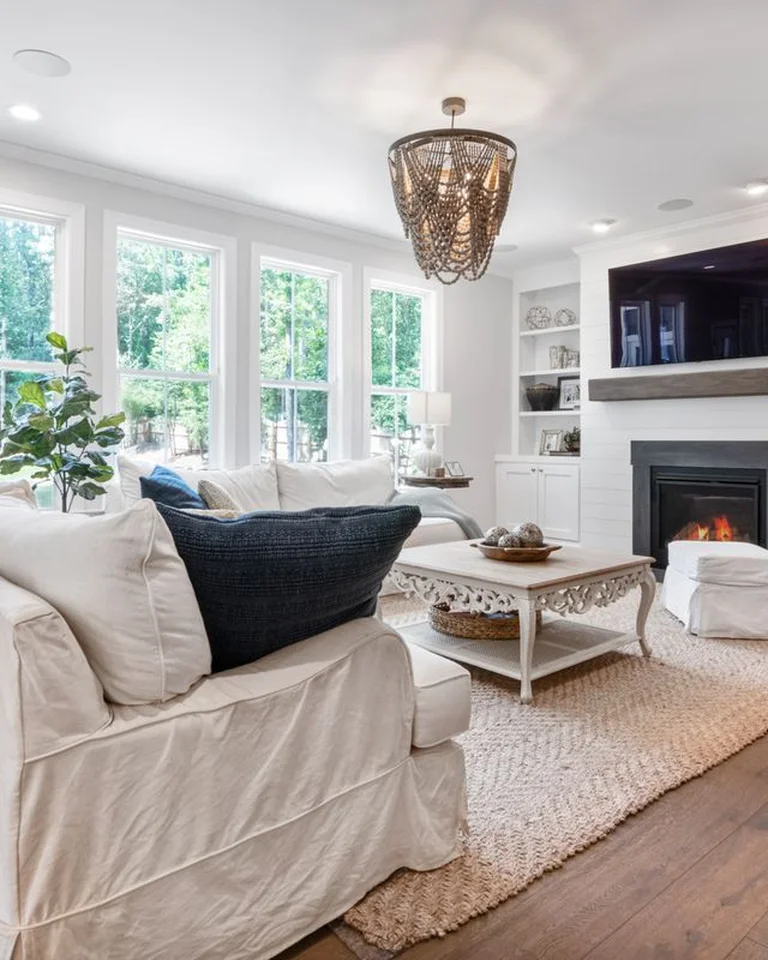
Lightweight faux beams in polyurethane or hollow wood-look material give you the dimensional grid for a fraction of the cost and weight of solid timber. They install far more easily over a plain flat ceiling like the one above, need no structural framing, and take paint or stain convincingly enough that guests won’t guess. This is the most DIY-friendly route to a coffered look and a good fit for second floors or older homes where heavy beams are a structural question. The tradeoff is depth: faux beams are shallower than built-up wood grids, so keep the design simple and let clean lines do the work.
How to choose the right design for your living room
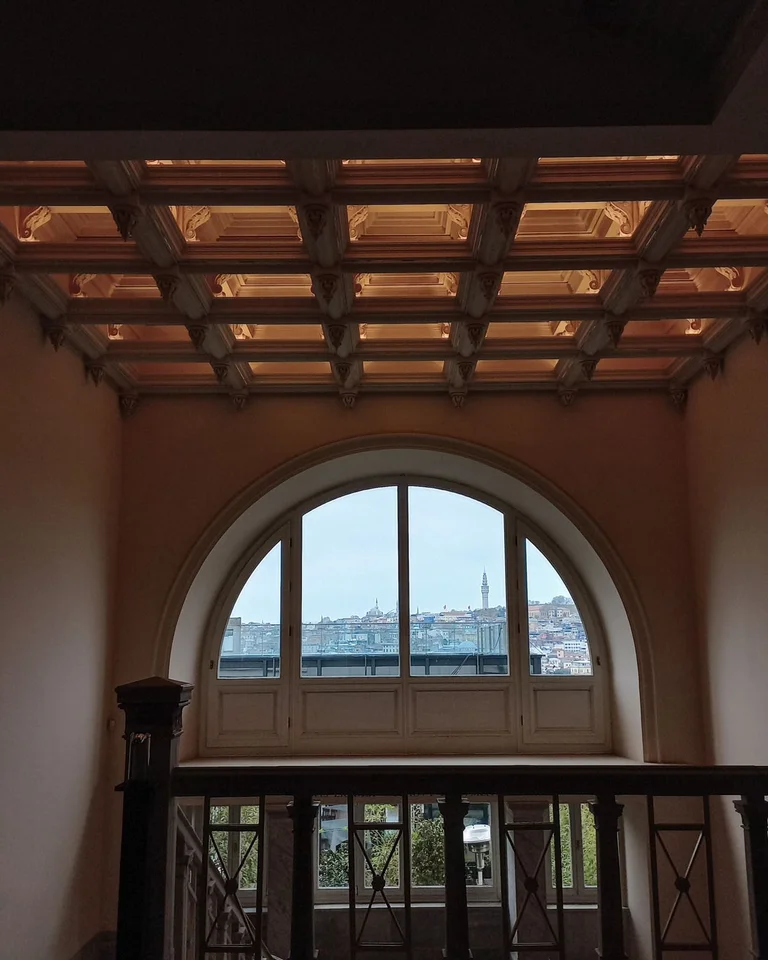
Match the depth to your ceiling height first: deep dramatic beams for tall rooms, shallow low-profile grids for anything under about nine feet. Then match the style to your home: white grids for bright and versatile, dark wood for cozy and formal, whitewash for coastal, faux beams for budget. Keep the rest of the room’s decor relatively simple once the ceiling goes in, because the whole point is that it draws the eye up. And plan lighting before the carpentry, since recessed lights, LED strips, and chandelier boxes are all far cheaper to wire before the beams are finished.
Frequently asked questions
How much does a coffered ceiling cost in a living room?
A professionally installed coffered ceiling typically runs about $25 per square foot, or roughly $3,750 for a 150-square-foot living room, with ornate or custom designs climbing higher. DIY grids built from lumber and molding cost far less, and faux-beam systems are the most budget-friendly route.
What ceiling height do you need for a coffered ceiling?
Most professionals recommend at least 8 to 9 feet of ceiling height. Rooms under nine feet should use shallow, low-profile coffers so the beams don’t make the space feel cramped.
Do coffered ceilings make a room look smaller?
They can in a low-ceilinged room with deep, dark beams. But a white or light-colored grid with shallow coffers usually makes a room feel taller and more spacious, because the grid draws the eye upward and adds architectural depth.
Can you install a coffered ceiling yourself?
Yes, a confident DIYer can build a simple grid from 1×6 and 1×2 lumber with a nail gun, or install lightweight faux beams over a weekend. Complex layouts, deep ornate coffers, and any design with integrated lighting are better left to a professional finish carpenter and electrician.
Do coffered ceilings add home value?
They can, particularly classic white grids in living rooms, which read as custom architecture to buyers. The return depends on your market, the quality of the work, and whether the style fits the home; an ornate dark-wood ceiling in a modern condo may not pay back as well.
A coffered ceiling is one of the few upgrades that changes how a living room feels from the moment you walk in. Pick the design that fits your ceiling height, your home’s style, and your budget, get the layout square before the first board goes up, and the result will look like it was always part of the house.